Special Train to Connect Madurai and Muzaffarpur
RAILWAYS & METRO RAIL

Special Train to Connect Madurai and Muzaffarpur

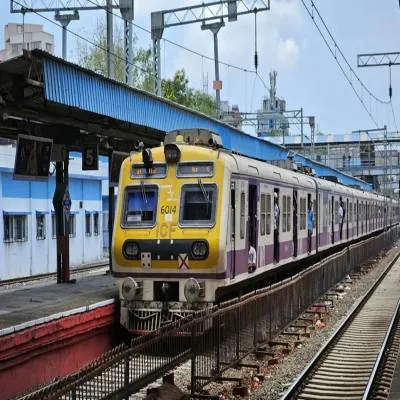
The Indian Railways has announced the launch of a special train service connecting Madurai in Tamil Nadu to Muzaffarpur in Bihar, with a key stop in Chennai. This initiative aims to enhance connectivity between the southern and northern regions of India, catering to the growing demand for travel between these areas.

Key details of the special train service include:

Route and Stops: The special train will travel from Madurai to Muzaffarpur, covering a significant distance and passing through several major stations, including Chennai. This route connects important cities in Tamil Nadu, Andhra Pradesh, Odisha, and Bihar, providing a direct and convenient travel option for passengers.

Schedule and Frequency: The train will operate on a regular schedule, ensuring timely and consistent service. The specific frequency of the train, including the days of operation, is designed to meet the needs of both long-distance travelers and those commuting between the intermediate stations.

Passenger Demand: The introduction of this special train is in response to the high demand for travel between southern and northern India, especially among migrant workers, students, and tourists. The service is expected to alleviate congestion on existing routes and provide an additional travel option for passengers.

Facilities on Board: The special train is equipped with modern amenities to ensure a comfortable journey for passengers. This includes air-conditioned coaches, sleeper classes, and general seating, catering to a wide range of passenger preferences and budgets.

Economic and Social Impact: By connecting regions that are economically and culturally diverse, the new train service is expected to boost trade, tourism, and social interactions between the southern and northern parts of India. It will also support the mobility of labor, which is crucial for various sectors of the economy.

Railway Infrastructure: The launch of this service is part of Indian Railways' broader efforts to expand its network and improve connectivity across the country. This includes introducing new routes, enhancing existing services, and upgrading infrastructure to support the growing demand for rail travel.

Operational Efficiency: The introduction of this special train is a testament to Indian Railways' commitment to operational efficiency and customer satisfaction. The service is designed to provide a reliable and timely travel option, with a focus on safety and convenience.

Future Plans: Depending on the success of this route, Indian Railways may consider introducing additional special trains on other high-demand routes, further enhancing the connectivity and accessibility of its network.

The new special train service between Madurai and Muzaffarpur, via Chennai, represents a significant enhancement in India's railway connectivity. It offers a vital link between the southern and northern regions, providing passengers with a convenient and efficient travel option.

The Indian Railways has announced the launch of a special train service connecting Madurai in Tamil Nadu to Muzaffarpur in Bihar, with a key stop in Chennai. This initiative aims to enhance connectivity between the southern and northern regions of India, catering to the growing demand for travel between these areas. Key details of the special train service include: Route and Stops: The special train will travel from Madurai to Muzaffarpur, covering a significant distance and passing through several major stations, including Chennai. This route connects important cities in Tamil Nadu, Andhra Pradesh, Odisha, and Bihar, providing a direct and convenient travel option for passengers. Schedule and Frequency: The train will operate on a regular schedule, ensuring timely and consistent service. The specific frequency of the train, including the days of operation, is designed to meet the needs of both long-distance travelers and those commuting between the intermediate stations. Passenger Demand: The introduction of this special train is in response to the high demand for travel between southern and northern India, especially among migrant workers, students, and tourists. The service is expected to alleviate congestion on existing routes and provide an additional travel option for passengers. Facilities on Board: The special train is equipped with modern amenities to ensure a comfortable journey for passengers. This includes air-conditioned coaches, sleeper classes, and general seating, catering to a wide range of passenger preferences and budgets. Economic and Social Impact: By connecting regions that are economically and culturally diverse, the new train service is expected to boost trade, tourism, and social interactions between the southern and northern parts of India. It will also support the mobility of labor, which is crucial for various sectors of the economy. Railway Infrastructure: The launch of this service is part of Indian Railways' broader efforts to expand its network and improve connectivity across the country. This includes introducing new routes, enhancing existing services, and upgrading infrastructure to support the growing demand for rail travel. Operational Efficiency: The introduction of this special train is a testament to Indian Railways' commitment to operational efficiency and customer satisfaction. The service is designed to provide a reliable and timely travel option, with a focus on safety and convenience. Future Plans: Depending on the success of this route, Indian Railways may consider introducing additional special trains on other high-demand routes, further enhancing the connectivity and accessibility of its network. The new special train service between Madurai and Muzaffarpur, via Chennai, represents a significant enhancement in India's railway connectivity. It offers a vital link between the southern and northern regions, providing passengers with a convenient and efficient travel option.

Related Stories

Gold Stories

Next Story
Resources

Schindler named among Forbes’ World’s Best Employers 2026

Schindler has been named among Forbes’ World’s Best Employers 2026, a global ranking recognising companies for their workplace environments.Compiled by Forbes in partnership with Statista, the ranking is based on independent employee feedback, including whether employees would recommend their organisation to friends and family.The company said the recognition reflected its focus on creating a workplace where employees can develop their expertise and build careers. ..

Next Story
Infrastructure Urban

India needs an export-execution mindset: Vishesh Jain

Interview with Vishesh Jain, Founder & CEO, EximpleWhat gaps in India’s global trade ecosystem led you to build Eximple, and what problem did you see businesses struggling with most?Eximple came out of a problem that all three founders had seen from different choke points in the trade ecosystem. India has millions of MSMEs and manufacturers, and many of them can make products that are genuinely competitive on quality. Yet only a small fraction is able to build meaningful international businesses. In our experience, the gap is usually not manufacturing capability; it is the ability to exe..

Next Story
Building Material

Nuvoco reports 13.5% revenue growth in Q2 FY27

Nuvoco Vistas Corp. Ltd. reported consolidated revenue of Rs 27.9 billion for Q2 FY27, up 13.5% year on year. Cement sales volume rose 9% to 4.7 million tonnes (MMT), while EBITDA increased 11% to Rs 4.11 billion.The company said it began its cement operations in 2014 with a 2.3 MMT per annum (MMTPA) operation at Nimbol. It now aims to reach 35 MMTPA of cement capacity by FY28, nearly 15 times its initial capacity. Its portfolio spans cement, ready-mix concrete and modern building materials.On sustainability and cost efficiency, Nuvoco partnered with CleanMax for a 46.4 MW wind-solar hybrid re..

Advertisement

Subscribe to Our Newsletter

Get daily newsletters around different themes from Construction world.

STAY CONNECTED

Advertisement

SPECIAL OFFER
QR Code