+
Titagarh Boosts Rail Output With Pune Metro, Vande Bharat
RAILWAYS & METRO RAIL

Titagarh Boosts Rail Output With Pune Metro, Vande Bharat

Titagarh Rail Systems is intensifying its role in India’s railway modernisation, with significant manufacturing activity underway at its Uttarpara facility near Kolkata. The company is producing lightweight metro coaches and preparing for the sleeper variant of the Vande Bharat Express, reinforcing its presence in the national transport ecosystem.

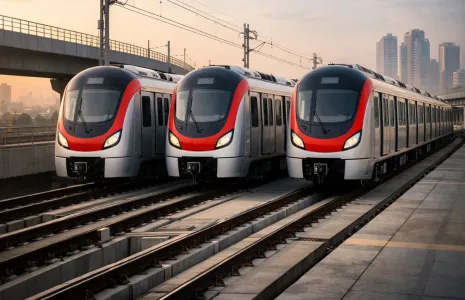
A standout project is the Pune Metro, which features India’s only aluminium-bodied metro coaches. Compared to traditional stainless-steel models used in cities like Bengaluru, these aluminium coaches are lighter and more energy-efficient throughout their operational lifespan—though their initial cost is slightly higher.

“The biggest difference for Pune Metro would actually be the material of the car body, which in this case is aluminium,” said Prithish Choudhary, Deputy Managing Director of Titagarh Rail Systems. The production facility integrates everything from car bodies and HVAC systems to propulsion units and cables. On average, each metro coach sells for around Rs 100 million, with EBITDA margins of roughly 10 per cent.

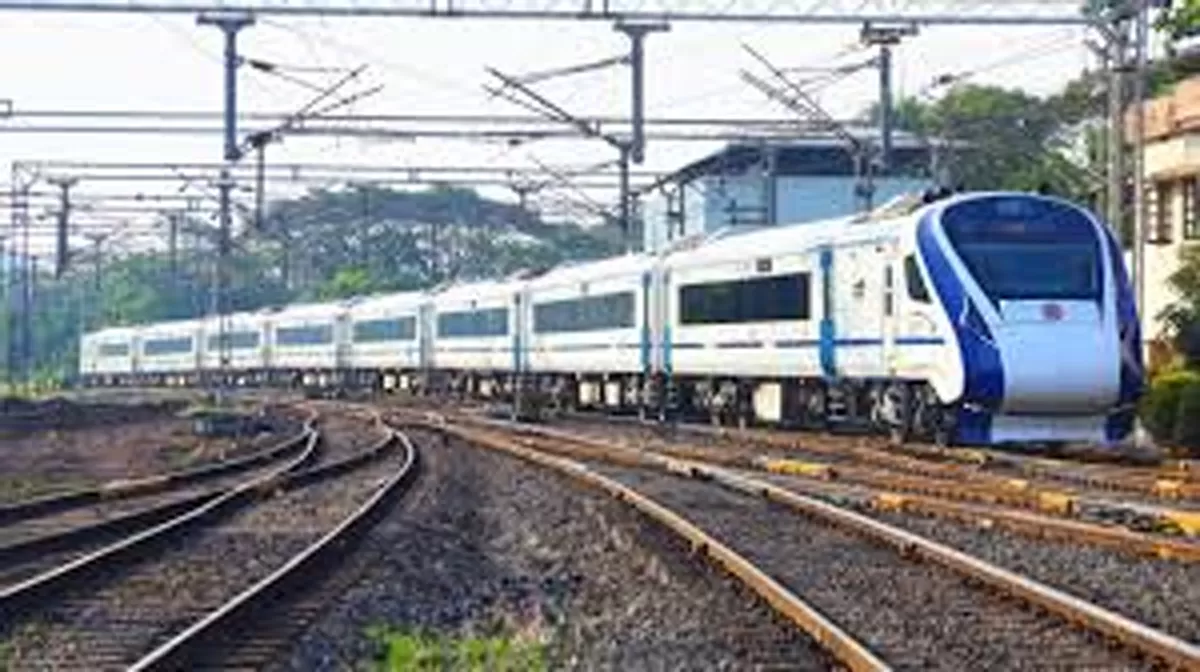
Titagarh is also preparing for the rollout of Vande Bharat’s sleeper variant, with a prototype expected soon and launch targeted for next year.

The firm’s order book stands at about 11,000 wagons, reflecting robust demand from Indian Railways. With the addition of a new wheel manufacturing facility and a strong focus on localisation and timely execution, Titagarh is positioning itself as a crucial player in India’s rail infrastructure growth.

As government capital expenditure on railways continues to increase, private manufacturers like Titagarh Rail Systems are set to play a defining role in advancing India’s mobility and transport efficiency.

Titagarh Rail Systems is intensifying its role in India’s railway modernisation, with significant manufacturing activity underway at its Uttarpara facility near Kolkata. The company is producing lightweight metro coaches and preparing for the sleeper variant of the Vande Bharat Express, reinforcing its presence in the national transport ecosystem.A standout project is the Pune Metro, which features India’s only aluminium-bodied metro coaches. Compared to traditional stainless-steel models used in cities like Bengaluru, these aluminium coaches are lighter and more energy-efficient throughout their operational lifespan—though their initial cost is slightly higher.“The biggest difference for Pune Metro would actually be the material of the car body, which in this case is aluminium,” said Prithish Choudhary, Deputy Managing Director of Titagarh Rail Systems. The production facility integrates everything from car bodies and HVAC systems to propulsion units and cables. On average, each metro coach sells for around Rs 100 million, with EBITDA margins of roughly 10 per cent.Titagarh is also preparing for the rollout of Vande Bharat’s sleeper variant, with a prototype expected soon and launch targeted for next year.The firm’s order book stands at about 11,000 wagons, reflecting robust demand from Indian Railways. With the addition of a new wheel manufacturing facility and a strong focus on localisation and timely execution, Titagarh is positioning itself as a crucial player in India’s rail infrastructure growth.As government capital expenditure on railways continues to increase, private manufacturers like Titagarh Rail Systems are set to play a defining role in advancing India’s mobility and transport efficiency.

Next Story
Infrastructure Urban

ABB to Invest Rs 6.25 Billion to Expand India Manufacturing

ABB recently announced plans to invest approximately Rs 6.25 billion ($75 million) in India during 2026 to expand its manufacturing footprint and research and development capabilities. The investment follows more than $35 million spent in 2025 and reflects the company’s continued focus on strengthening its ‘local-for-local’ strategy in the country.The investment will support ABB’s Electrification, Motion and Automation businesses and expand manufacturing capacity for infrastructure sectors such as renewable energy, metro rail, data centres and industrial applications. Approximately 300..

Next Story
Equipment

Six WOLFF Cranes Handle 60,000 m³ Concrete for German Hospital

Six WOLFF tower cranes are playing a key role in constructing a new hospital complex in Memmingen, Germany, supporting large-scale material handling for the project. The facility is being built on a 7.7-hectare site and will feature six floors, around 480 beds and a gross floor area exceeding 75,000 sq m.Building shell works began recently in February 2025. One WOLFF 6531.12 Cross crane supported early site preparation before being dismantled in autumn 2025, while five remaining cranes continue operations. Over an average deployment period of 16 months, the cranes are expected to move approxim..

Next Story
Equipment

REC Funds Rs 115.6 Million CSR Support for Bihar Eye Hospital

REC recently committed Rs 115.6 million under its Corporate Social Responsibility (CSR) programme for the procurement of clinical and non-clinical equipment at Sankara Eye Hospital in Saharsa, Bihar. The initiative aims to strengthen healthcare infrastructure and improve access to specialised eye care services in the region.A Memorandum of Agreement (MoA) was recently signed between Pradeep Fellows, Executive Director (CSR), REC Limited, and Wg Cdr V. Shankar (Retd), Trustee and Executive Director of Sankara Eye Hospital, at the REC office in the SCOPE Complex, New Delhi.The support is expecte..

Advertisement

Subscribe to Our Newsletter

Get daily newsletters around different themes from Construction world.

STAY CONNECTED

Advertisement

Advertisement

Advertisement