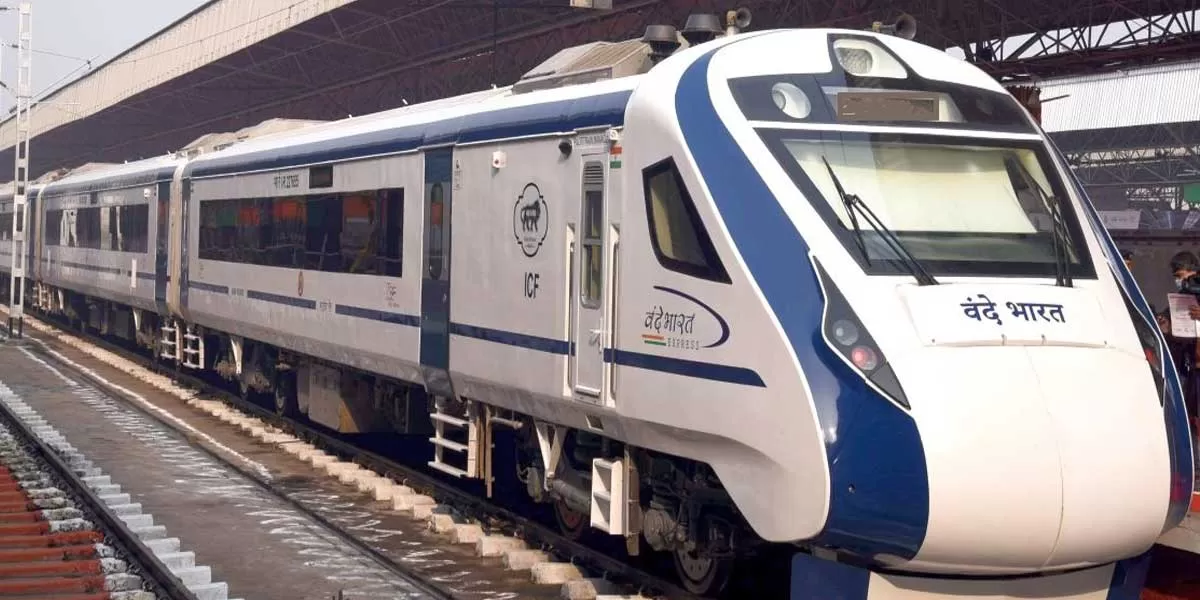
Vande Bharat: Ahmedabad-Mumbai travel in just 4.45 hours
RAILWAYS & METRO RAIL

Vande Bharat: Ahmedabad-Mumbai travel in just 4.45 hours

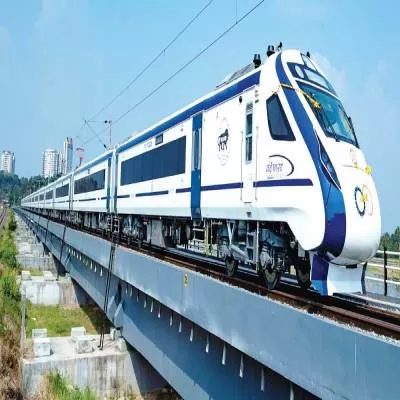
In preparation for a Diwali present to regular visitors to India's financial hub, Indian Railways is preparing the track. According to Western Railway (WR) insiders, if inspections proceed as planned, the Ahmedabad-Mumbai Vande Bharat train is expected to accelerate to 160 km/h, cutting the existing 5.25-hour journey time between these two cities to just 4.45 hours. Currently, trains on this busy route go at 130 kmph on the Vande Bharat. The Mumbai-Vadodara-Delhi corridor is the focus of Mission Raftar, which includes this project. At Vadodara, this railroad connects to Ahmedabad. According to sources in Ahmedabad, a second technical examination will be carried out in July to evaluate characteristics like the train's smoothness of ride when it rumbles at 160 kmph, following the initial inspection's positive results in April. According to officials, the track's present strength of 52 kg per metre enables it to reach 130 kmph. The strength has been increased to 60 kg per metre for the testing. Between Ahmedabad and Mumbai, there are two train pairs that depart in the morning and the afternoon, one of which comes from Gandhinagar. Although the train is capable of reaching 160 mph, officials pointed out that the main obstacle is making sure the track can handle such high speeds. The possibility of livestock accidents is another significant barrier to reaching this speed. In order to remedy this, boundary walls and fences have been erected in several locations along the route. After the July inspection, the railways will have nearly four months to address the issues identified by a technical team, said officials close to the development. Sources said the train departing Ahmedabad at 6.10 a.m. currently reaches Mumbai at 11.35 a.m. After the new speed is implemented, travel time will be reduced by 45 minutes, bringing passengers to Mumbai by 10.50 a.m.

In preparation for a Diwali present to regular visitors to India's financial hub, Indian Railways is preparing the track. According to Western Railway (WR) insiders, if inspections proceed as planned, the Ahmedabad-Mumbai Vande Bharat train is expected to accelerate to 160 km/h, cutting the existing 5.25-hour journey time between these two cities to just 4.45 hours. Currently, trains on this busy route go at 130 kmph on the Vande Bharat. The Mumbai-Vadodara-Delhi corridor is the focus of Mission Raftar, which includes this project. At Vadodara, this railroad connects to Ahmedabad. According to sources in Ahmedabad, a second technical examination will be carried out in July to evaluate characteristics like the train's smoothness of ride when it rumbles at 160 kmph, following the initial inspection's positive results in April. According to officials, the track's present strength of 52 kg per metre enables it to reach 130 kmph. The strength has been increased to 60 kg per metre for the testing. Between Ahmedabad and Mumbai, there are two train pairs that depart in the morning and the afternoon, one of which comes from Gandhinagar. Although the train is capable of reaching 160 mph, officials pointed out that the main obstacle is making sure the track can handle such high speeds. The possibility of livestock accidents is another significant barrier to reaching this speed. In order to remedy this, boundary walls and fences have been erected in several locations along the route. After the July inspection, the railways will have nearly four months to address the issues identified by a technical team, said officials close to the development. Sources said the train departing Ahmedabad at 6.10 a.m. currently reaches Mumbai at 11.35 a.m. After the new speed is implemented, travel time will be reduced by 45 minutes, bringing passengers to Mumbai by 10.50 a.m.

Next Story
Infrastructure Transport

MMRDA advances 250 m on Orange Gate–Marine Drive tunnel

The Mumbai Metropolitan Region Development Authority (MMRDA) has completed 250 m of underground tunnelling for the Orange Gate–Marine Drive Urban Road Tunnel using India’s largest slurry shield tunnel boring machine (TBM) deployed for an urban road project.The project involves twin tunnels extending over 7 km beneath critical transport corridors, including Central Railway, Western Railway and Metro Line 3. The work requires high-precision engineering to navigate densely developed urban infrastructure.Once completed, the tunnel is expected to reduce travel time between Orange Gate and Marin..

Next Story
Infrastructure Urban

Hindustan Zinc Pays Rs 188.46 Billion in FY26

Hindustan Zinc contributed Rs 188.46 billion to the public exchequer in FY 2025-26, according to its 9th Tax Transparency Report. The contribution, equivalent to 46 per cent of the company’s revenue, included direct and indirect taxes, government royalties, dividends to the Government of India, withholding taxes and other statutory levies.The company’s five-year cumulative contribution to the exchequer stood at Rs 915.72 billion. In FY26, Hindustan Zinc reported revenue of Rs 408.44 billion, EBITDA of Rs 221.62 billion and profit after tax of Rs 138.32 billion. It also achieved its highest..

Next Story
Infrastructure Urban

World of Concrete India 2026 Opens in Mumbai

Informa Markets in India will host the 12th edition of World of Concrete India 2026 from 3–5 June 2026 at the Bombay Exhibition Centre, Mumbai. The specialised B2B exhibition will bring together manufacturers, suppliers, contractors, developers, architects, consultants, infrastructure companies, project leaders and government stakeholders.The event is expected to feature over 350 brands and more than 18,000 trade professionals. It will cover concrete and cement, dry mortar, precast technologies, formwork, construction chemicals, industrial and commercial flooring, scaffolding, safety solutio..

Advertisement

Subscribe to Our Newsletter

Get daily newsletters around different themes from Construction world.

STAY CONNECTED

Advertisement

Advertisement

Advertisement

-->