Vizag Metro: Transforming transportation in Andhra Pradesh's biggest city
RAILWAYS & METRO RAIL

Vizag Metro: Transforming transportation in Andhra Pradesh's biggest city

Visakhapatnam, the largest city in Andhra Pradesh and the prospective Executive capital of the state, is in dire need of a metro rail system to address the escalating transportation requirements of its residents.

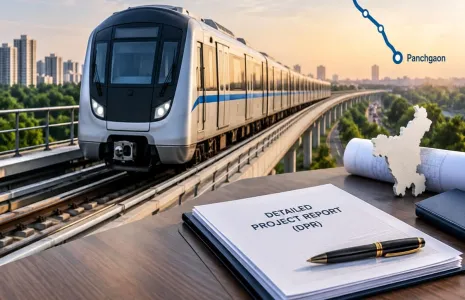
The development of the Vizag Metro is a collaborative effort involving the government of India, the government of Andhra Pradesh, and the IL&FS Engineering and Construction Limited. The planning and Detailed Project Report (DPR) for the Vizag Metro have been meticulously prepared by the Urban Mass Transit Company (UMTC), selected as the project's consulting entity.

UJM Rao, the Managing Director of the AP Metro Rail Corporation (APMRC), expresses optimism about commencing work soon, stating, "We have presented the final DPR for the construction of the Vizag Metro Rail to the State government. Once the project gains approval from the State Cabinet, we will forward it to the Ministry of Housing and Urban Affairs (MoHUA) for clearance."

The funding for the Vizag Metro project will be a joint effort, with the Government of India contributing 20% of the project cost as Viability Gap Funding (VGF), the State government contributing another 20%, and the remaining cost being invested by private investors under the Public-Private Partnership (PPP) model.

The proposed metro corridors are as follows:

1. A 64.09 km corridor from Kurmannapalem Junction to Bhogapuram via Gajuwaka and Anandapuram, initially extending to Kommadi Junction (34 km). After the construction of Bhogapuram International Airport, the corridor will be further extended to provide seamless connectivity to air passengers.

2. A 6.5 km corridor from Thatichetlapalem Junction (current National Highway) to Park Hotel Junction via Railway New Colony, Railway Station, Old Jail Road, Vivekananda statue junction, RTC Complex, Sampath Vinayaka temple road, and AU Out Gate.

3. A 5.5 km corridor from Gurudwara junction (Santhipuram) to Old Head Post Office (OHPO) junction via Diamond Park, LIC, Dabagardens, City Police Commissioner’s Office, and Poorna Market backside road.

To optimise cost-effectiveness, the project has chosen the Light Metro system with an elevated corridor design. Land acquisition poses no significant challenges in any of the corridors, except for OHPO junction in the third corridor. Discussions have already taken place with officials from the State Bank of India (SBI) and a local shipping company to address potential property concerns, and their responses have been positive, according to Rao.

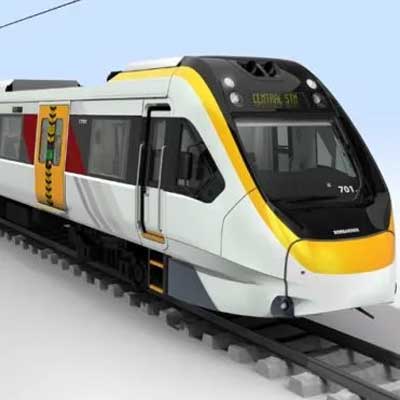
The Vizag Metro aims to offer an economical, rapid, comfortable, and eco-friendly mode of transportation to the public. The maximum waiting time between two trains will be just 8 minutes for each corridor, with an initial deployment of two coaches. The number of coaches can be increased as demand dictates, further enhancing the metro's capacity to serve the community.

Visakhapatnam, the largest city in Andhra Pradesh and the prospective Executive capital of the state, is in dire need of a metro rail system to address the escalating transportation requirements of its residents.The development of the Vizag Metro is a collaborative effort involving the government of India, the government of Andhra Pradesh, and the IL&FS Engineering and Construction Limited. The planning and Detailed Project Report (DPR) for the Vizag Metro have been meticulously prepared by the Urban Mass Transit Company (UMTC), selected as the project's consulting entity.UJM Rao, the Managing Director of the AP Metro Rail Corporation (APMRC), expresses optimism about commencing work soon, stating, We have presented the final DPR for the construction of the Vizag Metro Rail to the State government. Once the project gains approval from the State Cabinet, we will forward it to the Ministry of Housing and Urban Affairs (MoHUA) for clearance.The funding for the Vizag Metro project will be a joint effort, with the Government of India contributing 20% of the project cost as Viability Gap Funding (VGF), the State government contributing another 20%, and the remaining cost being invested by private investors under the Public-Private Partnership (PPP) model.The proposed metro corridors are as follows:1. A 64.09 km corridor from Kurmannapalem Junction to Bhogapuram via Gajuwaka and Anandapuram, initially extending to Kommadi Junction (34 km). After the construction of Bhogapuram International Airport, the corridor will be further extended to provide seamless connectivity to air passengers.2. A 6.5 km corridor from Thatichetlapalem Junction (current National Highway) to Park Hotel Junction via Railway New Colony, Railway Station, Old Jail Road, Vivekananda statue junction, RTC Complex, Sampath Vinayaka temple road, and AU Out Gate.3. A 5.5 km corridor from Gurudwara junction (Santhipuram) to Old Head Post Office (OHPO) junction via Diamond Park, LIC, Dabagardens, City Police Commissioner’s Office, and Poorna Market backside road.To optimise cost-effectiveness, the project has chosen the Light Metro system with an elevated corridor design. Land acquisition poses no significant challenges in any of the corridors, except for OHPO junction in the third corridor. Discussions have already taken place with officials from the State Bank of India (SBI) and a local shipping company to address potential property concerns, and their responses have been positive, according to Rao.The Vizag Metro aims to offer an economical, rapid, comfortable, and eco-friendly mode of transportation to the public. The maximum waiting time between two trains will be just 8 minutes for each corridor, with an initial deployment of two coaches. The number of coaches can be increased as demand dictates, further enhancing the metro's capacity to serve the community.

Related Stories

Gold Stories

Next Story
Infrastructure Energy

Asian Energy Services Q1 FY27 PAT Rises 129 Per Cent

Asian Energy Services Limited reported a 129 per cent year-on-year rise in net profit to Rs 128 million for Q1 FY27, compared with the corresponding quarter last year.Revenue increased 135 per cent year-on-year to Rs 2.71 billion, supported by continued momentum across its services business, disciplined execution and contributions from domestic and international operations. EBITDA grew 81 per cent year-on-year during the quarter.As of June 30, 2026, the company’s standalone order book stood at Rs 17.54 billion, with around 60 per cent coming from oil and gas services and 40 per cent from min..

Next Story
Infrastructure Urban

BioBTX to Build First Commercial-Scale Circular Chemicals Plant

Dutch circular chemistry technology developer BioBTX is building what it says will be the world’s first commercial-scale plant to convert mixed plastic waste into high-quality aromatic chemicals using its proprietary Integrated Catalytic Cracking Process (ICCP) technology.The facility will be built at Chemical Park Delfzijl on the northern coast of the Netherlands and is expected to create 35 jobs. Covestro, which has been a shareholder and strategic partner of BioBTX since 2024, holds a mid-single-digit million-euro investment in the company.BioBTX’s ICCP technology uses catalytic pyrolys..

Next Story
Real Estate

Awfis Q1 FY27 PAT Jumps 140% as Revenue Rises 27%

Awfis Space Solutions reported a 140 per cent year-on-year rise in consolidated profit after tax (PAT) to Rs 240 million for Q1 FY27, compared with Rs 100 million in the corresponding quarter last year.Revenue from operations increased 27 per cent to Rs 4.25 billion from Rs 3.35 billion, while EBITDA rose 28 per cent to Rs 1.62 billion. EBITDA margin improved to 38.2 per cent from 37.8 per cent. Profit before tax increased 135 per cent to Rs 240 million.The company's co-working business recorded 27 per cent year-on-year growth, supported by demand from enterprises, Global Capability Centres (G..

Advertisement

Subscribe to Our Newsletter

Get daily newsletters around different themes from Construction world.

STAY CONNECTED

Advertisement