


+
Centre To Set Up Bureau Of Port Security
PORTS & SHIPPING

Centre To Set Up Bureau Of Port Security

The government will constitute a dedicated Bureau of Port Security (BoPS) to oversee the security of vessels and port facilities across India, official sources said on Friday. The move is aimed at strengthening maritime security through a centralised and specialised institutional framework.

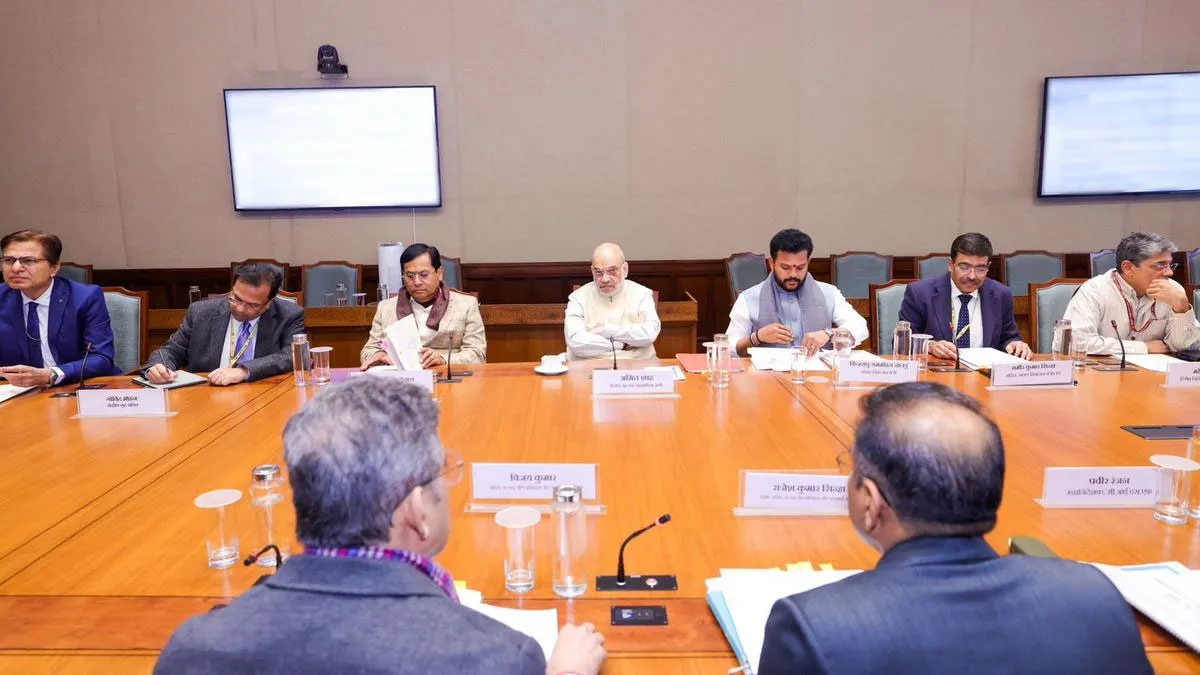
Union Home Minister Amit Shah chaired a meeting on the constitution of BoPS, which was attended by Sarbananda Sonowal, Union Minister for Ports, Shipping and Waterways, and Ram Mohan Naidu, Minister of Civil Aviation. During the discussions, Mr Shah underlined the need for a robust and future-ready port security architecture, directing that security measures be implemented in a graded and risk-based manner, factoring in vulnerabilities, trade potential, geographic location and other relevant parameters.

According to a statement issued by the Ministry of Home Affairs, BoPS will focus on the timely analysis, collection and exchange of security-related information. A dedicated cybersecurity division will be established within the Bureau to protect port information technology infrastructure from emerging digital threats.

BoPS will be constituted as a statutory body under Section 13 of the newly promulgated Merchant Shipping Act, 2025. Headed by a Director General, the Bureau will function under the Ministry of Ports, Shipping and Waterways and will be responsible for regulatory and oversight functions related to the security of ships and port facilities. The structure of BoPS is being modelled on the Bureau of Civil Aviation Security.

The Bureau will be led by an Indian Police Service officer at Pay Level-15. During a one-year transition period, the Director General of Shipping will serve as the Director General of BoPS.

Earlier, the Central Industrial Security Force was designated as a Recognised Security Organisation for seaport facilities, with responsibility for conducting security assessments and preparing port security plans. The CISF has also been tasked with training and building the capacity of private security agencies engaged in port security. These agencies will be certified, and regulatory measures will be introduced to ensure that only licensed operators function in the sector.

The meeting also noted that best practices and lessons from the maritime security framework could be replicated in the aviation security domain to enhance overall national transport security.

The government will constitute a dedicated Bureau of Port Security (BoPS) to oversee the security of vessels and port facilities across India, official sources said on Friday. The move is aimed at strengthening maritime security through a centralised and specialised institutional framework. Union Home Minister Amit Shah chaired a meeting on the constitution of BoPS, which was attended by Sarbananda Sonowal, Union Minister for Ports, Shipping and Waterways, and Ram Mohan Naidu, Minister of Civil Aviation. During the discussions, Mr Shah underlined the need for a robust and future-ready port security architecture, directing that security measures be implemented in a graded and risk-based manner, factoring in vulnerabilities, trade potential, geographic location and other relevant parameters. According to a statement issued by the Ministry of Home Affairs, BoPS will focus on the timely analysis, collection and exchange of security-related information. A dedicated cybersecurity division will be established within the Bureau to protect port information technology infrastructure from emerging digital threats. BoPS will be constituted as a statutory body under Section 13 of the newly promulgated Merchant Shipping Act, 2025. Headed by a Director General, the Bureau will function under the Ministry of Ports, Shipping and Waterways and will be responsible for regulatory and oversight functions related to the security of ships and port facilities. The structure of BoPS is being modelled on the Bureau of Civil Aviation Security. The Bureau will be led by an Indian Police Service officer at Pay Level-15. During a one-year transition period, the Director General of Shipping will serve as the Director General of BoPS. Earlier, the Central Industrial Security Force was designated as a Recognised Security Organisation for seaport facilities, with responsibility for conducting security assessments and preparing port security plans. The CISF has also been tasked with training and building the capacity of private security agencies engaged in port security. These agencies will be certified, and regulatory measures will be introduced to ensure that only licensed operators function in the sector. The meeting also noted that best practices and lessons from the maritime security framework could be replicated in the aviation security domain to enhance overall national transport security.

Related Stories

Gold Stories
Next Story
Infrastructure Urban

KONE Opens India's First Digital Experience Centre in Pune

KONE, a global elevator and escalator manufacturer, has inaugurated its first Digital Experience Centre (DEC) in India, located in Pune. The facility aims to showcase how artificial intelligence (AI), connectivity and data-driven technologies can enhance customer experiences and improve building operations.The centre was inaugurated by Jussi Herlin, Executive Vice Chair, KONE Corporation; Philippe Delorme, President and CEO, KONE; and Nandan Nilekani, Co-founder and Chairman of the Board, Infosys.Designed as an interactive customer environment, the facility demonstrates digital solutions cover..

Next Story
Infrastructure Urban

CII GreenCo Launches Circularity Guidelines for Indian Industry

The Confederation of Indian Industry (CII) GreenCo Council has launched the CII GreenCo Circularity Guidelines – Pilot Version at the 17th CII GreenCo Waste & Resource Management Summit 2026 in Chennai. The initiative aims to strengthen resource efficiency, waste reduction and circular economy practices across Indian manufacturing and process industries.The guidelines introduce a structured framework with circularity indices covering raw materials, consumables, packaging and other resource inputs. These indicators will help industries assess existing practices, identify opportunities to ..

Next Story
Infrastructure Energy

Global Electronics Association Launches IPC-1783-CO2E Standard

The Global Electronics Association has introduced IPC-1783-CO2E, a new international standard aimed at improving consistency, transparency and comparability in product carbon footprint reporting across the electronics manufacturing industry.The standard, titled International Standard for Data Collection and Reporting of CO2 Equivalent (CO2e) Emissions for the Electronics Manufacturing Supply Chain, provides industry-specific guidance for collecting, estimating and reporting carbon emissions data.With increasing regulatory requirements and customer expectations, electronics manufacturers face c..

Advertisement

Subscribe to Our Newsletter

Get daily newsletters around different themes from Construction world.

STAY CONNECTED

Advertisement

SPECIAL OFFER
QR Code