Development of Green Ports and Maritime Infrastructure
PORTS & SHIPPING

Development of Green Ports and Maritime Infrastructure

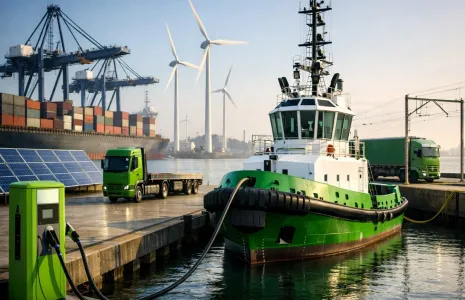
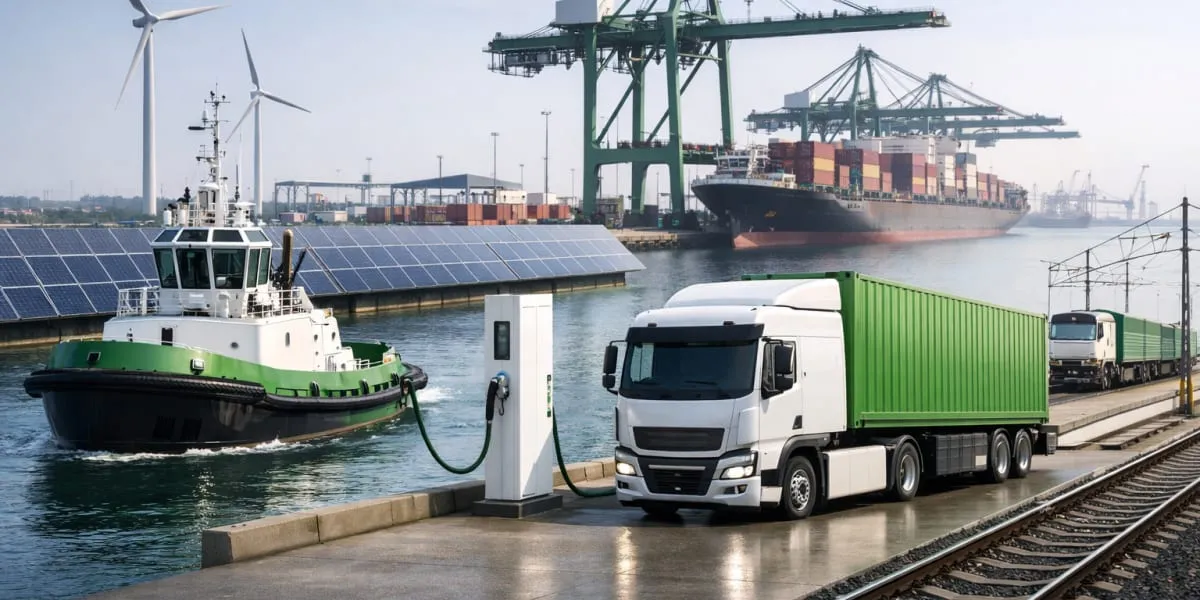
Major ports in India have undertaken initiatives under the Green Tug Transition Programme (GTTP) and the Harit Sagar Green Port Guidelines to reduce carbon intensity. Measures include transition from diesel powered tugs to electric and hybrid tugs, adoption of renewable energy and electrification of port equipment, vehicles and railway tracks, deployment of zero emission trucks and onshore power supply systems. Four major ports, Deendayal Port, Jawaharlal Nehru Port, Visakhapatnam Port and V.O. Chidambaranar Port, have placed work orders for electric tugs.

The Ministry of New and Renewable Energy has recognised Deendayal Port Authority in Gujarat, Paradip Port Authority in Odisha and V.O. Chidambaranar Port Authority in Tamil Nadu as Green Hydrogen Hubs under the National Green Hydrogen Mission. All ports are providing shore to ship power facilities to smaller crafts. Incentives amounting to Rs 533.9 mn have been provided to 109 ship recycling yards through the Ferrous Scrap Development Fund up to 2026.

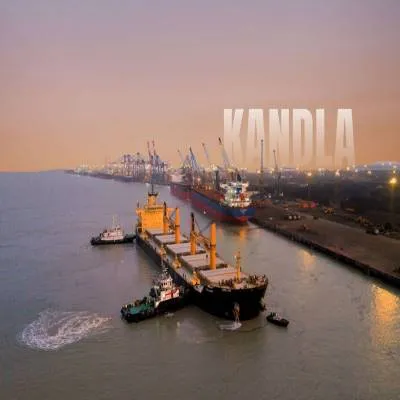
Deendayal Port has commissioned a one megawatt (MW) electrolyser based green hydrogen plant and has obtained a Port Readiness Level of six, progressing to seven, for Kandla Port for bio methanol bunkering operations. The port has allotted 3,400 acres to developers for Green Hydrogen and Green Ammonia projects and has developed a jetty with capacity of three point five million (mn) tonne (t) per annum compatible with handling green ammonia. These assets aim to attract private investment for fuel and bunker supply chains.

V.O. Chidambaranar Port has allotted 205.72 acres for Green Hydrogen and Green Ammonia projects, commissioned a 10 Nm3 capacity pilot green hydrogen plant in April 2025 and is developing a green methanol bunkering facility with two 750 cubic metre tanks. The government has approved development of a Green Hydrogen and Green Ammonia handling jetty at Paradip Port through a public private partnership with an estimated cost of Rs 7.9717 billion (bn) and a cargo handling capacity of four million (mn) tonne (t) per annum. The Union Minister of Ports, Shipping and Waterways provided these details in a written reply to the Lok Sabha.

Major ports in India have undertaken initiatives under the Green Tug Transition Programme (GTTP) and the Harit Sagar Green Port Guidelines to reduce carbon intensity. Measures include transition from diesel powered tugs to electric and hybrid tugs, adoption of renewable energy and electrification of port equipment, vehicles and railway tracks, deployment of zero emission trucks and onshore power supply systems. Four major ports, Deendayal Port, Jawaharlal Nehru Port, Visakhapatnam Port and V.O. Chidambaranar Port, have placed work orders for electric tugs. The Ministry of New and Renewable Energy has recognised Deendayal Port Authority in Gujarat, Paradip Port Authority in Odisha and V.O. Chidambaranar Port Authority in Tamil Nadu as Green Hydrogen Hubs under the National Green Hydrogen Mission. All ports are providing shore to ship power facilities to smaller crafts. Incentives amounting to Rs 533.9 mn have been provided to 109 ship recycling yards through the Ferrous Scrap Development Fund up to 2026. Deendayal Port has commissioned a one megawatt (MW) electrolyser based green hydrogen plant and has obtained a Port Readiness Level of six, progressing to seven, for Kandla Port for bio methanol bunkering operations. The port has allotted 3,400 acres to developers for Green Hydrogen and Green Ammonia projects and has developed a jetty with capacity of three point five million (mn) tonne (t) per annum compatible with handling green ammonia. These assets aim to attract private investment for fuel and bunker supply chains. V.O. Chidambaranar Port has allotted 205.72 acres for Green Hydrogen and Green Ammonia projects, commissioned a 10 Nm3 capacity pilot green hydrogen plant in April 2025 and is developing a green methanol bunkering facility with two 750 cubic metre tanks. The government has approved development of a Green Hydrogen and Green Ammonia handling jetty at Paradip Port through a public private partnership with an estimated cost of Rs 7.9717 billion (bn) and a cargo handling capacity of four million (mn) tonne (t) per annum. The Union Minister of Ports, Shipping and Waterways provided these details in a written reply to the Lok Sabha.

Next Story
Real Estate

Indian real estate attracts USD 1.4 bn institutional investments in Q1 2026: Vestian

Institutional investments in India’s real estate sector touched USD 1.4 billion in Q1 2026, marking the highest first-quarter inflow since 2022, according to Vestian. While investments fell 62 per cent quarter-on-quarter due to an exceptionally high base in the previous quarter, they rose 74 per cent compared to the same period last year, reflecting sustained investor confidence despite rising geopolitical and macroeconomic challenges.Commercial real estate remained the key driver of investment activity during the quarter, accounting for 80 per cent of total inflows, sharply higher than 38 p..

Next Story
Infrastructure Transport

VECV crosses 1 lakh annual vehicle sales milestone in FY26

VE Commercial Vehicles (VECV), a joint venture between Volvo Group and Eicher Motors, has surpassed the 1 lakh annual sales mark in FY 2025–26, recording its highest-ever commercial vehicle sales performance. The company said it sold more than 100,000 vehicles during the year, marking a major milestone aligned with the original vision of the Volvo–Eicher joint venture.The strong performance was supported by demand across categories. Light and Medium Duty (LMD) trucks contributed 47,789 units, accounting for 46.1 per cent of total sales. Heavy Duty (HD) trucks recorded 26,867 units (25.9 pe..

Next Story
Technology

Rodic Digital & Advisory partners SatSure to deploy EO intelligence in public sector

Rodic Digital & Advisory (RDA), the strategic advisory and digital transformation arm of Rodic Consultants, has signed a strategic cooperation Memorandum of Understanding (MoU) with SatSure to jointly pursue opportunities in India’s public sector. The collaboration aims to integrate high-resolution Earth Observation (EO) data and geospatial AI into government workflows to strengthen monitoring, compliance, and operational decision-making across key sectors.The partnership combines SatSure’s Earth intelligence capabilities with RDA’s expertise in government digital transformation and ..

Advertisement

Subscribe to Our Newsletter

Get daily newsletters around different themes from Construction world.

STAY CONNECTED

Advertisement

Advertisement

Advertisement