Government Approves Redevelopment Of Berth Nine At New Mangalore Port
PORTS & SHIPPING

Government Approves Redevelopment Of Berth Nine At New Mangalore Port

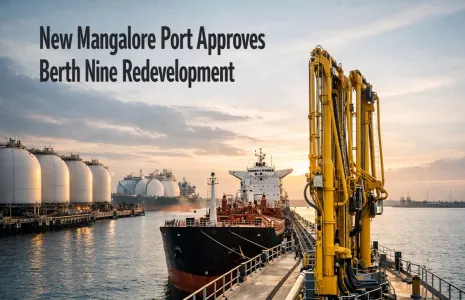
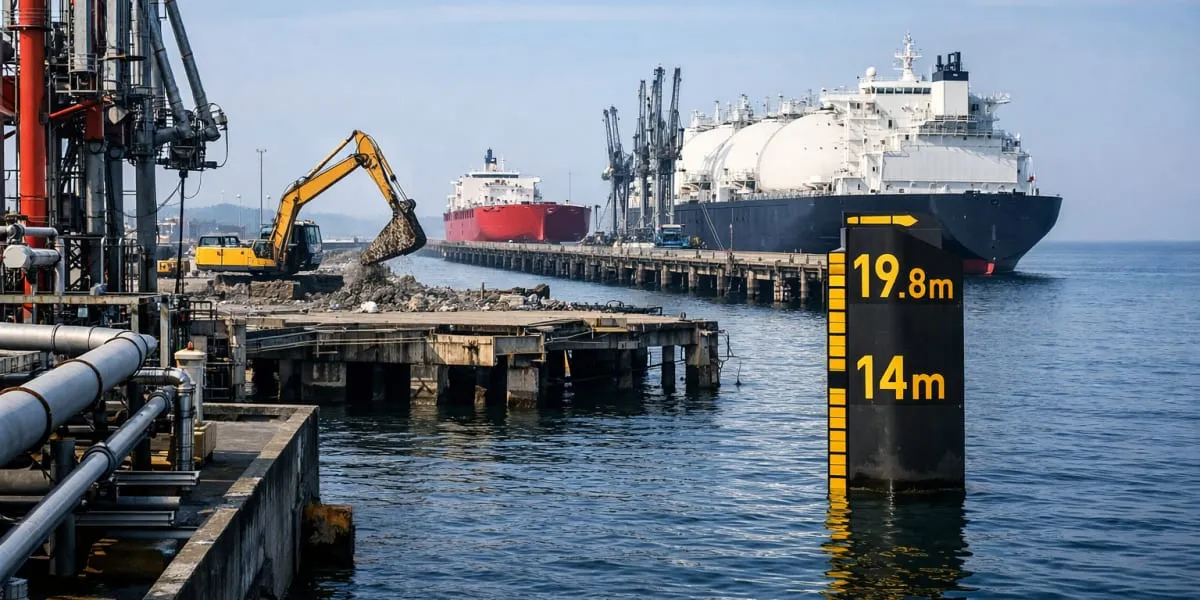
The government has approved the New Mangalore Port Authority proposal to redevelop Berth Nine for handling liquid bulk cargo on a public-private partnership basis under the DBFOT model, with implementation conveyed on 25 March 2026. The redevelopment will involve dismantling legacy infrastructure and increasing the berth draft from 10.5 metres to 14 metres, with a future-ready provision up to 19.8 metres to accommodate vessels up to 200,000 DWT including Very Large Gas Carriers.

The project is estimated to cost Rs 4.38 billion (bn) and will be implemented by a private concessionaire selected through an open competitive bidding process under a single-stage, two-envelope system. The redevelopment is intended to deliver a handling capacity of 10.90 MTPA and the concessionaire will commit to a minimum guaranteed cargo of 7.63 MTPA by the fifth year of operations, with a two year construction period and a concession term of 30 years inclusive of construction.

It will replace nearly 50-year-old structures with modern marine infrastructure designed for a 50-year structural life, and will strengthen the port's ability to meet regional demand for liquid bulk, particularly energy commodities. The project is expected to improve economies of scale by enabling larger vessels and the handling of VLGCs, reduce logistics costs, and enhance overall port competitiveness through mechanisation and automated mooring systems.

Operational efficiency improvements will include installation of high-capacity marine unloading arms and integrated control systems as well as modern firefighting infrastructure and nitrogen generation skids to ensure safe handling of hazardous liquid cargo. Financially, the redevelopment will provide stable revenue streams for the port authority through fixed royalty payments tied to cargo volumes alongside mandatory guarantees, and it will reinforce New Mangalore Port as a key maritime gateway for the Karnataka and Kerala hinterlands supporting trade and energy supply chain resilience.

The government has approved the New Mangalore Port Authority proposal to redevelop Berth Nine for handling liquid bulk cargo on a public-private partnership basis under the DBFOT model, with implementation conveyed on 25 March 2026. The redevelopment will involve dismantling legacy infrastructure and increasing the berth draft from 10.5 metres to 14 metres, with a future-ready provision up to 19.8 metres to accommodate vessels up to 200,000 DWT including Very Large Gas Carriers. The project is estimated to cost Rs 4.38 billion (bn) and will be implemented by a private concessionaire selected through an open competitive bidding process under a single-stage, two-envelope system. The redevelopment is intended to deliver a handling capacity of 10.90 MTPA and the concessionaire will commit to a minimum guaranteed cargo of 7.63 MTPA by the fifth year of operations, with a two year construction period and a concession term of 30 years inclusive of construction. It will replace nearly 50-year-old structures with modern marine infrastructure designed for a 50-year structural life, and will strengthen the port's ability to meet regional demand for liquid bulk, particularly energy commodities. The project is expected to improve economies of scale by enabling larger vessels and the handling of VLGCs, reduce logistics costs, and enhance overall port competitiveness through mechanisation and automated mooring systems. Operational efficiency improvements will include installation of high-capacity marine unloading arms and integrated control systems as well as modern firefighting infrastructure and nitrogen generation skids to ensure safe handling of hazardous liquid cargo. Financially, the redevelopment will provide stable revenue streams for the port authority through fixed royalty payments tied to cargo volumes alongside mandatory guarantees, and it will reinforce New Mangalore Port as a key maritime gateway for the Karnataka and Kerala hinterlands supporting trade and energy supply chain resilience.

Next Story
Equipment

MYCRANE Crosses 1,000 Customers in India

MYCRANE, the global platform for crane rental and purchase, has achieved major commercial milestones in India, reinforcing the country’s position as one of its fastest-growing strategic markets. The company has surpassed 1,000 registered customers and 1,000 crane suppliers nationwide, while completing more than 100 paid orders.The growth reflects rising adoption of digital procurement solutions across India’s construction, infrastructure, energy and industrial sectors. Equipment sourced through the platform is supporting projects across the country, with several leading contractors and EPC..

Next Story
Infrastructure Urban

AMTOE 2026 Opens Global Machine Tool Sourcing Hub

The Asian Machine Tool Online Exhibition 2026 (AMTOE 2026) has officially opened as a B2B sourcing platform connecting global buyers with verified Asian suppliers across the machine tool and manufacturing sector. The exhibition will run until 31 October 2026 through a hybrid online and offline model, offering extended sourcing and business networking opportunities.Co-organised by AsianNet and TradeAsia, the event aims to strengthen links between Asian manufacturers and international importers while improving cross-border procurement efficiency and supplier matching.Since launching in 2022, AMT..

Next Story
Infrastructure Energy

Vedanta Lifts Renewable Energy Use by Over 50%

On World Earth Day, Vedanta Limited announced that its renewable energy usage rose by over 50 per cent year on year to 3.97 billion units in FY26, helping avoid 3 million tonnes of carbon dioxide emissions.The company said its portfolio of metals, minerals, power, and oil & gas continues to support advanced manufacturing, electrification, energy transition and clean technology. Aluminium, copper and silver remain critical for applications such as mobility, power transmission, renewable infrastructure and solar photovoltaics, while iron, steel and zinc continue to support energy infrastruct..

Advertisement

Subscribe to Our Newsletter

Get daily newsletters around different themes from Construction world.

STAY CONNECTED

Advertisement

Advertisement

Advertisement