


+
India Launches Industry 4.0 Shipbuilding at Cochin
PORTS & SHIPPING

India Launches Industry 4.0 Shipbuilding at Cochin

Union Minister of Ports, Shipping and Waterways, Shri Sarbananda Sonowal, visited Cochin Shipyard Limited (CSL) to inaugurate advanced shipbuilding facilities aimed at accelerating India’s maritime capabilities under the vision of Atmanirbhar Bharat.

During the visit, the Minister unveiled the ProArc CNC Plasma Cum Oxy Fuel Plate Cutting Machine—an Industry 4.0-ready, IoT-enabled system designed to enhance shipbuilding precision, efficiency, and real-time monitoring. The move aligns with the government’s revamped Shipbuilding Financial Assistance Policy (SBFAP) 2.0 and strengthens India's domestic manufacturing prowess.

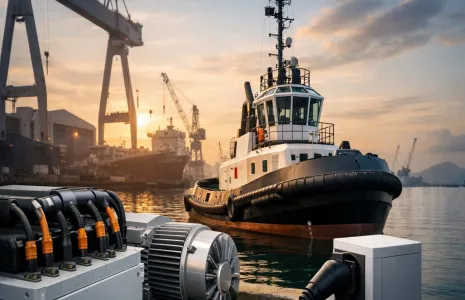
Shri Sonowal also presided over the steel-cutting ceremony for two hybrid Green Tugs under the Green Tug Transition Programme (GTTP). CSL is the first Indian shipyard to construct these tugs, with 16 such vessels planned across major Indian ports. The initiative is being executed in collaboration with global experts including Robert Allan Ltd. and the Indian Register of Shipping.

“The launch of Industry 4.0-ready facilities and the Green Tug Transition Programme marks a transformative leap in India's shipbuilding and green maritime journey,” said Shri Sonowal. “These initiatives represent India's resolve to lead the global green maritime movement.”

Highlighting CSL’s legacy, the Minister noted its role in building the iconic INS Vikrant, delivering over 175 vessels, and completing more than 2,500 ship repairs. He also reviewed progress on India’s largest Trailer Suction Hopper Dredger (12,000 cu.m), being built in partnership with IHC Holland for the Dredging Corporation of India. The dredger is expected to reduce foreign dependency and boost coastal infrastructure in line with the Maritime Amritkaal Vision, 2047.

Emphasizing human resource development, Shri Sonowal praised CSL’s USHUS Marine Startup Programme and its collaboration with Maersk and ASAP Kerala for skilling the future maritime workforce. Investments in AI, deep-tech, and renewables through these platforms are seen as key to job creation and global leadership in marine innovation.

The visit follows the Union Budget 2025–26 announcement of a Rs 250 billion Maritime Development Fund (MDF), which aims to mobilize Rs 1.5 trillion in maritime investments by 2030. With a 46% rise in the Ministry's budget allocation and a 143% increase in R&D funding, the government has made its strongest financial commitment yet to maritime growth.

Shri Sonowal also pointed to key legislative reforms like the Merchant Shipping Bill, 2024 and Coastal Shipping Bill, 2024, which aim to streamline regulations, promote Indian-flagged vessels, enhance environmental safeguards, and uplift seafarer welfare.

“Cochin Shipyard Limited stands as the Pride of India,” Shri Sonowal declared, “and under Prime Minister Narendra Modi ji’s leadership, India is anchoring a new era of maritime transformation.”

Union Minister of Ports, Shipping and Waterways, Shri Sarbananda Sonowal, visited Cochin Shipyard Limited (CSL) to inaugurate advanced shipbuilding facilities aimed at accelerating India’s maritime capabilities under the vision of Atmanirbhar Bharat. During the visit, the Minister unveiled the ProArc CNC Plasma Cum Oxy Fuel Plate Cutting Machine—an Industry 4.0-ready, IoT-enabled system designed to enhance shipbuilding precision, efficiency, and real-time monitoring. The move aligns with the government’s revamped Shipbuilding Financial Assistance Policy (SBFAP) 2.0 and strengthens India's domestic manufacturing prowess. Shri Sonowal also presided over the steel-cutting ceremony for two hybrid Green Tugs under the Green Tug Transition Programme (GTTP). CSL is the first Indian shipyard to construct these tugs, with 16 such vessels planned across major Indian ports. The initiative is being executed in collaboration with global experts including Robert Allan Ltd. and the Indian Register of Shipping. “The launch of Industry 4.0-ready facilities and the Green Tug Transition Programme marks a transformative leap in India's shipbuilding and green maritime journey,” said Shri Sonowal. “These initiatives represent India's resolve to lead the global green maritime movement.” Highlighting CSL’s legacy, the Minister noted its role in building the iconic INS Vikrant, delivering over 175 vessels, and completing more than 2,500 ship repairs. He also reviewed progress on India’s largest Trailer Suction Hopper Dredger (12,000 cu.m), being built in partnership with IHC Holland for the Dredging Corporation of India. The dredger is expected to reduce foreign dependency and boost coastal infrastructure in line with the Maritime Amritkaal Vision, 2047. Emphasizing human resource development, Shri Sonowal praised CSL’s USHUS Marine Startup Programme and its collaboration with Maersk and ASAP Kerala for skilling the future maritime workforce. Investments in AI, deep-tech, and renewables through these platforms are seen as key to job creation and global leadership in marine innovation. The visit follows the Union Budget 2025–26 announcement of a Rs 250 billion Maritime Development Fund (MDF), which aims to mobilize Rs 1.5 trillion in maritime investments by 2030. With a 46% rise in the Ministry's budget allocation and a 143% increase in R&D funding, the government has made its strongest financial commitment yet to maritime growth. Shri Sonowal also pointed to key legislative reforms like the Merchant Shipping Bill, 2024 and Coastal Shipping Bill, 2024, which aim to streamline regulations, promote Indian-flagged vessels, enhance environmental safeguards, and uplift seafarer welfare. “Cochin Shipyard Limited stands as the Pride of India,” Shri Sonowal declared, “and under Prime Minister Narendra Modi ji’s leadership, India is anchoring a new era of maritime transformation.”

Related Stories

Gold Stories
Next Story
Real Estate

Peninsula Land launches 19 luxury villas in Pune

Pune’s residential landscape is witnessing a shift as premium homebuyers increasingly seek larger spaces, privacy and independent living options beyond high-rise apartments. Addressing this demand, Peninsula Land Limited, part of the Ashok Piramal Group, has launched AshokVillas, an exclusive collection of 19 premium furnished villas in Gahunje, Pune.The development combines the independence of a standalone home with the convenience and security of a managed residential community. Designed around low-density horizontal living, AshokVillas offers residents private spaces while providing acces..

Next Story
Infrastructure Urban

MyBranch Expands South India Network with 16 Workspace Centres

MyBranch has expanded its South India presence with a 50,000 sq ft flexible workspace network comprising 16 centres across 14 cities in Andhra Pradesh, Karnataka, Tamil Nadu and Telangana.The expansion reflects growing demand for flexible office infrastructure as businesses establish regional teams, satellite offices and operations beyond traditional metropolitan markets. MyBranch’s network spans Bengaluru, Coimbatore, Guntur, Hanamkonda, Hubballi, Hyderabad, Madurai, Mangaluru, Rajahmundry, Salem, Tirupati, Vellore, Vijayawada and Visakhapatnam, with a large office space in Chennai also und..

Next Story
Building Material

Walplast Launches Moisture-Resistant Gypsum Plaster Solutions

Walplast Products Pvt. Ltd. has expanded its HomeSure GypEx portfolio with the launch of GypEx MoistShield and GypEx Gold, two gypsum plaster solutions designed to address moisture-prone applications and improve plastering efficiency.The new products have been developed in response to the growing demand for faster construction processes, improved material performance and consistent surface quality. The solutions aim to simplify interior plastering while addressing specific application requirements across construction environments.“Through HomeSure GypEx MoistShield and GypEx Gold, we are exp..

Advertisement

Subscribe to Our Newsletter

Get daily newsletters around different themes from Construction world.

STAY CONNECTED

Advertisement

SPECIAL OFFER
QR Code