+
Maersk agrees to study nuclear-powered container shipping
PORTS & SHIPPING

Maersk agrees to study nuclear-powered container shipping

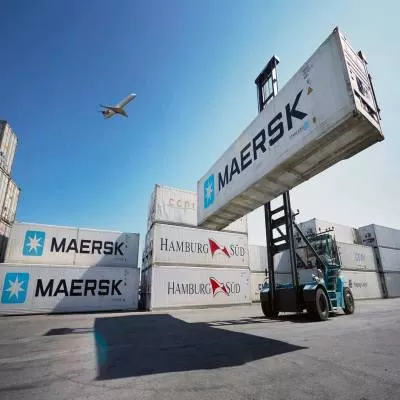
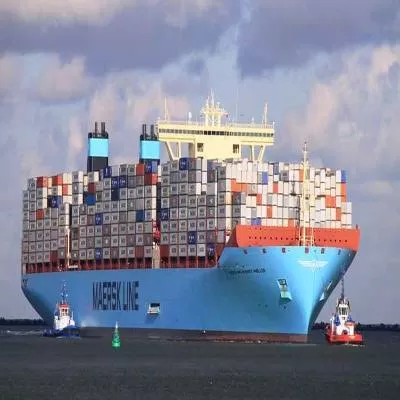
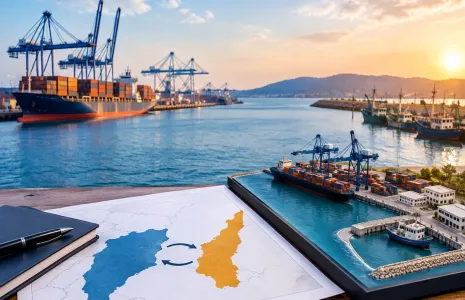
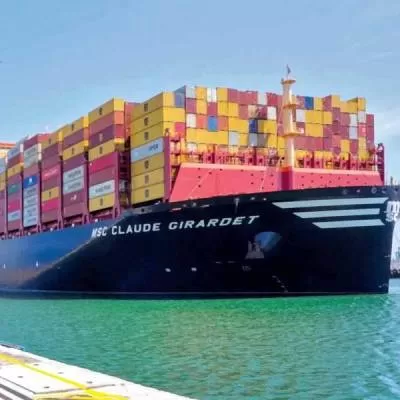
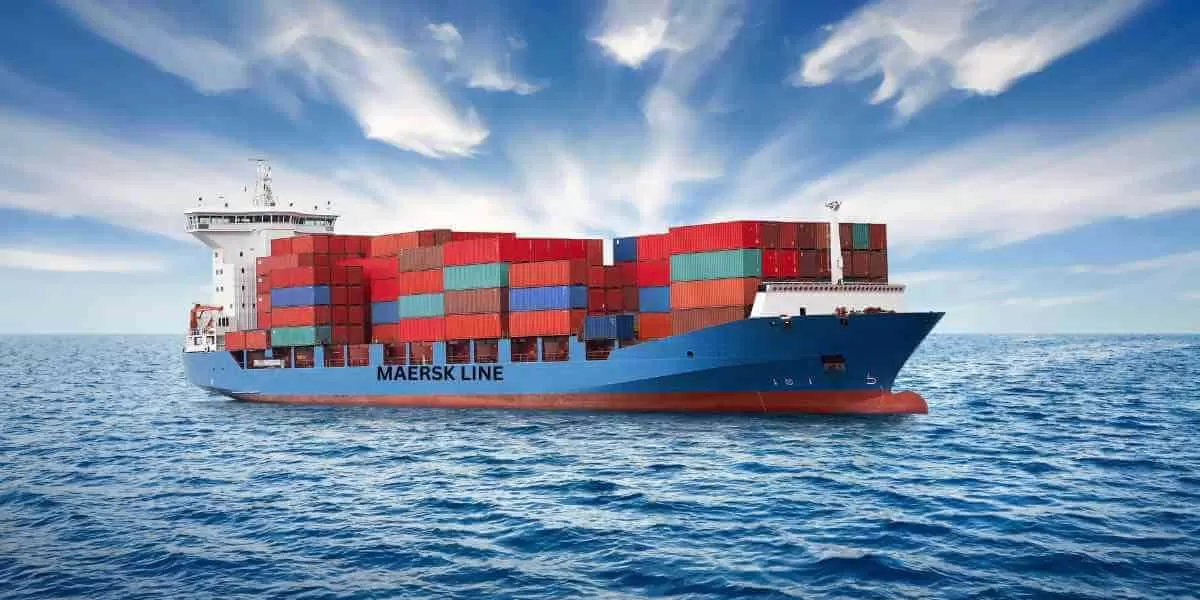
Danish shipping group Maersk has agreed to join a study by maritime services firm Lloyd's Register (LR) and UK-based Core Power, that will assess the potential for nuclear-powered container shipping in Europe. The maritime industry has been exploring whether nuclear fuel can be used to power commercial ships as technological advancements have opened up such options, but industry officials last year said nuclear fuel solutions for ships were at least a decade away. Shipping, which transports around 90 percent of world trade, accounts for nearly 3 percent of global carbon dioxide emissions and the industry is under pressure to find cleaner fuel solutions.  
Contact: Maersk
Website: www.maersk.com 

Sydney opens new driverless metro line
Sydney's new multi-billion-dollar driverless metro line officially opened to commuters. The state government of New South Wales (NSW) estimates the service will carry up to 250,000 passengers on a typical weekday and save commuters travelling from Sydenham to Barangaroo in central Sydney 27 minutes. Construction on the project began in 2017 and cost 21.6 billion Australian dollars, making it the largest public transport project in Australian history. 

Google to provide cyber security for Australian infrastructure
Google and Australia's national science agency will join hands to develop digital tools that automatically detect and fix software vulnerabilities for operators of critical infrastructure, seeking to combat a surge in cyberattacks. The Australian government has been imposing tougher requirements on critical infrastructure operators to report and prevent cyberattacks after a spate of breaches in the past two years left personal information of half the country's 26 million population exposed. Google also supplies cybersecurity services to the US as part of a $9 billion contract between the US Department of Defence and a number of large tech firms. The project's findings will be made public to provide operators of critical infrastructure easy access to the information.

World's first ammonia-fuelled PSV ship to operate in 2026
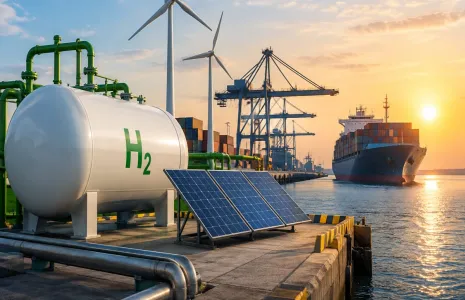
Finland-based engine manufacturer Wartsila has signed a contract with Norwegian shipowner Eidesvik to make one of its platform supply vessels (PSV) capable of running on ammonia fuel. Viking Energy will be the world's first ammonia-fuelled in-service PSV, which will supply the equipment to convert the vessel. Ammonia is one of several alternative fuels being explored by shippers in order to reduce carbon emissions. Viking Energy is also financing the conversion. The ship will be converted in early 2026. Wartsila expects to deliver its first ammonia-fuelled engine on a new vessel in 2025, with more widespread sales expected in the 2030s.
The technology can help cut greenhouse gas emissions by more than 70 percent.

Trilateral Highway will link India, Myanmar and Thailand
The Kolkata-Bangkok Highway is expected to be completed in 2027. The Kolkata-Bangkok Highway, also known as the Trilateral Highway, is a major infrastructure project that will boost connectivity between India, Myanmar, and Thailand. The highway will go from Kolkata, India, to Bangkok, Thailand, passing through Myanmar, allowing better trade links and regional integration. Thailand will receive the shortest stretch of this 2,800 km long highway whereas India will have the longest coverage. This project, consistent with India’s Look East Policy, is part of the Bay of Bengal Initiative for Multi-Sectoral Technical and Economic Cooperation (BIMSTEC). 

Danish shipping group Maersk has agreed to join a study by maritime services firm Lloyd's Register (LR) and UK-based Core Power, that will assess the potential for nuclear-powered container shipping in Europe. The maritime industry has been exploring whether nuclear fuel can be used to power commercial ships as technological advancements have opened up such options, but industry officials last year said nuclear fuel solutions for ships were at least a decade away. Shipping, which transports around 90 percent of world trade, accounts for nearly 3 percent of global carbon dioxide emissions and the industry is under pressure to find cleaner fuel solutions.  Contact: MaerskWebsite: www.maersk.com Sydney opens new driverless metro lineSydney's new multi-billion-dollar driverless metro line officially opened to commuters. The state government of New South Wales (NSW) estimates the service will carry up to 250,000 passengers on a typical weekday and save commuters travelling from Sydenham to Barangaroo in central Sydney 27 minutes. Construction on the project began in 2017 and cost 21.6 billion Australian dollars, making it the largest public transport project in Australian history. Google to provide cyber security for Australian infrastructureGoogle and Australia's national science agency will join hands to develop digital tools that automatically detect and fix software vulnerabilities for operators of critical infrastructure, seeking to combat a surge in cyberattacks. The Australian government has been imposing tougher requirements on critical infrastructure operators to report and prevent cyberattacks after a spate of breaches in the past two years left personal information of half the country's 26 million population exposed. Google also supplies cybersecurity services to the US as part of a $9 billion contract between the US Department of Defence and a number of large tech firms. The project's findings will be made public to provide operators of critical infrastructure easy access to the information.World's first ammonia-fuelled PSV ship to operate in 2026Finland-based engine manufacturer Wartsila has signed a contract with Norwegian shipowner Eidesvik to make one of its platform supply vessels (PSV) capable of running on ammonia fuel. Viking Energy will be the world's first ammonia-fuelled in-service PSV, which will supply the equipment to convert the vessel. Ammonia is one of several alternative fuels being explored by shippers in order to reduce carbon emissions. Viking Energy is also financing the conversion. The ship will be converted in early 2026. Wartsila expects to deliver its first ammonia-fuelled engine on a new vessel in 2025, with more widespread sales expected in the 2030s.The technology can help cut greenhouse gas emissions by more than 70 percent.Trilateral Highway will link India, Myanmar and ThailandThe Kolkata-Bangkok Highway is expected to be completed in 2027. The Kolkata-Bangkok Highway, also known as the Trilateral Highway, is a major infrastructure project that will boost connectivity between India, Myanmar, and Thailand. The highway will go from Kolkata, India, to Bangkok, Thailand, passing through Myanmar, allowing better trade links and regional integration. Thailand will receive the shortest stretch of this 2,800 km long highway whereas India will have the longest coverage. This project, consistent with India’s Look East Policy, is part of the Bay of Bengal Initiative for Multi-Sectoral Technical and Economic Cooperation (BIMSTEC). 

Related Stories

Gold Stories

Next Story
Infrastructure Urban

Infrastructure Opportunity Outlook by IMPACCT.Info

India’s infrastructure pipeline is witnessing dynamic activity across stages — from immediate bidding to future planning. IMPACCT segments these into three categories: Immediate, 3–6 Month, and Future Opportunities, enabling businesses to identify, prepare, and participate in high-value tenders and projects across sectors.To read full article Click Here ..

Next Story
Real Estate

Glass, Reframed!

Glass façades, quintessential aesthetic building envelopes globally, have been widely adopted in India as well. But when the focus is high-performance building systems that deliver energy efficiency, comfort and architectural identity, glass isn’t the only preference. Combination solutions, involving glass and some other material, improve façade outcomes. Some combinations come at comparable prices, some at a higher price. Here is a selection of performance-oriented solutions...To read the full story Click Here ..

Next Story
Infrastructure Urban

Beyond Building Faster

India’s cities are expanding at an unprecedented pace, bringing new infrastructure and development opportunities while also intensifying challenges around mobility, public spaces, liveability and supporting infrastructure. The question, therefore, is not simply whether India can build faster, but whether it can build cities that work better.At a CW webinar, Are We Designing Better Cities – or Just Building Faster?, moderator Ar. Samir Shaikh, Founding Principal, AR&UD Studio, brought together perspectives from design, development, master planning and technology...To read the full artic..

Advertisement

Subscribe to Our Newsletter

Get daily newsletters around different themes from Construction world.

STAY CONNECTED

Advertisement

SPECIAL OFFER
QR Code