+
Ministry Unveils One Nation, One Port Initiative
PORTS & SHIPPING

Ministry Unveils One Nation, One Port Initiative

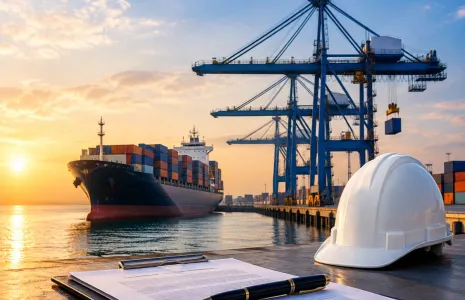
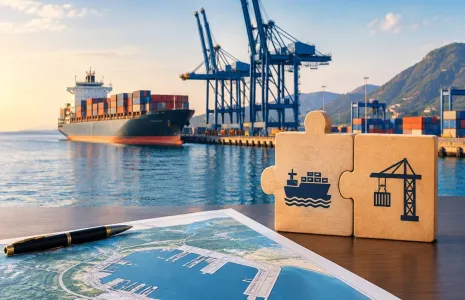
The Ministry of Ports, Shipping and Waterways has introduced the ‘One Nation One Port Process (ONOP)’ initiative to standardize and streamline port processes and documentation across the country. This initiative involves a thorough review of current procedures and documents exchanged throughout the port value chain at all major ports. It covers various cargo types such as containers, dry bulk, and liquid bulk, and includes different movement categories like export-import, transshipment, and coastal operations. By harmonizing these processes, the ONOP initiative aims to reduce documentation processing time, which is expected to lower overall logistics costs.

As part of its efforts to improve efficiency, the Ministry is also focusing on the digitization and automation of port operations through the National Logistics Portal – Marine (NLP-Marine). This platform integrates the Enterprise Business System (EBS) as a unified port operating system to ensure smoother and more transparent workflows.

A recent review of ONOP implementation at major ports revealed significant progress in port process documentation. The findings indicate that standardization efforts are beginning to deliver positive results in improving operational efficiency.

Additionally, the Ministry has undertaken several initiatives to enhance the overall competitiveness of Indian ports. These include the development of new ports, terminals, and berths; modernization and mechanization of port infrastructure; digitization of procedures; and the creation of road and rail connectivity infrastructure. To further support these efforts, the Ministry has launched the “Sagar Aankalan” guidelines, aimed at boosting the efficiency and global competitiveness of Indian ports.

These strategic measures form part of a broader push to position India’s maritime sector as a key driver of economic growth and global trade integration.

The Ministry of Ports, Shipping and Waterways has introduced the ‘One Nation One Port Process (ONOP)’ initiative to standardize and streamline port processes and documentation across the country. This initiative involves a thorough review of current procedures and documents exchanged throughout the port value chain at all major ports. It covers various cargo types such as containers, dry bulk, and liquid bulk, and includes different movement categories like export-import, transshipment, and coastal operations. By harmonizing these processes, the ONOP initiative aims to reduce documentation processing time, which is expected to lower overall logistics costs. As part of its efforts to improve efficiency, the Ministry is also focusing on the digitization and automation of port operations through the National Logistics Portal – Marine (NLP-Marine). This platform integrates the Enterprise Business System (EBS) as a unified port operating system to ensure smoother and more transparent workflows. A recent review of ONOP implementation at major ports revealed significant progress in port process documentation. The findings indicate that standardization efforts are beginning to deliver positive results in improving operational efficiency. Additionally, the Ministry has undertaken several initiatives to enhance the overall competitiveness of Indian ports. These include the development of new ports, terminals, and berths; modernization and mechanization of port infrastructure; digitization of procedures; and the creation of road and rail connectivity infrastructure. To further support these efforts, the Ministry has launched the “Sagar Aankalan” guidelines, aimed at boosting the efficiency and global competitiveness of Indian ports. These strategic measures form part of a broader push to position India’s maritime sector as a key driver of economic growth and global trade integration.

Related Stories

Gold Stories
Next Story
Infrastructure Urban

Infrastructure Opportunity Outlook by IMPACCT.Info

India’s infrastructure pipeline is witnessing dynamic activity across stages — from immediate bidding to future planning. IMPACCT segments these into three categories: Immediate, 3–6 Month, and Future Opportunities, enabling businesses to identify, prepare, and participate in high-value tenders and projects across sectors.To read full article Click Here ..

Next Story
Real Estate

Glass, Reframed!

Glass façades, quintessential aesthetic building envelopes globally, have been widely adopted in India as well. But when the focus is high-performance building systems that deliver energy efficiency, comfort and architectural identity, glass isn’t the only preference. Combination solutions, involving glass and some other material, improve façade outcomes. Some combinations come at comparable prices, some at a higher price. Here is a selection of performance-oriented solutions...To read the full story Click Here ..

Next Story
Infrastructure Urban

Beyond Building Faster

India’s cities are expanding at an unprecedented pace, bringing new infrastructure and development opportunities while also intensifying challenges around mobility, public spaces, liveability and supporting infrastructure. The question, therefore, is not simply whether India can build faster, but whether it can build cities that work better.At a CW webinar, Are We Designing Better Cities – or Just Building Faster?, moderator Ar. Samir Shaikh, Founding Principal, AR&UD Studio, brought together perspectives from design, development, master planning and technology...To read the full artic..

Advertisement

Subscribe to Our Newsletter

Get daily newsletters around different themes from Construction world.

STAY CONNECTED

Advertisement

SPECIAL OFFER
QR Code