Paradip Port Tops India’s Major Ports With Record Cargo Handling
PORTS & SHIPPING

Paradip Port Tops India’s Major Ports With Record Cargo Handling

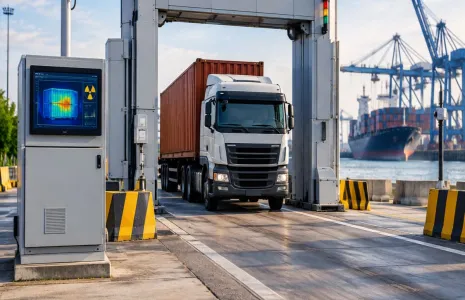
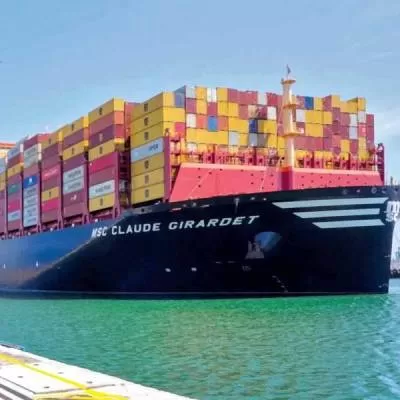
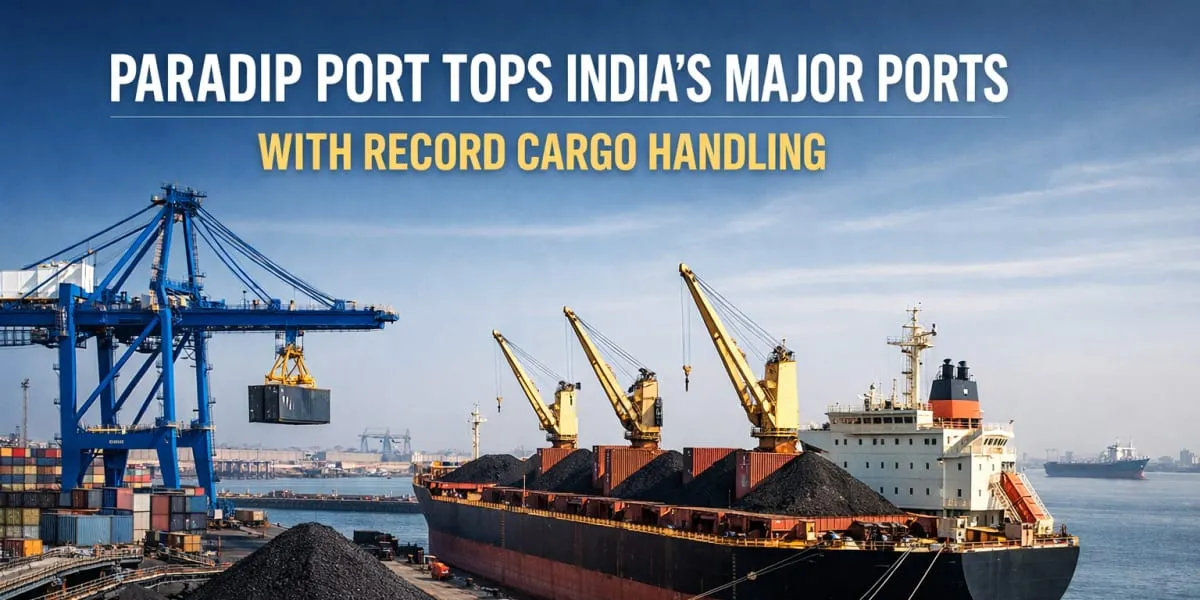
Paradip Port has reported a record cargo handling of 150.41 million (mn) tonnes in the 2024–25 fiscal year, establishing it as India’s top major port. The Paradip Port Authority said the performance set a new national benchmark for cargo throughput and operational scale.

With a rated capacity of 289 million tonnes per annum, the port combines industry-leading productivity with competitive cost structures and the lowest vessel and cargo charges among major ports. The authority reported a provisional net surplus of Rs 1,860 crore, equivalent to Rs 18.6 billion (bn), underscoring strong financial health.

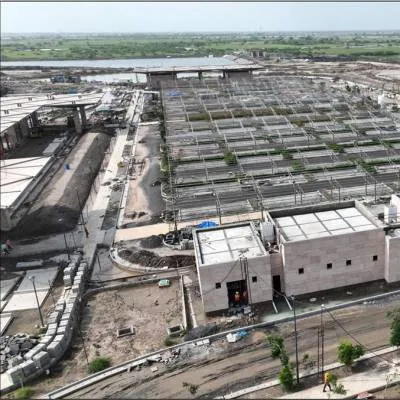
The State Chief Secretary, Anu Garg, visited the port to review operations and long-term expansion plans and outlined Odisha’s economic roadmap targeting USD 500 billion by 2036 and USD 1.5 trillion (tn) by 2047, calling for double-digit growth driven by exports, shipbuilding and port-led development. She highlighted the strategic advantage of Odisha’s coastline and promoted the Paradip Port 2.0 vision, which envisages capacity expansion beyond 500 million tonnes per annum, deepening of the Western Dock and a dedicated green hydrogen berth.

Discussions included proposals for a 150 million tonnes per annum Bahuda Port in Ganjam district and a 1.2 million gross tonnage capacity shipbuilding and ship repair cluster north of the Mahanadi in Kendrapara district. Officials said these projects, to be developed through a Special Purpose Vehicle between the Government of Odisha and the Paradip Port Authority, together with plans for a cruise terminal at Puri and integrated industrial and urban infrastructure, are expected to strengthen the State’s maritime economy and support diversification beyond mining. The Chief Secretary stressed that planned land use, law and order and inclusive public infrastructure would be key enablers, and officials noted that the projects would be supported by industrial townships, housing, tourism infrastructure and urban amenities. The State’s strong fiscal position and high capital expenditure allocation were cited as enabling factors for timely implementation and long-term sustainability.

Paradip Port has reported a record cargo handling of 150.41 million (mn) tonnes in the 2024–25 fiscal year, establishing it as India’s top major port. The Paradip Port Authority said the performance set a new national benchmark for cargo throughput and operational scale. With a rated capacity of 289 million tonnes per annum, the port combines industry-leading productivity with competitive cost structures and the lowest vessel and cargo charges among major ports. The authority reported a provisional net surplus of Rs 1,860 crore, equivalent to Rs 18.6 billion (bn), underscoring strong financial health. The State Chief Secretary, Anu Garg, visited the port to review operations and long-term expansion plans and outlined Odisha’s economic roadmap targeting USD 500 billion by 2036 and USD 1.5 trillion (tn) by 2047, calling for double-digit growth driven by exports, shipbuilding and port-led development. She highlighted the strategic advantage of Odisha’s coastline and promoted the Paradip Port 2.0 vision, which envisages capacity expansion beyond 500 million tonnes per annum, deepening of the Western Dock and a dedicated green hydrogen berth. Discussions included proposals for a 150 million tonnes per annum Bahuda Port in Ganjam district and a 1.2 million gross tonnage capacity shipbuilding and ship repair cluster north of the Mahanadi in Kendrapara district. Officials said these projects, to be developed through a Special Purpose Vehicle between the Government of Odisha and the Paradip Port Authority, together with plans for a cruise terminal at Puri and integrated industrial and urban infrastructure, are expected to strengthen the State’s maritime economy and support diversification beyond mining. The Chief Secretary stressed that planned land use, law and order and inclusive public infrastructure would be key enablers, and officials noted that the projects would be supported by industrial townships, housing, tourism infrastructure and urban amenities. The State’s strong fiscal position and high capital expenditure allocation were cited as enabling factors for timely implementation and long-term sustainability.

Related Stories

Gold Stories

Next Story
Infrastructure Urban

KONE Opens India's First Digital Experience Centre in Pune

KONE, a global elevator and escalator manufacturer, has inaugurated its first Digital Experience Centre (DEC) in India, located in Pune. The facility aims to showcase how artificial intelligence (AI), connectivity and data-driven technologies can enhance customer experiences and improve building operations.The centre was inaugurated by Jussi Herlin, Executive Vice Chair, KONE Corporation; Philippe Delorme, President and CEO, KONE; and Nandan Nilekani, Co-founder and Chairman of the Board, Infosys.Designed as an interactive customer environment, the facility demonstrates digital solutions cover..

Next Story
Infrastructure Urban

CII GreenCo Launches Circularity Guidelines for Indian Industry

The Confederation of Indian Industry (CII) GreenCo Council has launched the CII GreenCo Circularity Guidelines – Pilot Version at the 17th CII GreenCo Waste & Resource Management Summit 2026 in Chennai. The initiative aims to strengthen resource efficiency, waste reduction and circular economy practices across Indian manufacturing and process industries.The guidelines introduce a structured framework with circularity indices covering raw materials, consumables, packaging and other resource inputs. These indicators will help industries assess existing practices, identify opportunities to ..

Next Story
Infrastructure Energy

Global Electronics Association Launches IPC-1783-CO2E Standard

The Global Electronics Association has introduced IPC-1783-CO2E, a new international standard aimed at improving consistency, transparency and comparability in product carbon footprint reporting across the electronics manufacturing industry.The standard, titled International Standard for Data Collection and Reporting of CO2 Equivalent (CO2e) Emissions for the Electronics Manufacturing Supply Chain, provides industry-specific guidance for collecting, estimating and reporting carbon emissions data.With increasing regulatory requirements and customer expectations, electronics manufacturers face c..

Advertisement

Subscribe to Our Newsletter

Get daily newsletters around different themes from Construction world.

STAY CONNECTED

Advertisement

SPECIAL OFFER
QR Code