Patenga Container Terminal: Saudi firm RSGTI takes over operations
PORTS & SHIPPING

Patenga Container Terminal: Saudi firm RSGTI takes over operations

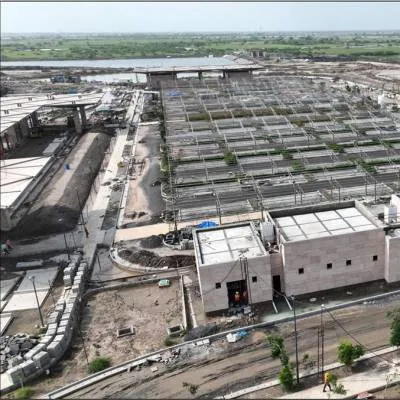
The Chattogram Port Authority (CPA) has signed a landmark agreement with Red Sea Gateway Terminal International (RSGTI) to operate the newly constructed Patenga Container Terminal. This marks a significant development in enhancing the capacity and efficiency of Bangladesh's maritime trade.

Change in Operator:

Initially, Red Sea Gateway Terminal (RSGT) was nominated by the Saudi government to operate the terminal. However, due to a requirement for 100% Saudi ownership under the G2G (government-to-government) policy, a new company, RSGTI, was formed with complete Saudi ownership. RSGTI is considered a sister concern of RSGT, established in 2022.

Timeline and Next Steps:

The inauguration of the Patenga terminal took place last month, nearly 17 months after construction completion. Signing the agreement this week paves the way for further development. Gear vessel loading is expected to commence in January 2024, followed by a two-year period for acquiring additional equipment and achieving full operational capacity.

Addressing Confusion:

Concerns arose regarding the inclusion of RSGTI in the initial proposal. In response, the Saudi Ministry of Investment communicated with the Bangladesh government, proposing RSGTI instead of RSGT. This proposal was subsequently accepted by the Bangladeshi shipping ministry.

Collaboration and Future Prospects:

As the agreement involves both governments, all future contracts and activities will be undertaken in close collaboration with RSGTI. The CPA Secretary confirmed that the port authority will work directly with the Saudi-nominated company for this G2G project.

This agreement marks a positive step forward in strengthening the economic ties between Bangladesh and Saudi Arabia. The Patenga Container Terminal is expected to play a crucial role in facilitating trade and boosting Bangladesh's economic growth.

The Chattogram Port Authority (CPA) has signed a landmark agreement with Red Sea Gateway Terminal International (RSGTI) to operate the newly constructed Patenga Container Terminal. This marks a significant development in enhancing the capacity and efficiency of Bangladesh's maritime trade. Change in Operator: Initially, Red Sea Gateway Terminal (RSGT) was nominated by the Saudi government to operate the terminal. However, due to a requirement for 100% Saudi ownership under the G2G (government-to-government) policy, a new company, RSGTI, was formed with complete Saudi ownership. RSGTI is considered a sister concern of RSGT, established in 2022. Timeline and Next Steps: The inauguration of the Patenga terminal took place last month, nearly 17 months after construction completion. Signing the agreement this week paves the way for further development. Gear vessel loading is expected to commence in January 2024, followed by a two-year period for acquiring additional equipment and achieving full operational capacity. Addressing Confusion: Concerns arose regarding the inclusion of RSGTI in the initial proposal. In response, the Saudi Ministry of Investment communicated with the Bangladesh government, proposing RSGTI instead of RSGT. This proposal was subsequently accepted by the Bangladeshi shipping ministry. Collaboration and Future Prospects: As the agreement involves both governments, all future contracts and activities will be undertaken in close collaboration with RSGTI. The CPA Secretary confirmed that the port authority will work directly with the Saudi-nominated company for this G2G project. This agreement marks a positive step forward in strengthening the economic ties between Bangladesh and Saudi Arabia. The Patenga Container Terminal is expected to play a crucial role in facilitating trade and boosting Bangladesh's economic growth.

Next Story
Infrastructure Transport

MMRDA advances 250 m on Orange Gate–Marine Drive tunnel

The Mumbai Metropolitan Region Development Authority (MMRDA) has completed 250 m of underground tunnelling for the Orange Gate–Marine Drive Urban Road Tunnel using India’s largest slurry shield tunnel boring machine (TBM) deployed for an urban road project.The project involves twin tunnels extending over 7 km beneath critical transport corridors, including Central Railway, Western Railway and Metro Line 3. The work requires high-precision engineering to navigate densely developed urban infrastructure.Once completed, the tunnel is expected to reduce travel time between Orange Gate and Marin..

Next Story
Infrastructure Urban

Hindustan Zinc Pays Rs 188.46 Billion in FY26

Hindustan Zinc contributed Rs 188.46 billion to the public exchequer in FY 2025-26, according to its 9th Tax Transparency Report. The contribution, equivalent to 46 per cent of the company’s revenue, included direct and indirect taxes, government royalties, dividends to the Government of India, withholding taxes and other statutory levies.The company’s five-year cumulative contribution to the exchequer stood at Rs 915.72 billion. In FY26, Hindustan Zinc reported revenue of Rs 408.44 billion, EBITDA of Rs 221.62 billion and profit after tax of Rs 138.32 billion. It also achieved its highest..

Next Story
Infrastructure Urban

World of Concrete India 2026 Opens in Mumbai

Informa Markets in India will host the 12th edition of World of Concrete India 2026 from 3–5 June 2026 at the Bombay Exhibition Centre, Mumbai. The specialised B2B exhibition will bring together manufacturers, suppliers, contractors, developers, architects, consultants, infrastructure companies, project leaders and government stakeholders.The event is expected to feature over 350 brands and more than 18,000 trade professionals. It will cover concrete and cement, dry mortar, precast technologies, formwork, construction chemicals, industrial and commercial flooring, scaffolding, safety solutio..

Advertisement

Subscribe to Our Newsletter

Get daily newsletters around different themes from Construction world.

STAY CONNECTED

Advertisement

Advertisement

Advertisement