PIL Expands Process Intelligence CoE with Celonis and WNS
PORTS & SHIPPING

PIL Expands Process Intelligence CoE with Celonis and WNS

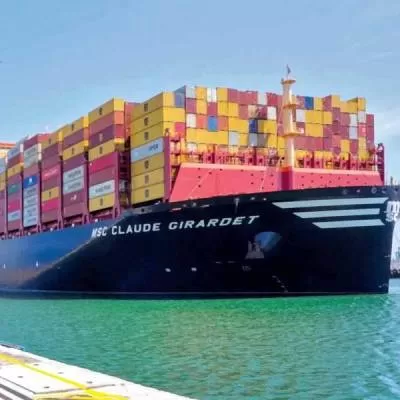
Pacific International Lines (PIL) has partnered with Celonis and WNS, part of Capgemini, to expand its global Process Intelligence Center of Excellence (CoE) and accelerate digital transformation across operations spanning 90 countries.

Singapore-headquartered PIL operates a fleet of more than 100 container vessels. The shipping company is deploying the Celonis Platform to create a dynamic, real-time digital twin of its operations, enabling teams to gain greater visibility into how processes are executed and identify areas for improvement.

WNS will bring its shipping and logistics domain expertise to the CoE, helping integrate Celonis' Process Intelligence capabilities across PIL's systems and operations.

The initiative is expected to provide end-to-end visibility across shipping workflows, from customer-facing activities to back-office operations. It will also help identify and address operational inefficiencies through greater process standardisation across trade operations.

PIL also plans to use the platform as a foundation for AI-driven automation, aimed at making its global operations more efficient and resilient.

Lionel Chatelet, Chief Commercial Officer, PIL, said shipping companies often operate across multiple systems globally, making it difficult to identify operational bottlenecks. He added that Process Intelligence would provide PIL with a unified view of its processes while supporting automation and AI-led continuous improvement.

Pascal Coubard, VP of APAC at Celonis, said providing enterprise AI with a comprehensive model of business operations could help PIL generate measurable operational improvements and strengthen performance across its global network.

Jaison Augustine, Business Unit Head, Shipping & Logistics, WNS, part of Capgemini, said combining technology with shipping domain expertise would help translate process insights into operational improvements and establish capabilities for continuous optimisation at PIL.

PIL joins organisations across the Asia-Pacific region using Celonis for process optimisation, including Singtel, Optus, Queensland Health and New Zealand-based Zespri.

Pacific International Lines (PIL) has partnered with Celonis and WNS, part of Capgemini, to expand its global Process Intelligence Center of Excellence (CoE) and accelerate digital transformation across operations spanning 90 countries.Singapore-headquartered PIL operates a fleet of more than 100 container vessels. The shipping company is deploying the Celonis Platform to create a dynamic, real-time digital twin of its operations, enabling teams to gain greater visibility into how processes are executed and identify areas for improvement.WNS will bring its shipping and logistics domain expertise to the CoE, helping integrate Celonis' Process Intelligence capabilities across PIL's systems and operations.The initiative is expected to provide end-to-end visibility across shipping workflows, from customer-facing activities to back-office operations. It will also help identify and address operational inefficiencies through greater process standardisation across trade operations.PIL also plans to use the platform as a foundation for AI-driven automation, aimed at making its global operations more efficient and resilient.Lionel Chatelet, Chief Commercial Officer, PIL, said shipping companies often operate across multiple systems globally, making it difficult to identify operational bottlenecks. He added that Process Intelligence would provide PIL with a unified view of its processes while supporting automation and AI-led continuous improvement.Pascal Coubard, VP of APAC at Celonis, said providing enterprise AI with a comprehensive model of business operations could help PIL generate measurable operational improvements and strengthen performance across its global network.Jaison Augustine, Business Unit Head, Shipping & Logistics, WNS, part of Capgemini, said combining technology with shipping domain expertise would help translate process insights into operational improvements and establish capabilities for continuous optimisation at PIL.PIL joins organisations across the Asia-Pacific region using Celonis for process optimisation, including Singtel, Optus, Queensland Health and New Zealand-based Zespri.

Next Story
Real Estate

Dilip Buildcon Q1 FY27 Revenue at Rs 23.78 billion

Dilip Buildcon Limited reported consolidated revenue from operations of Rs 2,378 crore in Q1 FY27, along with EBITDA of Rs 429 crore and profit after tax of Rs 128 crore.Consolidated EBITDA margin stood at 18.1%, improving from 17.1% in Q4 FY26. On a standalone basis, revenue from operations was Rs 1,930 crore, EBITDA stood at Rs 199 crore and PAT was Rs 39 crore, with an EBITDA margin of 10.3%.The company’s order book stood at Rs 27,691 crore as of 30 June 2026, compared with Rs 28,830 crore as of 31 March 2026. Roads and highways accounted for 17.1% of the order book, irrigation and water ..

Next Story
Technology

ideaForge Q1 FY27 Revenue at Rs 680.6 million; EBITDA Turns Positive

ideaForge Technology Limited reported revenue from operations of Rs 68.6 crore in Q1 FY27, while executing more than 20% of its opening order book for the financial year. The company also reported positive EBITDA during the quarter.ideaForge entered FY27 with an order book of over Rs 300 crore and is targeting delivery of the opening order book by Q3, in line with customer timelines. The company said global supply chain disruptions and component availability continue to pose challenges.During the quarter, ideaForge completed a Rs 500 crore Qualified Institutional Placement (QIP), with particip..

Next Story
Infrastructure Energy

Websol Energy Q1 FY27 Revenue Rises 70% to Rs 3.73 billion

Websol Energy System Limited reported revenue from operations of Rs 372.60 crore in Q1 FY27, up 70% from Rs 218.75 crore in Q1 FY26.EBITDA increased 21% year-on-year to Rs 125.58 crore from Rs 103.48 crore, while profit after tax rose 16% to Rs 77.79 crore from Rs 67.18 crore. EBITDA margin stood at 34%, compared with 47% in the corresponding quarter last year, while PAT margin declined to 21% from 30%.Solar cell production increased to 259 MW during the quarter from 126 MW a year earlier, with capacity utilisation at 92%. Module production rose to 103 MW from 50 MW, while module capacity util..

Advertisement

Subscribe to Our Newsletter

Get daily newsletters around different themes from Construction world.

STAY CONNECTED

Advertisement

Advertisement

Advertisement