Tata Motors To Run 40 Hydrogen Trucks At Tuticorin Port
PORTS & SHIPPING

Tata Motors To Run 40 Hydrogen Trucks At Tuticorin Port

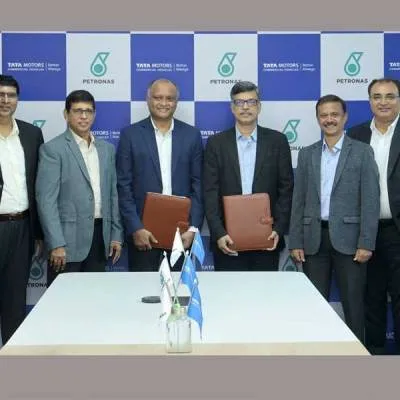
Tata Motors has signed an agreement to operate 40 hydrogen fuel cell trucks at Tuticorin Port within two years, marking a significant step in deploying hydrogen for heavy commercial transport. The deal will see the company run the fleet at the port to support cargo movement and terminal operations while assessing real world performance under port conditions. The deployment will involve heavy duty tractor and trailer combinations designed for freight handling and yard movements. Tata Motors will retain operational responsibility for the vehicles and associated logistics.

The move is part of a broader strategy to introduce zero tailpipe emission vehicles in high duty cycle applications where decarbonisation of freight can yield substantive benefits. Operators expect hydrogen fuel cell powertrains to offer range and refuelling times suitable for port logistics compared with battery electric alternatives for some use cases. The trial will gather data on energy consumption, duty cycles, turnaround times and operational reliability to inform future fleet decisions. Infrastructure planning for hydrogen production, storage and refuelling will be integral to successful scale up.

Tata Motors stated the programme is aligned with its long term commercial vehicle roadmap that includes hydrogen and battery electric technologies for decarbonising freight transport. The company will use the operational experience to refine vehicle integration, maintenance protocols and driver training for hydrogen systems. Industry observers note that pilot deployments at major ports can accelerate broader adoption by demonstrating total cost of ownership and operational viability. The outcome may influence fleet owners, logistics providers and policymakers considering alternative fuels.

The scheduled timeline envisages phased deliveries and progressive ramp up of operations over the two year period to ensure safe integration with port workflows. The programme will aim to capture lessons on compatibility with existing port infrastructure and regulatory compliance for hydrogen handling. Data from the trial will be used to evaluate scaling up to larger fleets or additional terminals as part of longer term rollout planning. Tata Motors will monitor performance metrics and operational costs to guide subsequent investment decisions.

Tata Motors has signed an agreement to operate 40 hydrogen fuel cell trucks at Tuticorin Port within two years, marking a significant step in deploying hydrogen for heavy commercial transport. The deal will see the company run the fleet at the port to support cargo movement and terminal operations while assessing real world performance under port conditions. The deployment will involve heavy duty tractor and trailer combinations designed for freight handling and yard movements. Tata Motors will retain operational responsibility for the vehicles and associated logistics. The move is part of a broader strategy to introduce zero tailpipe emission vehicles in high duty cycle applications where decarbonisation of freight can yield substantive benefits. Operators expect hydrogen fuel cell powertrains to offer range and refuelling times suitable for port logistics compared with battery electric alternatives for some use cases. The trial will gather data on energy consumption, duty cycles, turnaround times and operational reliability to inform future fleet decisions. Infrastructure planning for hydrogen production, storage and refuelling will be integral to successful scale up. Tata Motors stated the programme is aligned with its long term commercial vehicle roadmap that includes hydrogen and battery electric technologies for decarbonising freight transport. The company will use the operational experience to refine vehicle integration, maintenance protocols and driver training for hydrogen systems. Industry observers note that pilot deployments at major ports can accelerate broader adoption by demonstrating total cost of ownership and operational viability. The outcome may influence fleet owners, logistics providers and policymakers considering alternative fuels. The scheduled timeline envisages phased deliveries and progressive ramp up of operations over the two year period to ensure safe integration with port workflows. The programme will aim to capture lessons on compatibility with existing port infrastructure and regulatory compliance for hydrogen handling. Data from the trial will be used to evaluate scaling up to larger fleets or additional terminals as part of longer term rollout planning. Tata Motors will monitor performance metrics and operational costs to guide subsequent investment decisions.

Related Stories

Gold Stories

Next Story
Resources

Schindler named among Forbes’ World’s Best Employers 2026

Schindler has been named among Forbes’ World’s Best Employers 2026, a global ranking recognising companies for their workplace environments.Compiled by Forbes in partnership with Statista, the ranking is based on independent employee feedback, including whether employees would recommend their organisation to friends and family.The company said the recognition reflected its focus on creating a workplace where employees can develop their expertise and build careers. ..

Next Story
Infrastructure Urban

India needs an export-execution mindset: Vishesh Jain

Interview with Vishesh Jain, Founder & CEO, EximpleWhat gaps in India’s global trade ecosystem led you to build Eximple, and what problem did you see businesses struggling with most?Eximple came out of a problem that all three founders had seen from different choke points in the trade ecosystem. India has millions of MSMEs and manufacturers, and many of them can make products that are genuinely competitive on quality. Yet only a small fraction is able to build meaningful international businesses. In our experience, the gap is usually not manufacturing capability; it is the ability to exe..

Next Story
Building Material

Nuvoco reports 13.5% revenue growth in Q2 FY27

Nuvoco Vistas Corp. Ltd. reported consolidated revenue of Rs 27.9 billion for Q2 FY27, up 13.5% year on year. Cement sales volume rose 9% to 4.7 million tonnes (MMT), while EBITDA increased 11% to Rs 4.11 billion.The company said it began its cement operations in 2014 with a 2.3 MMT per annum (MMTPA) operation at Nimbol. It now aims to reach 35 MMTPA of cement capacity by FY28, nearly 15 times its initial capacity. Its portfolio spans cement, ready-mix concrete and modern building materials.On sustainability and cost efficiency, Nuvoco partnered with CleanMax for a 46.4 MW wind-solar hybrid re..

Advertisement

Subscribe to Our Newsletter

Get daily newsletters around different themes from Construction world.

STAY CONNECTED

Advertisement

SPECIAL OFFER
QR Code