+
Vizhinjam Port Begins Full-Scale EXIM Operations as New Gateway
PORTS & SHIPPING

Vizhinjam Port Begins Full-Scale EXIM Operations as New Gateway

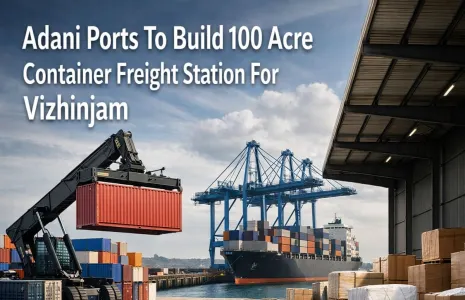
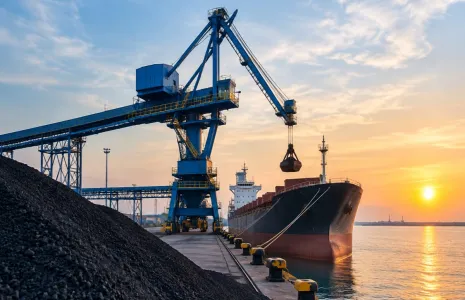
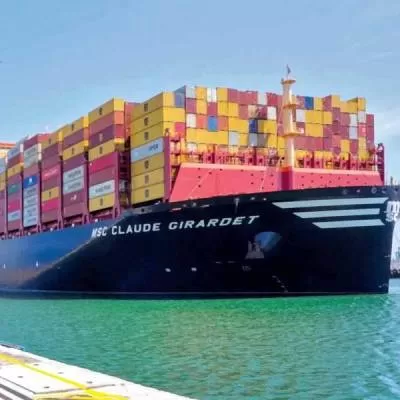
Vizhinjam Port has commenced full-scale export-import (EXIM) operations, positioning the facility as a new international gateway for India. The transition follows completion of operational trials and the handover of requisite infrastructure to the port operator. The port will handle container and bulk services and integrate with coastal shipping and long-distance liner routes. The inauguration of full-scale operations followed coordinated regulatory clearances and commissioning of terminal equipment.

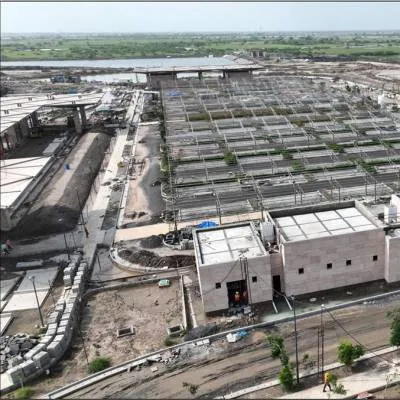
The development is intended to expand direct connectivity between south Indian trade corridors and global shipping networks without routing through traditional transhipment hubs. The port is connected to national road and rail networks and offers deep draft berths to accommodate large vessels. Hinterland linkages are being strengthened to facilitate efficient movement of goods to and from manufacturing and consumption centres. Cargo handling yards and container terminals have been prepared for continuous 24-hour operations to meet liner schedules.

Operational readiness includes customs facilitation and terminal handling systems that will support streamlined clearance and expedited cargo movement. The administration has coordinated with logistics service providers and shipping lines to schedule regular sailings and to integrate hinterland distribution. The activation of EXIM services is designed to reduce transit times and lower logistics costs for shippers utilising the south Kerala gateway. Customs and excise units are co-located to expedite documentation and to reduce administrative dwell time.

Stakeholders have cited commitments from liner operators and cargo owners to utilise the facility and to call at the port. The transition marks a strategic enhancement of India's maritime infrastructure and complements broader initiatives to boost seaborne trade. Continued investment in multimodal connectivity will underpin the port's role as a competitive international gateway. Ongoing investments in hinterland corridors and equipment modernisation underpin plans to integrate the port into existing supply chains.

Vizhinjam Port has commenced full-scale export-import (EXIM) operations, positioning the facility as a new international gateway for India. The transition follows completion of operational trials and the handover of requisite infrastructure to the port operator. The port will handle container and bulk services and integrate with coastal shipping and long-distance liner routes. The inauguration of full-scale operations followed coordinated regulatory clearances and commissioning of terminal equipment. The development is intended to expand direct connectivity between south Indian trade corridors and global shipping networks without routing through traditional transhipment hubs. The port is connected to national road and rail networks and offers deep draft berths to accommodate large vessels. Hinterland linkages are being strengthened to facilitate efficient movement of goods to and from manufacturing and consumption centres. Cargo handling yards and container terminals have been prepared for continuous 24-hour operations to meet liner schedules. Operational readiness includes customs facilitation and terminal handling systems that will support streamlined clearance and expedited cargo movement. The administration has coordinated with logistics service providers and shipping lines to schedule regular sailings and to integrate hinterland distribution. The activation of EXIM services is designed to reduce transit times and lower logistics costs for shippers utilising the south Kerala gateway. Customs and excise units are co-located to expedite documentation and to reduce administrative dwell time. Stakeholders have cited commitments from liner operators and cargo owners to utilise the facility and to call at the port. The transition marks a strategic enhancement of India's maritime infrastructure and complements broader initiatives to boost seaborne trade. Continued investment in multimodal connectivity will underpin the port's role as a competitive international gateway. Ongoing investments in hinterland corridors and equipment modernisation underpin plans to integrate the port into existing supply chains.

Related Stories

Gold Stories

Next Story
Infrastructure Urban

KONE Opens India's First Digital Experience Centre in Pune

KONE, a global elevator and escalator manufacturer, has inaugurated its first Digital Experience Centre (DEC) in India, located in Pune. The facility aims to showcase how artificial intelligence (AI), connectivity and data-driven technologies can enhance customer experiences and improve building operations.The centre was inaugurated by Jussi Herlin, Executive Vice Chair, KONE Corporation; Philippe Delorme, President and CEO, KONE; and Nandan Nilekani, Co-founder and Chairman of the Board, Infosys.Designed as an interactive customer environment, the facility demonstrates digital solutions cover..

Next Story
Infrastructure Urban

CII GreenCo Launches Circularity Guidelines for Indian Industry

The Confederation of Indian Industry (CII) GreenCo Council has launched the CII GreenCo Circularity Guidelines – Pilot Version at the 17th CII GreenCo Waste & Resource Management Summit 2026 in Chennai. The initiative aims to strengthen resource efficiency, waste reduction and circular economy practices across Indian manufacturing and process industries.The guidelines introduce a structured framework with circularity indices covering raw materials, consumables, packaging and other resource inputs. These indicators will help industries assess existing practices, identify opportunities to ..

Next Story
Infrastructure Energy

Global Electronics Association Launches IPC-1783-CO2E Standard

The Global Electronics Association has introduced IPC-1783-CO2E, a new international standard aimed at improving consistency, transparency and comparability in product carbon footprint reporting across the electronics manufacturing industry.The standard, titled International Standard for Data Collection and Reporting of CO2 Equivalent (CO2e) Emissions for the Electronics Manufacturing Supply Chain, provides industry-specific guidance for collecting, estimating and reporting carbon emissions data.With increasing regulatory requirements and customer expectations, electronics manufacturers face c..

Advertisement

Subscribe to Our Newsletter

Get daily newsletters around different themes from Construction world.

STAY CONNECTED

Advertisement

SPECIAL OFFER
QR Code