





Defence Approves Rs 670 Billion Arms Buys for Forces
DEFENSE

Defence Approves Rs 670 Billion Arms Buys for Forces

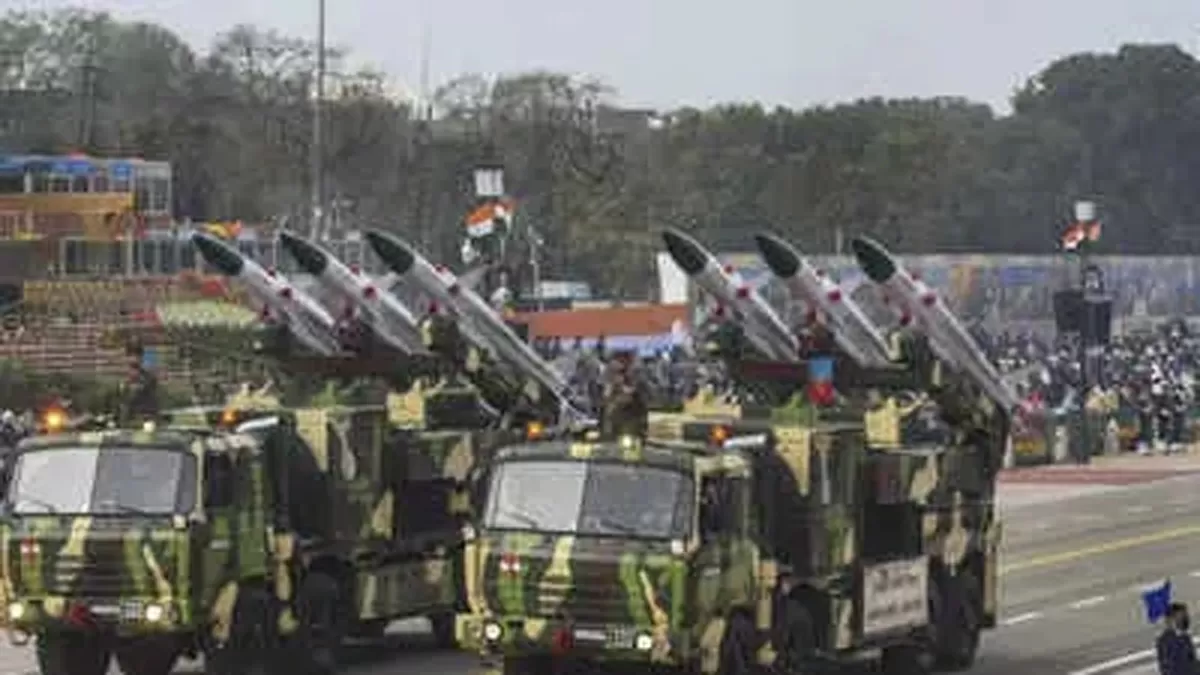
The Defence Acquisition Council (DAC), chaired by Defence Minister Rajnath Singh on 5 August 2025, approved a series of defence procurement proposals valued at approximately Rs 670 billion. These approvals span all three branches of the Armed Forces and are aimed at significantly enhancing operational capabilities across domains.
For the Indian Army, Acceptance of Necessity (AoN) was granted for the acquisition of Thermal Imager-based Driver Night Sights for BMP infantry combat vehicles. This system will improve night-time mobility and offer a tactical edge to the Mechanised Infantry.
The Indian Navy received AoN for the procurement of Compact Autonomous Surface Craft, BrahMos Fire Control Systems and Launchers, as well as the upgrade of the BARAK-1 Point Defence Missile System. The autonomous surface craft will bolster the Navy’s ability to detect, classify, and neutralise underwater threats during anti-submarine warfare missions.
For the Indian Air Force, AoN was accorded for the acquisition of Mountain Radars and the upgrade of the SAKSHAM/SPYDER Weapon System. The new radars will improve air surveillance in mountainous border areas, while the upgraded SPYDER system—integrated with the Integrated Air Command and Control System—will boost overall air defence capability.
AoN was also granted for the acquisition of Medium Altitude Long Endurance (MALE) Remotely Piloted Aircraft (RPAs) for the Army, Navy, and Air Force. These RPAs, capable of carrying various payloads and weapons, are designed for extended surveillance and strike missions, significantly increasing the Armed Forces’ all-weather operational readiness.
Additionally, the DAC approved AoNs for the continued maintenance and sustainment of the C-17 and C-130J transport aircraft fleets, as well as a comprehensive annual maintenance contract for the S-400 Long Range Air Defence Missile System.

The Defence Acquisition Council (DAC), chaired by Defence Minister Rajnath Singh on 5 August 2025, approved a series of defence procurement proposals valued at approximately Rs 670 billion. These approvals span all three branches of the Armed Forces and are aimed at significantly enhancing operational capabilities across domains.For the Indian Army, Acceptance of Necessity (AoN) was granted for the acquisition of Thermal Imager-based Driver Night Sights for BMP infantry combat vehicles. This system will improve night-time mobility and offer a tactical edge to the Mechanised Infantry.The Indian Navy received AoN for the procurement of Compact Autonomous Surface Craft, BrahMos Fire Control Systems and Launchers, as well as the upgrade of the BARAK-1 Point Defence Missile System. The autonomous surface craft will bolster the Navy’s ability to detect, classify, and neutralise underwater threats during anti-submarine warfare missions.For the Indian Air Force, AoN was accorded for the acquisition of Mountain Radars and the upgrade of the SAKSHAM/SPYDER Weapon System. The new radars will improve air surveillance in mountainous border areas, while the upgraded SPYDER system—integrated with the Integrated Air Command and Control System—will boost overall air defence capability.AoN was also granted for the acquisition of Medium Altitude Long Endurance (MALE) Remotely Piloted Aircraft (RPAs) for the Army, Navy, and Air Force. These RPAs, capable of carrying various payloads and weapons, are designed for extended surveillance and strike missions, significantly increasing the Armed Forces’ all-weather operational readiness.Additionally, the DAC approved AoNs for the continued maintenance and sustainment of the C-17 and C-130J transport aircraft fleets, as well as a comprehensive annual maintenance contract for the S-400 Long Range Air Defence Missile System.

Next Story
Technology

AI-Enabled Workflows Lift Profitability and Productivity

Organisations modernising frontline workflows with artificial intelligence, automation and real-time data are reporting stronger financial performance, higher productivity and improved employee engagement, according to a global study by Zebra Technologies and Oxford Economics.The research covered 1,000 senior leaders across retail, manufacturing, transportation and logistics in the US, Mexico, the UK, Germany, India, Japan, Australia and New Zealand.In transportation and logistics, 54 per cent of companies that improved picking and packing operations reported faster operational performance, wh..

Next Story
Real Estate

India Leads Global AI Readiness but Implementation Lags

Indian companies lead global averages across all eight artificial intelligence readiness indicators tracked by JLL, but only 19 per cent have started making changes to their workplaces, according to the JLL 2026 Future of Work Survey.The study found that 77 per cent of Indian business leaders expect AI to change their office requirements, creating a 58-percentage-point gap between awareness and implementation. The survey covered more than 2,200 CEOs, CFOs and real estate leaders across 21 countries during the first quarter of 2026.Despite concerns over automation, 58 per cent of Indian leaders..

Next Story
Equipment

Three WOLFF Cranes Build Riyadh Cable-Stayed Bridges

Three WOLFF 180 B luffing jib cranes are supporting the construction of two cable-stayed bridges alongside the existing Wadi Laban Bridge in Riyadh, Saudi Arabia. The project is being developed for the Royal Commission for Riyadh City and executed by the ICRC joint venture comprising IC Ictas and Al Rashid Trading & Contracting Company.The cranes are handling lifting operations including formwork, reinforcement, concrete placement, work platforms, surveying equipment and other construction materials. Each crane is fitted with a 40 m jib, reaches a hook height of 157 m and offers a maximum ..

Advertisement

Subscribe to Our Newsletter

Get daily newsletters around different themes from Construction world.

STAY CONNECTED

Advertisement

Advertisement

Advertisement