Defence Council Approves Rs 790 Billion Procurement For Armed Forces
DEFENSE

Defence Council Approves Rs 790 Billion Procurement For Armed Forces

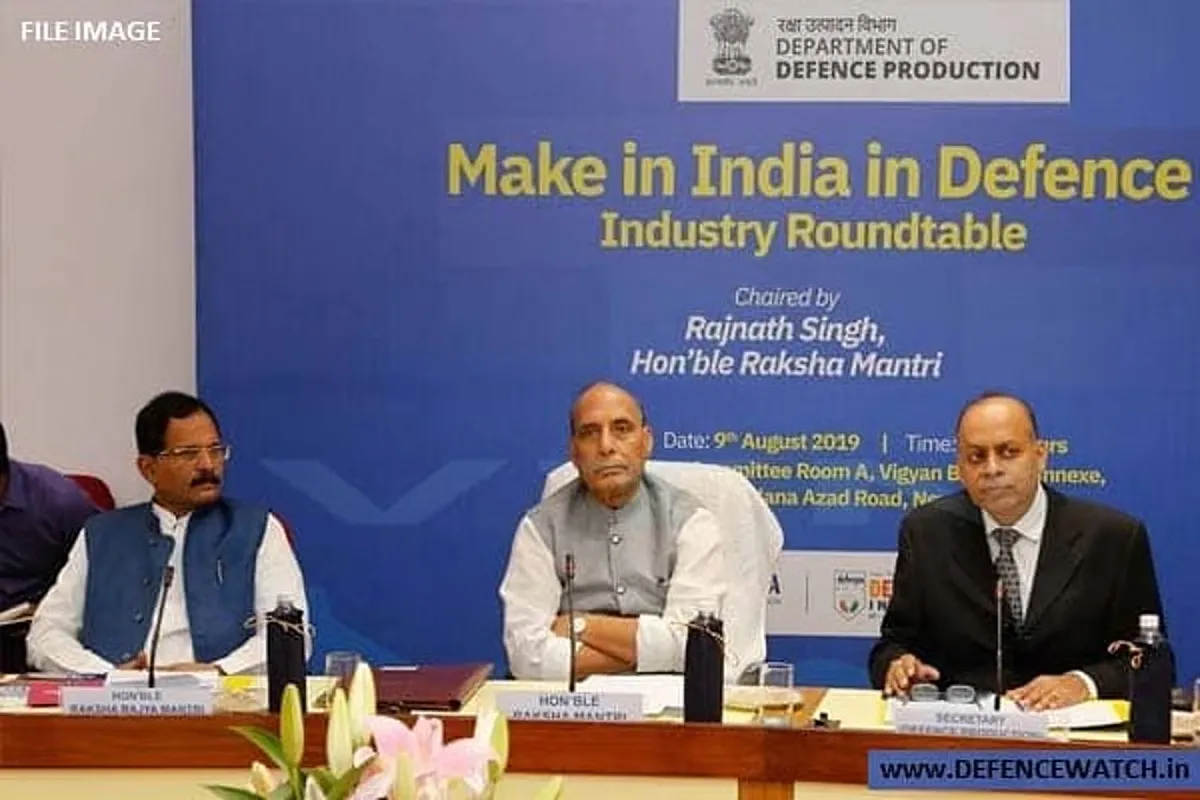
The Defence Acquisition Council (DAC), chaired by Defence Minister Rajnath Singh, has approved a series of procurement proposals worth approximately Rs 790 billion for the Indian Armed Forces. The approvals were granted during a meeting held at South Block, New Delhi, on 23 October 2025, marking a significant boost to India’s defence modernisation efforts.

For the Indian Army, the DAC accorded Acceptance of Necessity (AoN) for the procurement of the Nag Missile System (Tracked) Mk-II (NAMIS), Ground-Based Mobile ELINT System (GBMES), and High Mobility Vehicles (HMVs) equipped with material-handling cranes. The NAMIS system will enhance the Army’s ability to neutralise enemy combat vehicles, bunkers, and field fortifications, while the GBMES will provide continuous electronic intelligence on enemy emitters. The induction of HMVs will strengthen logistics and mobility support for forces operating in diverse terrains.

For the Indian Navy, approval was granted for the acquisition of Landing Platform Docks (LPDs), 30mm Naval Surface Guns (NSG), Advanced Lightweight Torpedoes (ALWT), Electro-Optical Infrared Search and Track Systems, and Smart Ammunition for 76mm Super Rapid Gun Mounts. The LPDs will enable the Navy to carry out large-scale amphibious operations in coordination with the Army and Air Force. These platforms will also enhance India’s ability to conduct peacekeeping, humanitarian assistance, and disaster relief operations.

The ALWT, developed indigenously by the Naval Science and Technological Laboratory under the DRDO, is capable of engaging conventional, nuclear, and midget submarines. Meanwhile, the 30mm NSGs will strengthen the Navy’s and Coast Guard’s capacity to conduct low-intensity maritime operations and anti-piracy missions.

For the Indian Air Force, the DAC approved the procurement of a Collaborative Long-Range Target Saturation/Destruction System (CLRTS/DS), among other advanced systems. The CLRTS/DS will possess autonomous take-off, landing, navigation, target detection, and payload delivery capabilities, enabling precision missions in high-threat environments.

The defence ministry stated that these procurements will enhance joint operational capability, promote indigenous manufacturing under the Aatmanirbhar Bharat initiative, and fortify India’s overall defence preparedness across land, sea, and air domains.

The Defence Acquisition Council (DAC), chaired by Defence Minister Rajnath Singh, has approved a series of procurement proposals worth approximately Rs 790 billion for the Indian Armed Forces. The approvals were granted during a meeting held at South Block, New Delhi, on 23 October 2025, marking a significant boost to India’s defence modernisation efforts. For the Indian Army, the DAC accorded Acceptance of Necessity (AoN) for the procurement of the Nag Missile System (Tracked) Mk-II (NAMIS), Ground-Based Mobile ELINT System (GBMES), and High Mobility Vehicles (HMVs) equipped with material-handling cranes. The NAMIS system will enhance the Army’s ability to neutralise enemy combat vehicles, bunkers, and field fortifications, while the GBMES will provide continuous electronic intelligence on enemy emitters. The induction of HMVs will strengthen logistics and mobility support for forces operating in diverse terrains. For the Indian Navy, approval was granted for the acquisition of Landing Platform Docks (LPDs), 30mm Naval Surface Guns (NSG), Advanced Lightweight Torpedoes (ALWT), Electro-Optical Infrared Search and Track Systems, and Smart Ammunition for 76mm Super Rapid Gun Mounts. The LPDs will enable the Navy to carry out large-scale amphibious operations in coordination with the Army and Air Force. These platforms will also enhance India’s ability to conduct peacekeeping, humanitarian assistance, and disaster relief operations. The ALWT, developed indigenously by the Naval Science and Technological Laboratory under the DRDO, is capable of engaging conventional, nuclear, and midget submarines. Meanwhile, the 30mm NSGs will strengthen the Navy’s and Coast Guard’s capacity to conduct low-intensity maritime operations and anti-piracy missions. For the Indian Air Force, the DAC approved the procurement of a Collaborative Long-Range Target Saturation/Destruction System (CLRTS/DS), among other advanced systems. The CLRTS/DS will possess autonomous take-off, landing, navigation, target detection, and payload delivery capabilities, enabling precision missions in high-threat environments. The defence ministry stated that these procurements will enhance joint operational capability, promote indigenous manufacturing under the Aatmanirbhar Bharat initiative, and fortify India’s overall defence preparedness across land, sea, and air domains.

Next Story
Equipment

Schwing Stetter India Unveils New Innovations at Excon 2025

Schwing Stetter India unveiled more than 20 new machines at Excon 2025, marking one of its most significant showcases and introducing several India-first technologies to the construction equipment sector. The company launched the country’s first 56-metre boom pump designed and manufactured in India, the first fully electric truck mixer, the first CNG mixer variant and the first hybrid boom pump. Executives said the launch portfolio was engineered to support India’s move toward faster, greener and more vertically oriented infrastructure through advanced engineering, clean-energy solutions a..

Next Story
Infrastructure Energy

SEPC Resolves Hindustan Copper Dispute, Wins Rs 725 Mn Order

Engineering, procurement and construction firm SEPC Ltd has recently settled a dispute with Hindustan Copper Ltd (HCL) and secured a mining infrastructure order valued at Rs 725 million from the state-owned company. SEPC informed the stock exchanges that it has executed a settlement deed with HCL, bringing closure to all inter-se claims and counterclaims arising from arbitration proceedings. As part of the settlement, SEPC will receive Rs 304.5 million as full and final payment, marking the resolution of all pending disputes between the two entities. The company also stated that Hindustan Co..

Next Story
Infrastructure Energy

20% Ethanol Blending Cuts India’s CO2 Emissions by 73.6 Mn Tonnes

Union Road Transport and Highways Minister Nitin Gadkari recently said that India has reduced carbon dioxide emissions by 73.6 million metric tonnes due to the adoption of 20 per cent ethanol blending in petrol. He made the statement while replying to supplementary questions during the Question Hour in the Lok Sabha. Describing ethanol as a green fuel, the minister said it plays a key role in reducing pollution while also supporting higher incomes for farmers. He underlined that ethanol blending contributes both to environmental sustainability and rural economic growth. Nitin Gadkari also po..

Advertisement

Subscribe to Our Newsletter

Get daily newsletters around different themes from Construction world.

STAY CONNECTED

Advertisement

Advertisement

Advertisement

Advertisement

Open In App