




+
Defence Ministry Concludes Special Campaign 5.0 Nationwide
DEFENSE

Defence Ministry Concludes Special Campaign 5.0 Nationwide

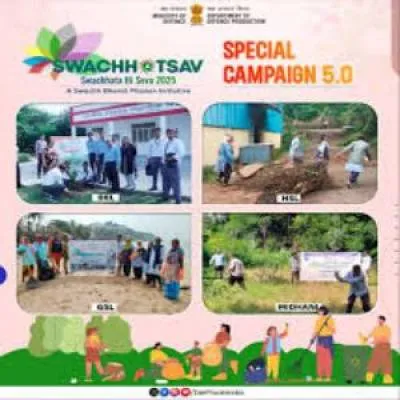
The Department of Defence (DoD) has successfully concluded Special Campaign 5.0, encompassing both the Preparation Phase (15–30 September 2025) and the Implementation Phase (2–31 October 2025). The campaign, conducted across 5,377 locations in India through various subordinate and attached offices, focused on cleanliness, efficiency, and sustainable practices.

The DoD achieved 100 per cent disposal of all identified targets under multiple parameters, including the resolution of pending references from MPs, VIPs, and public grievances filed through CPGRAMS. It also simplified 25 rules and procedures as part of administrative reform efforts.

During the campaign, 59,561 physical files were reviewed, out of which 11,401 were weeded out, while obsolete office and IT equipment were auctioned to generate Rs 1 million in revenue. The initiative also resulted in the unclogging of 57,648 square feet of office space, improving workplace organisation and efficiency.

As part of Special Campaign 5.0, several innovative and sustainable projects were undertaken:

Cantonment Boards across India adopted the “Reduce, Reuse, Recycle” model, promoting environmental conservation and waste reduction.

The Barrackpore Cantonment Board transformed a disused dumping ground into ‘Barrackpore Heritage Grove,’ a 2,500-square-foot rose garden.

The Secunderabad Cantonment Board launched the “Waste to Wonder Park,” converting discarded materials into art installations and functional park features.

The Delhi Cantonment Board implemented SMART (Swachhata Monitoring and Automated Reporting Tool) on a pilot basis for real-time cleanliness tracking and reporting.

The Border Roads Organisation (BRO) introduced a new ‘Geo Grid’ construction methodology for the Lukung–Chartse Road under Project Himank, enhancing durability in challenging terrains.

The Himalayan Mountaineering Institute (HMI), Darjeeling installed 52 solar water heaters, integrating renewable energy into campus operations to support environmental sustainability.

The campaign was implemented across various Defence establishments and affiliated organisations, including the Controller General of Defence Accounts, BRO, Directorate General of Armed Forces Medical Services, National Cadet Corps, Indian Coast Guard, Sainik Schools Society, Canteen Stores Department, and the Cantonments. Institutions such as the Nehru Institute of Mountaineering (Uttarkashi), National Institute of Mountaineering and Adventure Sports (Dirang, Arunachal Pradesh), Jawahar Institute of Mountaineering and Winter Sports (Pahalgam, J&K), and HMI (Darjeeling) also actively participated.

The Special Campaign 5.0 reinforces the Ministry’s commitment to sustainability, transparency, and good governance, while ensuring that defence establishments across India continue to adopt eco-friendly and efficient operational practices.

The Department of Defence (DoD) has successfully concluded Special Campaign 5.0, encompassing both the Preparation Phase (15–30 September 2025) and the Implementation Phase (2–31 October 2025). The campaign, conducted across 5,377 locations in India through various subordinate and attached offices, focused on cleanliness, efficiency, and sustainable practices. The DoD achieved 100 per cent disposal of all identified targets under multiple parameters, including the resolution of pending references from MPs, VIPs, and public grievances filed through CPGRAMS. It also simplified 25 rules and procedures as part of administrative reform efforts. During the campaign, 59,561 physical files were reviewed, out of which 11,401 were weeded out, while obsolete office and IT equipment were auctioned to generate Rs 1 million in revenue. The initiative also resulted in the unclogging of 57,648 square feet of office space, improving workplace organisation and efficiency. As part of Special Campaign 5.0, several innovative and sustainable projects were undertaken: Cantonment Boards across India adopted the “Reduce, Reuse, Recycle” model, promoting environmental conservation and waste reduction. The Barrackpore Cantonment Board transformed a disused dumping ground into ‘Barrackpore Heritage Grove,’ a 2,500-square-foot rose garden. The Secunderabad Cantonment Board launched the “Waste to Wonder Park,” converting discarded materials into art installations and functional park features. The Delhi Cantonment Board implemented SMART (Swachhata Monitoring and Automated Reporting Tool) on a pilot basis for real-time cleanliness tracking and reporting. The Border Roads Organisation (BRO) introduced a new ‘Geo Grid’ construction methodology for the Lukung–Chartse Road under Project Himank, enhancing durability in challenging terrains. The Himalayan Mountaineering Institute (HMI), Darjeeling installed 52 solar water heaters, integrating renewable energy into campus operations to support environmental sustainability. The campaign was implemented across various Defence establishments and affiliated organisations, including the Controller General of Defence Accounts, BRO, Directorate General of Armed Forces Medical Services, National Cadet Corps, Indian Coast Guard, Sainik Schools Society, Canteen Stores Department, and the Cantonments. Institutions such as the Nehru Institute of Mountaineering (Uttarkashi), National Institute of Mountaineering and Adventure Sports (Dirang, Arunachal Pradesh), Jawahar Institute of Mountaineering and Winter Sports (Pahalgam, J&K), and HMI (Darjeeling) also actively participated. The Special Campaign 5.0 reinforces the Ministry’s commitment to sustainability, transparency, and good governance, while ensuring that defence establishments across India continue to adopt eco-friendly and efficient operational practices.

Related Stories

Next Story
Infrastructure Transport

97 Per Cent Of Rongjeng-Mangsang-Adokgre Road Nears Completion

Deputy Chief Minister in-charge of public works Prestone Tynsong said in Shillong on 26 August that 97 per cent physical progress had been achieved on the ongoing Rongjeng-Mangsang-Adokgre road being constructed under the Non-Lapsable Central Pool of Resources (NLCPR). He noted the project was sanctioned in 2017 and that the stipulated time for completion had been 24 months from issue of the final work order. The deputy chief minister informed the assembly that the government had decided to include the remaining work under a World Bank project. In reply to a query from Rongjeng MLA Jim M Sangm..

Next Story
Infrastructure Transport

First TBM Starts Digging Five Point Three Kilometre Tunnel Under SGNP

The Goregaon-Mulund Link Road (GMLR) Phase three (B) project has reached a key milestone as the first tunnel boring machine (TBM) began excavation of the first of two tunnels beneath the Sanjay Gandhi National Park (SGNP). The machine, named Tulsi, started cutting a five point three kilometre bore that will link Dadasaheb Phalke Chitranagari in Goregaon East with Amar Nagar in Mulund West. Officials issued a statement noting the commencement of tunnelling work under the protected green belt. The twin tunnels are being constructed using mechanised tunnelling methods that aim to limit surface di..

Next Story
Infrastructure Transport

UP Approves Two Expressways And Rs 240 bn Infrastructure Push

The Uttar Pradesh Cabinet approved a series of infrastructure and industrial investment proposals totalling Rs 240 billion (Rs 240 bn), including two major expressway projects, a manufacturing and logistics cluster in Sultanpur and incentives for 11 industrial projects across the state. The decisions, taken at a meeting chaired by Chief Minister Yogi Adityanath, underline the state government’s focus on expanding road connectivity around emerging industrial hubs while attracting manufacturing investment to districts beyond major urban centres. The approvals cover both greenfield expressway c..

Advertisement

Subscribe to Our Newsletter

Get daily newsletters around different themes from Construction world.

STAY CONNECTED

Advertisement

SPECIAL OFFER
QR Code











