

DRDO Successfully Conducts High-Altitude Trials
DEFENSE

DRDO Successfully Conducts High-Altitude Trials

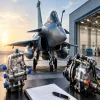
The Defence Bio-Engineering & Electro Medical Laboratory (DEBEL), a Bengaluru-based DRDO lab, has successfully completed high-altitude trials of the On-Board Oxygen Generating System (OBOGS)-based Integrated Life Support System (ILSS) for the LCA Tejas aircraft. The milestone trials were conducted on March 4, 2025, demonstrating India’s advancements in self-reliant aerospace technology.

Revolutionary Life Support System for Fighter Pilots The OBOGS-based ILSS is a state-of-the-art oxygen generation and regulation system, eliminating the dependence on traditional liquid oxygen cylinders. This ensures a continuous and real-time supply of breathable oxygen, enhancing pilot endurance, safety, and operational efficiency in extreme combat conditions.

The ILSS underwent rigorous testing on Hindustan Aeronautics Limited (HAL)’s LCA-Prototype Vehicle-3, in collaboration with the Aeronautical Development Agency (ADA). It successfully functioned in diverse flight conditions, including: ? Altitudes up to 50,000 feet Above Mean Sea Level ? High-G maneuvers ? Oxygen demand breathing tests ? Full functionality validation of Anti-G Valve & Breathing Oxygen System (BOS)

The Centre for Military Airworthiness & Certification (CEMILAC) granted clearance for the flight tests, ensuring compliance with stringent aeromedical and operational standards.

Indigenous Manufacturing & Strategic Collaboration The ILSS integrates 10 Line Replaceable Units (LRUs), including: ???? Low-Pressure Breathing Regulator ???? Emergency Oxygen System ???? Oxygen Sensor ???? Anti-G Valve

With 90% indigenous content, the system represents a major step in India’s Atmanirbhar Bharat initiative. Manufactured by L&T as a Development cum Production Partner, it exemplifies successful collaboration between DRDO, HAL, ADA, CEMILAC, the National Flight Test Center, Directorate General of Aeronautical Quality Assurance (DGAQA), and the Indian Air Force (IAF).

Potential Deployment Across Fighter Fleets Beyond its integration with LCA Tejas, the ILSS has the capability to be adapted for other fighter aircraft, including the MiG-29K. This development paves the way for enhanced pilot safety and efficiency across India's aerial combat platforms.

Leaders Applaud India’s Aerospace Advancements Raksha Mantri Shri Rajnath Singh lauded DRDO, the IAF, and industry partners, stating that this breakthrough strengthens India’s defence capabilities and aligns with the vision of ‘Viksit Bharat 2047’.

Dr. Samir V Kamat, Secretary, Department of Defence R&D and Chairman DRDO, also commended the successful trials, emphasising India’s commitment to cutting-edge defence technology and self-reliance in aerospace innovation. With this landmark achievement, India cements its position among global leaders in indigenous military aviation technology, ensuring superior pilot survivability and enhanced operational effectiveness in high-altitude combat missions.

The Defence Bio-Engineering & Electro Medical Laboratory (DEBEL), a Bengaluru-based DRDO lab, has successfully completed high-altitude trials of the On-Board Oxygen Generating System (OBOGS)-based Integrated Life Support System (ILSS) for the LCA Tejas aircraft. The milestone trials were conducted on March 4, 2025, demonstrating India’s advancements in self-reliant aerospace technology. Revolutionary Life Support System for Fighter Pilots The OBOGS-based ILSS is a state-of-the-art oxygen generation and regulation system, eliminating the dependence on traditional liquid oxygen cylinders. This ensures a continuous and real-time supply of breathable oxygen, enhancing pilot endurance, safety, and operational efficiency in extreme combat conditions. The ILSS underwent rigorous testing on Hindustan Aeronautics Limited (HAL)’s LCA-Prototype Vehicle-3, in collaboration with the Aeronautical Development Agency (ADA). It successfully functioned in diverse flight conditions, including: ? Altitudes up to 50,000 feet Above Mean Sea Level ? High-G maneuvers ? Oxygen demand breathing tests ? Full functionality validation of Anti-G Valve & Breathing Oxygen System (BOS) The Centre for Military Airworthiness & Certification (CEMILAC) granted clearance for the flight tests, ensuring compliance with stringent aeromedical and operational standards. Indigenous Manufacturing & Strategic Collaboration The ILSS integrates 10 Line Replaceable Units (LRUs), including: ???? Low-Pressure Breathing Regulator ???? Emergency Oxygen System ???? Oxygen Sensor ???? Anti-G Valve With 90% indigenous content, the system represents a major step in India’s Atmanirbhar Bharat initiative. Manufactured by L&T as a Development cum Production Partner, it exemplifies successful collaboration between DRDO, HAL, ADA, CEMILAC, the National Flight Test Center, Directorate General of Aeronautical Quality Assurance (DGAQA), and the Indian Air Force (IAF). Potential Deployment Across Fighter Fleets Beyond its integration with LCA Tejas, the ILSS has the capability to be adapted for other fighter aircraft, including the MiG-29K. This development paves the way for enhanced pilot safety and efficiency across India's aerial combat platforms. Leaders Applaud India’s Aerospace Advancements Raksha Mantri Shri Rajnath Singh lauded DRDO, the IAF, and industry partners, stating that this breakthrough strengthens India’s defence capabilities and aligns with the vision of ‘Viksit Bharat 2047’. Dr. Samir V Kamat, Secretary, Department of Defence R&D and Chairman DRDO, also commended the successful trials, emphasising India’s commitment to cutting-edge defence technology and self-reliance in aerospace innovation. With this landmark achievement, India cements its position among global leaders in indigenous military aviation technology, ensuring superior pilot survivability and enhanced operational effectiveness in high-altitude combat missions.

Next Story
Infrastructure Urban

Jyoti Structures FY26 profit rises 56.5%

Jyoti Structures (JSL) recently reported strong financial results for the quarter and year ended 31 March 2026, driven by disciplined execution, cost management and steady progress across its order book.For Q4 FY2025-26, total income rose 44.2 per cent to Rs 2.41 billion from Rs 1.67 billion in Q4 FY2024-25. EBITDA increased 58.6 per cent to Rs 237 million, while EBITDA margin improved by 89 basis points to 9.84 per cent. Profit before tax grew 53.3 per cent to Rs 188.5 million, and net profit rose 51.9 per cent to Rs 181.4 million.For FY2025-26, total income grew 53.1 per cent to Rs 7.72 bill..

Next Story
Infrastructure Energy

Cat BEPU to Power Doppstadt Separator at IFAT 2026

Caterpillar’s Cat Battery Electric Power Unit (BEPU) has been selected by Doppstadt to power its SWS 6 Spiral Shaft Separator, which will be showcased for the first time at IFAT 2026 in Munich, Germany, from 4–7 May.The compact plug-and-play BEPU is designed to replace a diesel engine within the same space, using the same mounting locations and relative machine position. It integrates the battery, motor, inverter, onboard charging, cooling and controls, enabling OEMs to electrify existing chassis platforms without extensive redesign.Caterpillar and Cat dealer Zeppelin Power Systems have be..

Next Story
Infrastructure Urban

VECV sales rise 6.9% in April 2026

VE Commercial Vehicles, a joint venture between Volvo Group and Eicher Motors, recorded sales of 7,318 units in April 2026, compared to 6,846 units in April 2025, registering 6.9 per cent growth. The total included 7,159 units under the Eicher brand and 159 units under the Volvo brand.Eicher branded trucks and buses reported sales of 7,159 units during the month, up 6.6 per cent from 6,717 units in April 2025. In the domestic commercial vehicle market, Eicher sales rose 8.6 per cent to 6,797 units from 6,257 units a year earlier.Exports declined 21.3 per cent, with VECV recording 362 units in ..

Advertisement

Subscribe to Our Newsletter

Get daily newsletters around different themes from Construction world.

STAY CONNECTED

Advertisement

Advertisement

Advertisement