India Nears Commissioning Of Third Indigenous Nuclear Submarine
DEFENSE

India Nears Commissioning Of Third Indigenous Nuclear Submarine

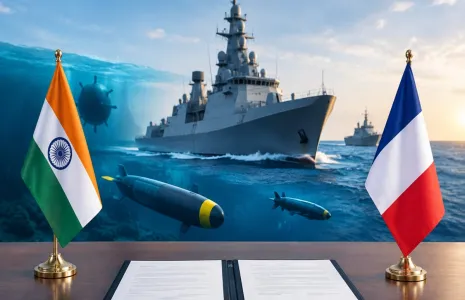
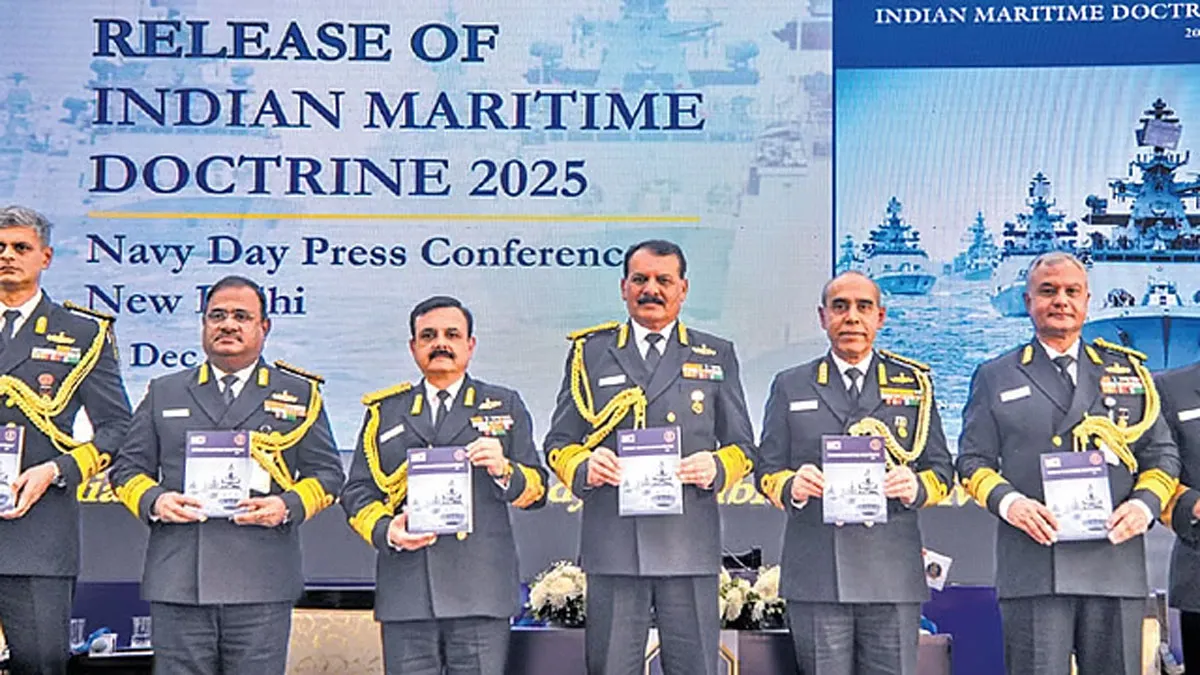
India is preparing to reinforce the naval leg of its nuclear triad, with Navy Chief Admiral Dinesh K. Tripathi announcing on Tuesday that the country’s third indigenous nuclear-powered submarine, INS Aridaman, is in its “final stages of trials” and “will be commissioned soon”. The addition marks a significant enhancement to India’s underwater deterrent, part of one of the nation’s most strategically sensitive defence programmes.

INS Aridaman follows INS Arihant and INS Arighat in India’s SSBN line-up, a fleet central to the country’s nuclear deterrence framework, which already includes established land and air components. Speaking ahead of Navy Day, Admiral Tripathi said the force is focused on strengthening “overall combat prowess” as multiple major projects near completion.

He confirmed that the long-pending acquisition of six stealth submarines under Project 75 India (P75-I) is “nearing completion”. The Navy also expects to receive the first four of 26 Rafale-M fighter jets in 2028, part of a Rs 640 billion agreement with France signed in April.

INS Arihant, India’s first indigenous nuclear-powered submarine, was launched in 2009 and quietly commissioned in 2016, placing India among a select group of nations—the United States, Russia, the United Kingdom, France and China—that operate such vessels.

Admiral Tripathi also highlighted the Navy’s operational posture during recent tensions with Pakistan. Recalling Operation Sindoor, he said India’s “aggressive posturing” compelled the Pakistan Navy to remain near its ports along the Makran coast. The Indian Navy maintained high readiness across the Western Arabian Sea for seven to eight months following the escalation. The operation also increased financial strain on Pakistan, as merchant ships avoided its waters and insurance costs rose sharply.

Despite strengthening its strategic capabilities, India continues to reaffirm its commitment to global nuclear disarmament. Following the 1998 Pokhran-II tests, India declared a policy of “credible minimum deterrence” and a “no first use” commitment, formalised in its 2003 nuclear doctrine.

India is preparing to reinforce the naval leg of its nuclear triad, with Navy Chief Admiral Dinesh K. Tripathi announcing on Tuesday that the country’s third indigenous nuclear-powered submarine, INS Aridaman, is in its “final stages of trials” and “will be commissioned soon”. The addition marks a significant enhancement to India’s underwater deterrent, part of one of the nation’s most strategically sensitive defence programmes. INS Aridaman follows INS Arihant and INS Arighat in India’s SSBN line-up, a fleet central to the country’s nuclear deterrence framework, which already includes established land and air components. Speaking ahead of Navy Day, Admiral Tripathi said the force is focused on strengthening “overall combat prowess” as multiple major projects near completion. He confirmed that the long-pending acquisition of six stealth submarines under Project 75 India (P75-I) is “nearing completion”. The Navy also expects to receive the first four of 26 Rafale-M fighter jets in 2028, part of a Rs 640 billion agreement with France signed in April. INS Arihant, India’s first indigenous nuclear-powered submarine, was launched in 2009 and quietly commissioned in 2016, placing India among a select group of nations—the United States, Russia, the United Kingdom, France and China—that operate such vessels. Admiral Tripathi also highlighted the Navy’s operational posture during recent tensions with Pakistan. Recalling Operation Sindoor, he said India’s “aggressive posturing” compelled the Pakistan Navy to remain near its ports along the Makran coast. The Indian Navy maintained high readiness across the Western Arabian Sea for seven to eight months following the escalation. The operation also increased financial strain on Pakistan, as merchant ships avoided its waters and insurance costs rose sharply. Despite strengthening its strategic capabilities, India continues to reaffirm its commitment to global nuclear disarmament. Following the 1998 Pokhran-II tests, India declared a policy of “credible minimum deterrence” and a “no first use” commitment, formalised in its 2003 nuclear doctrine.

Next Story
Real Estate

L&T Consolidates Its Realty Operations Under One Entity

Larsen & Toubro has approved the transfer of its Realty Business Undertaking to its wholly-owned subsidiary, L&T Realty Properties Ltd, through a slump-sale via a Scheme of Arrangement. This marks the first phase of a broader consolidation strategy aimed at placing all real estate assets under L&T Realty, creating a single, future-ready development arm capable of leveraging India’s expanding property market. The unified structure is expected to enhance scale, agility and financial resilience as L&T Realty expands its project pipeline, strengthens land acquisition and accelerates joint devel..

Next Story
Infrastructure Transport

India Opens Longest Precast Cut-and-Cover Tunnel

India has inaugurated its longest precast cut-and-cover tunnel, a 920-metre structure located at an altitude of 12,300 ft (3,750 m) in a sensitive border region. The project was formally opened on 7 December 2025 by Defence Minister Rajnath Singh. The tunnel is designed to improve troop movement, strengthen supply lines and bolster operational readiness in challenging high-altitude terrain. The company has expressed gratitude to the Ministry of Defence and the Border Roads Organisation for their support and guidance, noting that it is honoured to contribute to a project of such strategic sign..

Next Story
Infrastructure Urban

Thermax Marks 30 Years of Listing on NSE

Thermax has celebrated 30 years of its listing on the National Stock Exchange with a ceremonial bell-ringing event held in Mumbai. The occasion brought together NSE MD & CEO Ashishkumar Chauhan, Thermax Chairperson Meher Pudumjee, Managing Director and CEO Ashish Bhandari, board members, senior leaders and key stakeholders who have supported the company’s journey. Listed on 30 August 1995, Thermax has evolved from a packaged boiler and heating equipment manufacturer into a global provider of energy transition and sustainability solutions. Established in 1966 as Wanson India by the late A S ..

Advertisement

Subscribe to Our Newsletter

Get daily newsletters around different themes from Construction world.

STAY CONNECTED

Advertisement

Advertisement

Advertisement

Advertisement

Open In App