Raigad Pen Smart City Draws Rs 1 Trillion Investment
SMART CITIES

Raigad Pen Smart City Draws Rs 1 Trillion Investment

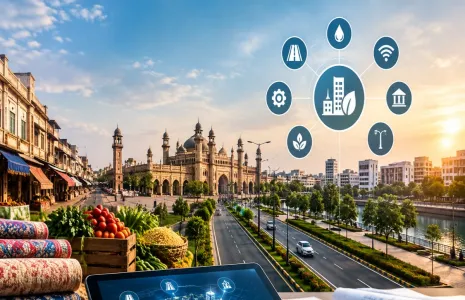
The Raigad Pen Smart City near Mumbai has attracted investments exceeding Rs 1 trillion, Maharashtra Chief Minister Devendra Fadnavis said on the sidelines of the World Economic Forum summit in Davos.

Speaking in an interview, Fadnavis said the state government has signed memoranda of understanding with global investors from the United States, the United Arab Emirates, Singapore, Australia and the Netherlands to develop the smart city. He added that land has been identified, approvals have been secured and the project has been opened to investors, with commitments already crossing Rs 1 trillion and expected to be operationalised soon.

The Chief Minister also highlighted the proposed Innovation City near Navi Mumbai International Airport, which he described as a global innovation ecosystem for India. The project is expected to host multiple artificial intelligence and innovation hubs, with Tata Sons committing USD 11 billion towards its development.

Fadnavis said pollution remains a key challenge in India and outlined plans to develop a comprehensive circular economy model for Mumbai. The initiative aims to enable municipal authorities and private investors to convert waste into economic value, improving air and water quality. Waste from sectors such as electronics, construction and healthcare will be addressed under the programme.

He said the circular economy project, designed in collaboration with Tata Sons and open to other private players, will be led by the municipal corporation and developed as a national model. As part of the initiative, the government plans to treat legacy waste, including the Deonar landfill site, through biomining, with reclaimed land proposed for housing development.

Fadnavis noted that these infrastructure and urban development initiatives are long-term projects expected to take seven to nine years to complete, though visible progress is anticipated within the next year.

He also said India continues to be a preferred destination for global investors, citing political stability, strong governance and consistent policy frameworks. According to him, even investors from countries with trade differences view India as a stable and attractive investment destination.

The Raigad Pen Smart City near Mumbai has attracted investments exceeding Rs 1 trillion, Maharashtra Chief Minister Devendra Fadnavis said on the sidelines of the World Economic Forum summit in Davos. Speaking in an interview, Fadnavis said the state government has signed memoranda of understanding with global investors from the United States, the United Arab Emirates, Singapore, Australia and the Netherlands to develop the smart city. He added that land has been identified, approvals have been secured and the project has been opened to investors, with commitments already crossing Rs 1 trillion and expected to be operationalised soon. The Chief Minister also highlighted the proposed Innovation City near Navi Mumbai International Airport, which he described as a global innovation ecosystem for India. The project is expected to host multiple artificial intelligence and innovation hubs, with Tata Sons committing USD 11 billion towards its development. Fadnavis said pollution remains a key challenge in India and outlined plans to develop a comprehensive circular economy model for Mumbai. The initiative aims to enable municipal authorities and private investors to convert waste into economic value, improving air and water quality. Waste from sectors such as electronics, construction and healthcare will be addressed under the programme. He said the circular economy project, designed in collaboration with Tata Sons and open to other private players, will be led by the municipal corporation and developed as a national model. As part of the initiative, the government plans to treat legacy waste, including the Deonar landfill site, through biomining, with reclaimed land proposed for housing development. Fadnavis noted that these infrastructure and urban development initiatives are long-term projects expected to take seven to nine years to complete, though visible progress is anticipated within the next year. He also said India continues to be a preferred destination for global investors, citing political stability, strong governance and consistent policy frameworks. According to him, even investors from countries with trade differences view India as a stable and attractive investment destination.

Next Story
Building Material

Steel: Shielded or Strengthened?

Going forward, domestic steel mills are targeting capacity expansion of nearly 40 per cent through till FY31, adding 80-85 mt, translating into an investment pipeline of $ 45-50 billion. So, Jhunjhunwala points out that continuing the safeguard duty will be vital to prevent a surge in imports and protect domestic prices from external shocks. While in FY26, the industry operating profit per tonne is expected to hold at around $ 108, similar to last year, the industry’s earnings must meaningfully improve from hereon to sustain large-scale investments. Else, domestic mills could..

Next Story
Infrastructure Transport

Metro Moves: From Expansion to System Integration

India’s metro rail programme has entered a new phase—one where the focus is no longer only on adding kilometres, but on building integrated, reliable and financially sustainable urban transit systems. With more than 1,000 km of metro lines already operational and daily ridership exceeding 10 million, the challenge now lies in execution quality, underground risk management, multimodal integration, viable funding structures, and large-scale digital adoption. These themes framed deliber..

Next Story
Infrastructure Urban

Turning environmental challenges into recoverable value streams.

The lack of scalable, scientific solutions capable of handling legacy waste and complex urban waste streams led to the establishment of Blue Planet Environmental Solutions. In conversation with CW, Prashant Singh, Co-Founder & CEO, shares the company’s journey from a startup to a city-scale environmental infrastructure player, detailing large municipal projects, decades-old legacy waste remediation, land recovery outcomes and its expanding circular economy footprint.How has the visio..

Advertisement

Subscribe to Our Newsletter

Get daily newsletters around different themes from Construction world.

STAY CONNECTED

Advertisement

Advertisement

Advertisement

Advertisement

Open In App