India Celebrates Three Years of National Logistics Policy
WAREHOUSING & LOGISTICS

India Celebrates Three Years of National Logistics Policy

The Department for Promotion of Industry and Internal Trade (DPIIT), Ministry of Commerce and Industry, marked the third anniversary of the National Logistics Policy (NLP), launched by Prime Minister Shri Narendra Modi on 17th September 2022. In its three years, the policy has advanced reforms in digital integration, skill development, policy alignment, and infrastructure planning, significantly improving efficiency and reducing logistics costs across domestic and global supply chains.

Aligned with the PM GatiShakti National Master Plan, NLP seeks to bring logistics costs in line with global benchmarks, elevate India’s position in the World Bank’s Logistics Performance Index (LPI) to the top 25 by 2030, and establish a data-driven logistics decision support system.

Key Achievements (2022–2025):
  • Digital Platforms: Unified Logistics Interface Platform (ULIP) enabled secure API integration across 30+ systems, facilitating over 160 crore digital transactions by August 2025. The Logistics Data Bank tracked 75 million EXIM containers across 101 Inland Container Depots.
  • Performance Metrics: LEADS Index (2024–25) introduced corridor access, terminal speed, digital logistics, and sustainability measures, aiding India’s rise to the 38th rank in LPI.
  • Innovation & ESG: LEAPS recognised MSMEs, startups, and academia for green logistics and ESG practices. A logistics cost study with NCAER is in its final stage.
  • Infrastructure: Large-scale Multi-Modal Logistics Parks (MMLPs) are being developed to integrate transport, customs, cold storage, and packaging services.
  • Policy & Integration: The Service Improvement Group (SIG) and E-Logs portal resolved 100 out of 140 industry issues, improving ease of doing business.
  • Sustainability: IIM Bangalore’s Transportation Emissions Measurement Tool (TEMT), aligned with ISO 14083, supports carbon measurement and green practices.
  • Skill Development: Over 100 universities and institutes now offer logistics courses, training 65,000 professionals between 2023–2025. More than 250 workshops and new programmes under GatiShakti Vishwavidyalaya are expanding sectoral capacity.
  • Sectoral Policies (SPEL): Frameworks for coal, cement, steel, and food processing logistics are underway, with coal and cement plans already finalised.
  • Inclusion: A study with GIZ is under review to boost women’s participation in logistics.
  • Urban Freight: Guidelines for City Logistics Plans (CLPs) are being integrated into State Action Plans to cut congestion, pollution, and costs.
At the regional level, 27 States and Union Territories have adopted State Logistics Policies, 14 have framed Logistics Action Plans, and 19 have granted industry status to logistics for tax and incentive benefits.
While challenges remain in infrastructure, regulatory harmonisation, and digital adoption by smaller operators, the Government remains committed to strengthening multimodal integration through the ‘Whole of Government’ approach under PM GatiShakti, backed by stakeholder engagement, public-private partnerships, and innovative financing.

News source: PIB

The Department for Promotion of Industry and Internal Trade (DPIIT), Ministry of Commerce and Industry, marked the third anniversary of the National Logistics Policy (NLP), launched by Prime Minister Shri Narendra Modi on 17th September 2022. In its three years, the policy has advanced reforms in digital integration, skill development, policy alignment, and infrastructure planning, significantly improving efficiency and reducing logistics costs across domestic and global supply chains.Aligned with the PM GatiShakti National Master Plan, NLP seeks to bring logistics costs in line with global benchmarks, elevate India’s position in the World Bank’s Logistics Performance Index (LPI) to the top 25 by 2030, and establish a data-driven logistics decision support system.Key Achievements (2022–2025):Digital Platforms: Unified Logistics Interface Platform (ULIP) enabled secure API integration across 30+ systems, facilitating over 160 crore digital transactions by August 2025. The Logistics Data Bank tracked 75 million EXIM containers across 101 Inland Container Depots.Performance Metrics: LEADS Index (2024–25) introduced corridor access, terminal speed, digital logistics, and sustainability measures, aiding India’s rise to the 38th rank in LPI.Innovation & ESG: LEAPS recognised MSMEs, startups, and academia for green logistics and ESG practices. A logistics cost study with NCAER is in its final stage.Infrastructure: Large-scale Multi-Modal Logistics Parks (MMLPs) are being developed to integrate transport, customs, cold storage, and packaging services.Policy & Integration: The Service Improvement Group (SIG) and E-Logs portal resolved 100 out of 140 industry issues, improving ease of doing business.Sustainability: IIM Bangalore’s Transportation Emissions Measurement Tool (TEMT), aligned with ISO 14083, supports carbon measurement and green practices.Skill Development: Over 100 universities and institutes now offer logistics courses, training 65,000 professionals between 2023–2025. More than 250 workshops and new programmes under GatiShakti Vishwavidyalaya are expanding sectoral capacity.Sectoral Policies (SPEL): Frameworks for coal, cement, steel, and food processing logistics are underway, with coal and cement plans already finalised.Inclusion: A study with GIZ is under review to boost women’s participation in logistics.Urban Freight: Guidelines for City Logistics Plans (CLPs) are being integrated into State Action Plans to cut congestion, pollution, and costs.At the regional level, 27 States and Union Territories have adopted State Logistics Policies, 14 have framed Logistics Action Plans, and 19 have granted industry status to logistics for tax and incentive benefits.While challenges remain in infrastructure, regulatory harmonisation, and digital adoption by smaller operators, the Government remains committed to strengthening multimodal integration through the ‘Whole of Government’ approach under PM GatiShakti, backed by stakeholder engagement, public-private partnerships, and innovative financing.News source: PIB

Next Story
Real Estate

Integrated Waterproofing Strategies

Waterproofing buildings used to be an annual pre-monsoon affair but the evolution of real-estate development has changed that approach. In new developments, developers are weaving waterproofing solutions into both the design and construction phases, an approach that Nikhil Madan, Managing Director, Mahima Group, says, “is all about ensuring lasting durability [of the building] and keeping lifecycle risks including water seepage and extensive maintenance to a minimum.”Watertight by designAluminium formwork systems aren’t commonly thought of as a waterproofing tool but at the Mahima Group,..

Next Story
Infrastructure Urban

GROHE Showcases Water-Led Design At Milan

GROHE unveiled its GROHE SPA Aqua Sanctuary at Milan Design Week 2026, transforming Piccolo Teatro Studio Melato into an immersive showcase of water, design and wellbeing. Built on the philosophy of ‘Wellbeing Through Water’, the installation reimagined bathrooms as holistic spaces for relaxation, rejuvenation and self-care.The Aqua Sanctuary was presented through three interconnected sanctums. The first showcased the 3D-printed GROHE SPA AquaTree shower and faucet, highlighting bespoke innovation and biophilic design. The second featured the Atrio Private Collection and GROHE SPA x Buster..
Next Story
Infrastructure Transport

Rahee Group Expands Rail Manufacturing Capacity

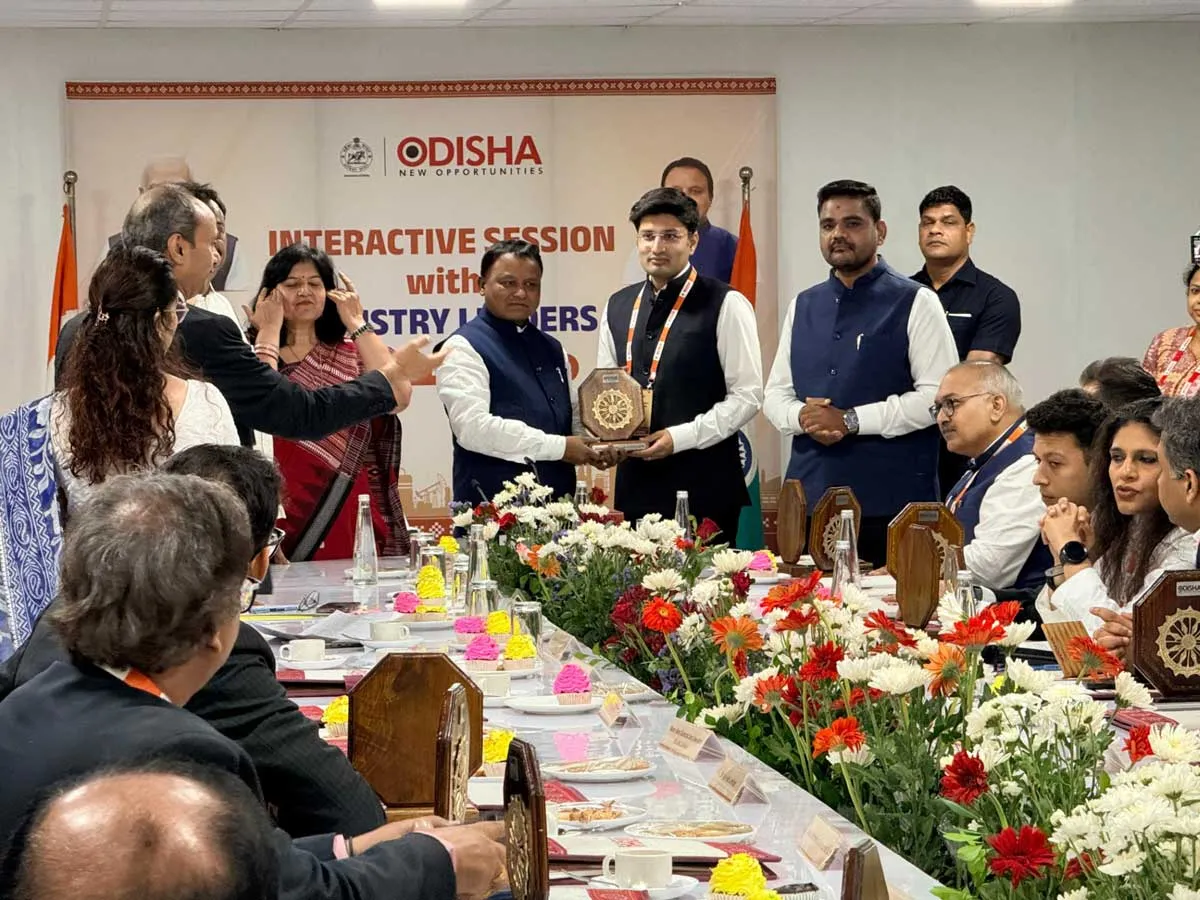
Rahee Group has outlined a multi-year investment roadmap to expand its operational footprint and strengthen manufacturing capabilities for India’s growing railway and urban transit sector. The Group is expanding in Odisha with a new Track Component Casting Unit, for which the groundbreaking ceremony was held on 8 April 2026 in the presence of Odisha Chief Minister Mohan Charan Majhi.The Group’s flagship EPC arm, Rahee Infratech Ltd, continues to focus on complex rail infrastructure projects, including track systems, bridges, viaducts and ballastless infrastructure. Its wholly owned subsidi..

Advertisement

Subscribe to Our Newsletter

Get daily newsletters around different themes from Construction world.

STAY CONNECTED

Advertisement

Advertisement

Advertisement

-->