Tata Steel and JSPL facing logistics issue in supplying oxygen
WAREHOUSING & LOGISTICS

Tata Steel and JSPL facing logistics issue in supplying oxygen

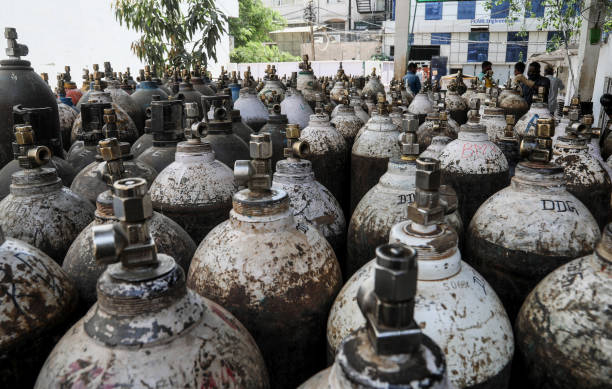
Steel manufacturers Tata Steel and JSPL told the media that logistics-related issues have posed a challenge in the transportation of medical oxygen from steel plants to health facilities.

Business conglomerates such as Tata Steel, JSW and Reliance Industries Ltd (RIL), Rashtriya Ispat Nigam Ltd (RINL), among others, have aligned themselves to divert oxygen for emergency medical use, as the second wave of Covid-19 has skyrocketed the oxygen demand in the country.

Both the companies said they are making efforts to increase their daily oxygen supply.

State-run RINL also said it is looking to increase the daily supply of liquid medical oxygen (LMO) to states for the treatment of Covid-19 patients.

Tata Steel said the Indian government has set up a committee that reviews the production, consumption and stocks available at all the steel plants in the country.

The company has allocated the distribution of liquid medical oxygen (LMO) from each steel plant to various states. The steel major said it has been supplying 300 tonne of LMO daily to states such as Uttar Pradesh, Madhya Pradesh, Andhra Pradesh, Jharkhand, Odisha, Bihar and West Bengal.

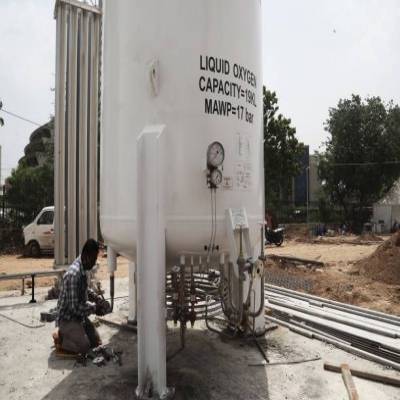
According to the company, although it is ready to increase the supply of oxygen, currently, there is a shortage of containers and trailers for transportation.

JSPL also said logistics remains an issue in the transportation of medical oxygen from steel plants. The company said tankers are unavailable, and there is a need to track the number of tankers in the country so that they can be assigned the task of transporting oxygen.

In addition to the daily supply of oxygen, the company has 500 tonne LMO ready to be supplied. JSPL is supplying up to 100 tonnes of oxygen daily from its facilities at Angul (Odisha) and Raigarh (Chhattisgarh).

RINL said the company, on average, is supplying 100 tonnes of oxygen daily to Andhra Pradesh and adjoining states.

Image Source


Also Read: Steel plants to divert oxygen for emergency medical use

Also Read: Covid logistics: Inox Air Products joins Railways in oxygen Ro-Ro

Steel manufacturers Tata Steel and JSPL told the media that logistics-related issues have posed a challenge in the transportation of medical oxygen from steel plants to health facilities. Business conglomerates such as Tata Steel, JSW and Reliance Industries Ltd (RIL), Rashtriya Ispat Nigam Ltd (RINL), among others, have aligned themselves to divert oxygen for emergency medical use, as the second wave of Covid-19 has skyrocketed the oxygen demand in the country. Both the companies said they are making efforts to increase their daily oxygen supply. State-run RINL also said it is looking to increase the daily supply of liquid medical oxygen (LMO) to states for the treatment of Covid-19 patients. Tata Steel said the Indian government has set up a committee that reviews the production, consumption and stocks available at all the steel plants in the country. The company has allocated the distribution of liquid medical oxygen (LMO) from each steel plant to various states. The steel major said it has been supplying 300 tonne of LMO daily to states such as Uttar Pradesh, Madhya Pradesh, Andhra Pradesh, Jharkhand, Odisha, Bihar and West Bengal. According to the company, although it is ready to increase the supply of oxygen, currently, there is a shortage of containers and trailers for transportation. JSPL also said logistics remains an issue in the transportation of medical oxygen from steel plants. The company said tankers are unavailable, and there is a need to track the number of tankers in the country so that they can be assigned the task of transporting oxygen. In addition to the daily supply of oxygen, the company has 500 tonne LMO ready to be supplied. JSPL is supplying up to 100 tonnes of oxygen daily from its facilities at Angul (Odisha) and Raigarh (Chhattisgarh). RINL said the company, on average, is supplying 100 tonnes of oxygen daily to Andhra Pradesh and adjoining states. Image Source Also Read: Steel plants to divert oxygen for emergency medical use Also Read: Covid logistics: Inox Air Products joins Railways in oxygen Ro-Ro

Next Story
Infrastructure Transport

Pune To Build Nine Km Link Road Between Highways

The Pune Municipal Corporation (PMC) has decided to appoint an expert to plan the development of a nine km long, 60 metre wide road from Khadi Machine chowk to Wadki chowk as an extension to the Katraj-Kondhwa road to link the Mumbai-Satara and Pune-Solapur national highways. The scheme is intended to divert heavy vehicle traffic away from the city and improve access between the two arterial routes. The project has been prioritised by the PMC and forms part of a larger set of schemes in which 19 roads have been identified for development at a combined cost of Rs 9.82 billion (bn) to address c..

Next Story
Infrastructure Transport

Barabanki Bahraich Six Lane Highway Approved in Uttar Pradesh

The Uttar Pradesh government has approved construction of a new six-lane highway linking Barabanki and Bahraich as part of National Highway 927, and the cabinet has cleared the project. The alignment will pass through Mustafabad and Kaiserganj and extend for about 101.5 km, creating a key corridor for local and long-distance movement. The National Highways Authority of India will oversee the work and has signalled the scheme is intended to strengthen regional connectivity and cross-border access to Nepal. The project carries an estimated total cost of Rs 69,690 million, equivalent to Rs 69.69..

Next Story
Infrastructure Transport

Toll At Kharegaon Likely As Highway Upgrade Nears Completion

A section of the highway at Kharegaon has undergone an upgrade and is approaching completion, and authorities have indicated plans for a toll to be introduced once works finish. The project has focused on strengthening the carriageway, improving drainage and upgrading intersections to enhance safety and capacity. Officials have said the toll will be used to recover construction costs and fund ongoing maintenance. The upgrade included resurfacing of the pavement, widening of certain stretches and installation of modern signage and lighting to reduce accident risk. Contractors completed most ma..

Advertisement

Subscribe to Our Newsletter

Get daily newsletters around different themes from Construction world.

STAY CONNECTED

Advertisement

Advertisement

Advertisement