


Bhubaneswar To Set Up 50 TPD Charcoal Plant
WATER & WASTE

Bhubaneswar To Set Up 50 TPD Charcoal Plant

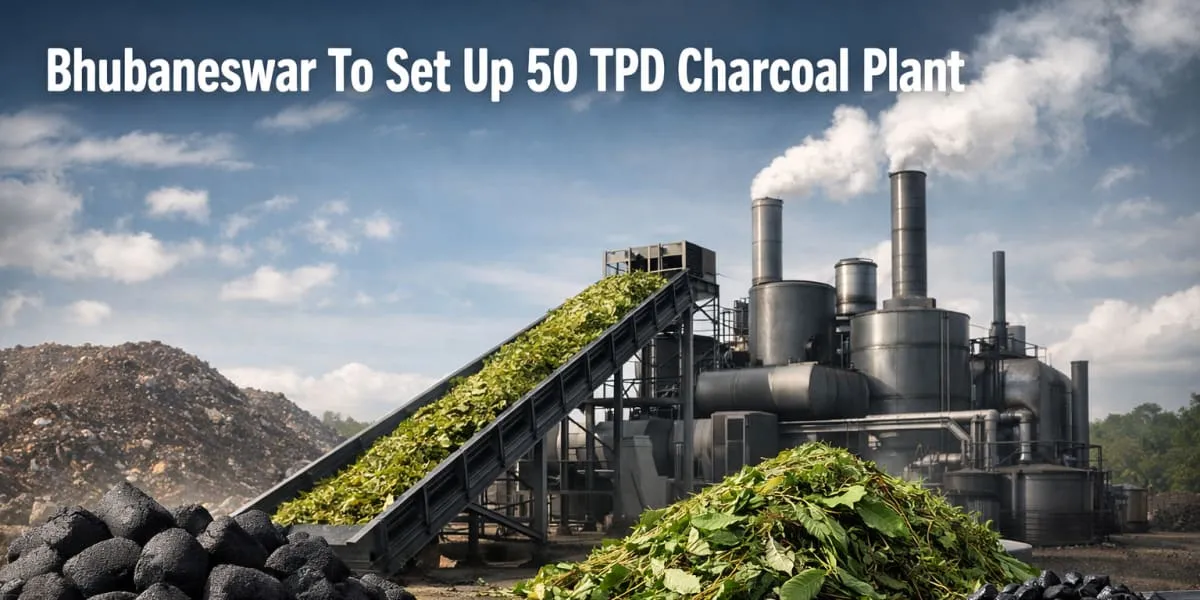
The Bhubaneswar Municipal Corporation has initiated the process to set up a 50 tonne per day (TPD) charcoal plant to convert the city's green waste into a smokeless fuel that could substitute coal, firewood and LPG in commercial and domestic markets. The facility will form part of a 200 TPD municipal solid waste processing complex at Bhuasuni where a bio-mining project is underway to clear legacy waste. Officials indicated the move is driven by an effort to find sustainable alternatives amid a global fuel crisis.

Under the proposal, about 150 tonne of solid waste from the site will be processed and converted into various value-added products, while a separate 50 TPD unit will handle green waste for charcoal production. The charcoal plant is intended to manage ligno-cellulosic fractions such as leaves, branches and other biomass residues that currently lack a dedicated treatment facility in the city. This separation aims to improve resource recovery and reduce reliance on external disposal mechanisms.

BMC officials also said steps are being taken to commission a 25 TPD biomass briquettes facility in Palasuni, which is expected to be made operational in one or two months, although that unit is designed primarily for woody biomass and not soft horticultural residues. The briquettes plant will complement the charcoal unit by processing suitable biomass streams and expanding the range of renewable fuels produced locally. Together these installations are intended to strengthen municipal capacity to manage green and horticulture waste.

The conversion process will use controlled carbonisation to thermally decompose biomass and produce biochar, along with byproducts such as syngas and bio-oil. The resulting charcoal is described by officials as a smokeless, high-calorific-value fuel suitable as a renewable substitute for conventional coal in industrial and commercial applications as well as for domestic use. Project implementation will follow finalisation of land and selection of an implementing agency through a bidding process, a BMC deputy commissioner said.

"Join industry leaders at RAHSTA Expo, India's premier platform for roads, highways and traffic infrastructure. Register now to explore innovations, network with experts and shape the future of mobility."

The Bhubaneswar Municipal Corporation has initiated the process to set up a 50 tonne per day (TPD) charcoal plant to convert the city's green waste into a smokeless fuel that could substitute coal, firewood and LPG in commercial and domestic markets. The facility will form part of a 200 TPD municipal solid waste processing complex at Bhuasuni where a bio-mining project is underway to clear legacy waste. Officials indicated the move is driven by an effort to find sustainable alternatives amid a global fuel crisis. Under the proposal, about 150 tonne of solid waste from the site will be processed and converted into various value-added products, while a separate 50 TPD unit will handle green waste for charcoal production. The charcoal plant is intended to manage ligno-cellulosic fractions such as leaves, branches and other biomass residues that currently lack a dedicated treatment facility in the city. This separation aims to improve resource recovery and reduce reliance on external disposal mechanisms. BMC officials also said steps are being taken to commission a 25 TPD biomass briquettes facility in Palasuni, which is expected to be made operational in one or two months, although that unit is designed primarily for woody biomass and not soft horticultural residues. The briquettes plant will complement the charcoal unit by processing suitable biomass streams and expanding the range of renewable fuels produced locally. Together these installations are intended to strengthen municipal capacity to manage green and horticulture waste. The conversion process will use controlled carbonisation to thermally decompose biomass and produce biochar, along with byproducts such as syngas and bio-oil. The resulting charcoal is described by officials as a smokeless, high-calorific-value fuel suitable as a renewable substitute for conventional coal in industrial and commercial applications as well as for domestic use. Project implementation will follow finalisation of land and selection of an implementing agency through a bidding process, a BMC deputy commissioner said.

Next Story
Infrastructure Energy

Centre Prioritising Energy Security With Coal Gasification

Union minister for Coal and Mines G Kishan Reddy said the Centre is prioritising energy security through a strategic shift to coal gasification and has announced incentives totalling Rs 460 billion (bn) to support the effort. He said more than 35 companies will start coal gasification activities in India within two months and that the government is encouraging firms that bring technology to close the domestic technology gap. The minister described the initiative as aimed at reducing import dependence and developing indigenous capacity. India has the fifth-largest coal reserve in the world, and..

Next Story
Infrastructure Urban

BHEL and Coal India Invest Rs 250 bn in Odisha Gasification

Bharat Heavy Electricals (BHEL) and Coal India (CIL) are jointly investing Rs 250 billion in a coal gasification project in Odisha, with the Prime Minister laying the foundation stone in Jharsuguda. Union Coal and Mines Minister G Kishan Reddy described the initiative as a transformative shift in coal utilisation that will open industrial avenues for the state. The project moves coal beyond conventional power generation to industrial feedstocks. Coal gasification will convert coal into synthesis gas, a versatile feedstock for chemicals, fertilisers and synthetic fuels, and the technology is ex..

Next Story
Infrastructure Energy

BCCL Hands Over Dugdha Coal Washery To JSW Steel

Bharat Coking Coal has handed over the Dugdha Coal Washery to JSW Steel, marking the first coal washery asset monetisation under the Ministry of Coal's asset monetisation programme. The handover took place in the presence of senior officials from Bharat Coking Coal Ltd, JSW Steel and JSW Energy. The washery has a capacity of two million tonnes per annum (mn t per annum), and its transfer is intended to introduce private sector practices into coal beneficiation operations. The monetisation is aimed at modernising coal sector assets, improving operational efficiency and enhancing resource utilis..

Advertisement

Subscribe to Our Newsletter

Get daily newsletters around different themes from Construction world.

STAY CONNECTED

Advertisement

Advertisement

Advertisement