

+
Cabinet Extends Jal Jeevan Mission To December 2028
WATER & WASTE

Cabinet Extends Jal Jeevan Mission To December 2028

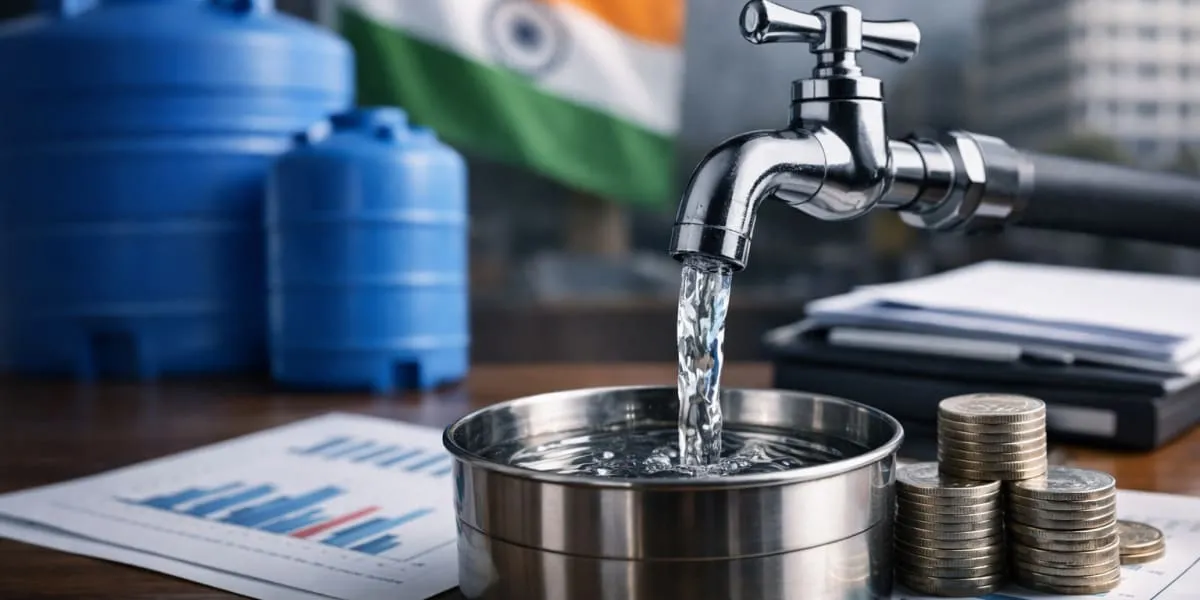
The Union Cabinet has approved an extension and restructuring of the Jal Jeevan Mission up to December 2028, shifting the emphasis from infrastructure creation to service delivery supported by a strengthened governance and institutional ecosystem. It approved an enhanced total outlay of Rs eight point six nine trillion (tn) with total central assistance of Rs three point five nine trillion (tn), up from Rs two point zero eight trillion (tn) approved in 2019?20 and comprising an additional central share of Rs one point five one trillion (tn).

A uniform national digital framework called Sujalam Bharat will assign each village a unique Sujal Gaon or Service Area ID to map drinking water systems from source to tap. Gram Panchayats and village water and sanitation committees will participate in commissioning and formal handover of schemes through Jal Arpan and Gram Panchayats will certify Har Ghar Jal only after in?village operation and maintenance mechanisms are confirmed by the State Government.

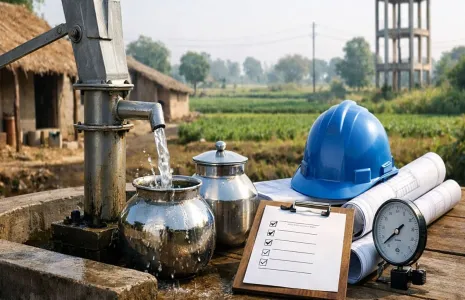
From a baseline of 32.3 million (mn) rural households with tap connections in 2019, the mission has added 125.6 million (mn) households, increasing the total to about 193.6 million (mn) identified households of which 158.0 million (mn), or 81.61 per cent, are reported to have connections to date. The programme emphasises community ownership through annual Jal Utsav events and aims to certify all Gram Panchayats as Har Ghar Jal by December 2028 through separate memoranda of understanding with States and Union Territories.

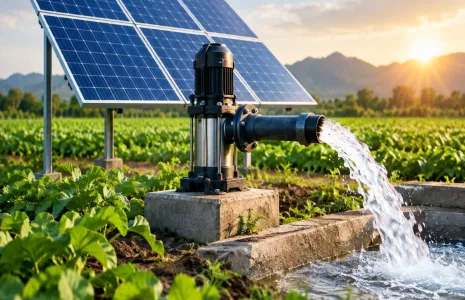
Independent assessments attribute reductions in women's burden and health gains to the mission, including estimates that it has freed 90 million (mn) women from fetching water and saved 55 million (mn) hours daily while preventing significant diarrhoeal deaths and producing substantial Disability Adjusted Life Year gains. The reoriented mission envisages strategic convergence across government departments to ensure sustainable operation and source sustenance and to deliver citizen?centric, around?the?clock rural drinking water services.

The Union Cabinet has approved an extension and restructuring of the Jal Jeevan Mission up to December 2028, shifting the emphasis from infrastructure creation to service delivery supported by a strengthened governance and institutional ecosystem. It approved an enhanced total outlay of Rs eight point six nine trillion (tn) with total central assistance of Rs three point five nine trillion (tn), up from Rs two point zero eight trillion (tn) approved in 2019?20 and comprising an additional central share of Rs one point five one trillion (tn). A uniform national digital framework called Sujalam Bharat will assign each village a unique Sujal Gaon or Service Area ID to map drinking water systems from source to tap. Gram Panchayats and village water and sanitation committees will participate in commissioning and formal handover of schemes through Jal Arpan and Gram Panchayats will certify Har Ghar Jal only after in?village operation and maintenance mechanisms are confirmed by the State Government. From a baseline of 32.3 million (mn) rural households with tap connections in 2019, the mission has added 125.6 million (mn) households, increasing the total to about 193.6 million (mn) identified households of which 158.0 million (mn), or 81.61 per cent, are reported to have connections to date. The programme emphasises community ownership through annual Jal Utsav events and aims to certify all Gram Panchayats as Har Ghar Jal by December 2028 through separate memoranda of understanding with States and Union Territories. Independent assessments attribute reductions in women's burden and health gains to the mission, including estimates that it has freed 90 million (mn) women from fetching water and saved 55 million (mn) hours daily while preventing significant diarrhoeal deaths and producing substantial Disability Adjusted Life Year gains. The reoriented mission envisages strategic convergence across government departments to ensure sustainable operation and source sustenance and to deliver citizen?centric, around?the?clock rural drinking water services.

Next Story
Infrastructure Urban

Implementation Status of Jal Jeevan Mission

Since August 2019 the Government has implemented Jal Jeevan Mission to provide assured potable water through household tap connections in rural India. At the start of the mission only 32.3 million (mn) rural households, representing 16.7 per cent, were reported to have tap water connections. States and union territories have reported that 125.8 mn additional rural households have since been provided with tap connections. As a result, of about 193.6 mn rural households roughly 158.2 mn, or 81.71 per cent, are reported to have tap water supply at home.\n\nThe State, district and village level st..

Next Story
Infrastructure Urban

Jal Jeevan Mission Reaches Eighty One Per Cent Rural Coverage

The Government reported substantial progress under the Jal Jeevan Mission, launched in August 2019 to provide tap water to every rural household. At launch only 32.3 million (mn) rural households had tap connections and states and Union territories reported provision of 125.8 mn additional households by March 2026. Consequently, out of about 193.6 mn rural households around 158.2 mn, or 81.71 per cent, are reported to have tap water at home. The Finance Minister announced extension of the mission until 2028 in the 2025-26 budget speech. The Swachh Bharat Mission Grameen, launched in October 20..

Next Story
Infrastructure Urban

Empowering Local Governance for Sustainable Rural Water Supply

The Ministry of Jal Shakti has aligned the Jal Jeevan Mission (JJM) with the 73rd Amendment to strengthen village level planning and community ownership of water supply. Gram Panchayats, village water and sanitation committees and Pani Samitis are to plan, implement, manage and maintain piped water systems, with gram sabha processes formalising handover and oversight. Implementation support agencies including non government organisations, community based organisations and self help groups have been empanelled to train local committees and promote women participation. Under JJM, the department ..

Advertisement

Subscribe to Our Newsletter

Get daily newsletters around different themes from Construction world.

STAY CONNECTED

Advertisement

Advertisement

Advertisement