+
Hindustan Zinc Cuts Freshwater Use by 28%
WATER & WASTE

Hindustan Zinc Cuts Freshwater Use by 28%

Hindustan Zinc, India’s only and the world’s largest integrated zinc producer, has achieved a major sustainability milestone by recycling 71 billion litres of treated sewage water between FY 2016 and 2025, reducing its freshwater use by 28%. This volume is enough to meet Udaipur city’s water needs for over 500 days. Operating in water-stressed Rajasthan, the company has demonstrated that industry growth and resource conservation can go hand in hand. Hindustan Zinc is now 3.32x water positive, treating and reusing all process water across operations, thereby minimising freshwater dependence and strengthening its commitment to UN Sustainable Development Goal 6 on Clean Water and Sanitation.

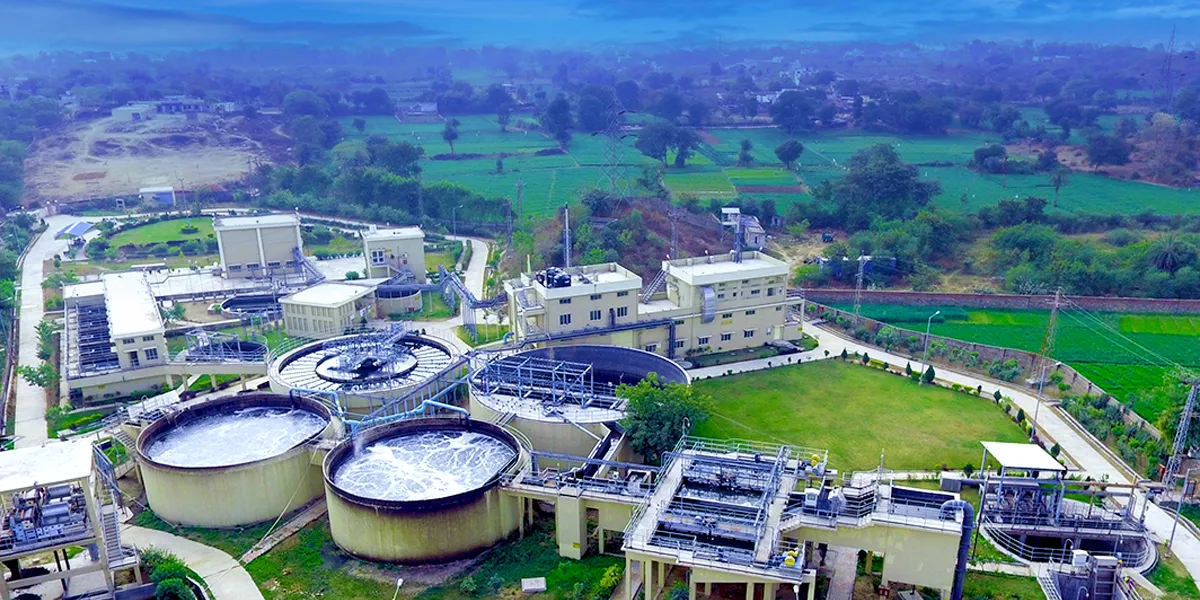
In partnership with the Government of Rajasthan, Hindustan Zinc pioneered Udaipur’s first sewage treatment plant (STP) under the PPP model in 2014. Over the past decade, the facility has expanded to a capacity of 60 MLD, preventing untreated sewage inflow into Udaipur’s lakes while supplying clean, treated water to the company’s operations through a dedicated pipeline. By deploying biological and advanced filtration processes, the initiative has become a landmark example of industrial reuse and urban water conservation.

Arun Misra, CEO – Hindustan Zinc, said, “Water is a shared legacy and at Hindustan Zinc, we’ve embraced water stewardship that turns challenges into opportunities. As a 3.32× water-positive company with zero effluent discharge across sites, we’re implementing cutting-edge technology to safeguard freshwater for communities while setting new benchmarks in sustainable manufacturing. We remain committed to reducing freshwater consumption by 50% by 2030 and achieving 100% reuse of low-quality water in smelting.”

The company has rolled out multiple water sustainability projects across sites, including effluent treatment plants with zero discharge, a new 4,000 KLD treatment plant at Rampura Agucha mine, and dry tailing and paste-fill plants at Rajpura Dariba Complex to enhance water reuse. Hindustan Zinc has also invested in community-led programs, most notably the ‘Jal Sakhi’ initiative, where rural women manage 13 community RO hubs, providing safe drinking water access to more than 2.19 lakh people across 36 villages. In the last five years alone, over 6.11 crore m³ of clean water has been delivered to communities, while conservation projects have increased local storage capacity by 1 lakh m³, boosting groundwater recharge.

Hindustan Zinc recently became the first Indian company to join the International Council on Mining & Metals (ICMM) and, for the second consecutive year, has been ranked as the world’s most sustainable metals and mining company by the S&P Global Corporate Sustainability Assessment 2024. These recognitions reinforce the company’s leadership in sustainable practices, proving that resource-intensive industries can drive innovation to reduce their environmental footprint while achieving growth. By investing in advanced recycling technologies and forging strong community partnerships, Hindustan Zinc continues to inspire a shift towards water-resilient and sustainable industrial operations.

Hindustan Zinc, India’s only and the world’s largest integrated zinc producer, has achieved a major sustainability milestone by recycling 71 billion litres of treated sewage water between FY 2016 and 2025, reducing its freshwater use by 28%. This volume is enough to meet Udaipur city’s water needs for over 500 days. Operating in water-stressed Rajasthan, the company has demonstrated that industry growth and resource conservation can go hand in hand. Hindustan Zinc is now 3.32x water positive, treating and reusing all process water across operations, thereby minimising freshwater dependence and strengthening its commitment to UN Sustainable Development Goal 6 on Clean Water and Sanitation.In partnership with the Government of Rajasthan, Hindustan Zinc pioneered Udaipur’s first sewage treatment plant (STP) under the PPP model in 2014. Over the past decade, the facility has expanded to a capacity of 60 MLD, preventing untreated sewage inflow into Udaipur’s lakes while supplying clean, treated water to the company’s operations through a dedicated pipeline. By deploying biological and advanced filtration processes, the initiative has become a landmark example of industrial reuse and urban water conservation.Arun Misra, CEO – Hindustan Zinc, said, “Water is a shared legacy and at Hindustan Zinc, we’ve embraced water stewardship that turns challenges into opportunities. As a 3.32× water-positive company with zero effluent discharge across sites, we’re implementing cutting-edge technology to safeguard freshwater for communities while setting new benchmarks in sustainable manufacturing. We remain committed to reducing freshwater consumption by 50% by 2030 and achieving 100% reuse of low-quality water in smelting.”The company has rolled out multiple water sustainability projects across sites, including effluent treatment plants with zero discharge, a new 4,000 KLD treatment plant at Rampura Agucha mine, and dry tailing and paste-fill plants at Rajpura Dariba Complex to enhance water reuse. Hindustan Zinc has also invested in community-led programs, most notably the ‘Jal Sakhi’ initiative, where rural women manage 13 community RO hubs, providing safe drinking water access to more than 2.19 lakh people across 36 villages. In the last five years alone, over 6.11 crore m³ of clean water has been delivered to communities, while conservation projects have increased local storage capacity by 1 lakh m³, boosting groundwater recharge.Hindustan Zinc recently became the first Indian company to join the International Council on Mining & Metals (ICMM) and, for the second consecutive year, has been ranked as the world’s most sustainable metals and mining company by the S&P Global Corporate Sustainability Assessment 2024. These recognitions reinforce the company’s leadership in sustainable practices, proving that resource-intensive industries can drive innovation to reduce their environmental footprint while achieving growth. By investing in advanced recycling technologies and forging strong community partnerships, Hindustan Zinc continues to inspire a shift towards water-resilient and sustainable industrial operations.

Next Story
Infrastructure Transport

Lucknow Metro East-West Corridor Consultancy Contract Awarded

The Uttar Pradesh Metro Rail Corporation has awarded the first construction-related consultancy contract for the Lucknow Metro East West Corridor to a joint venture of AYESA Ingenieria Arquitectura SAU and AYESA India Pvt Ltd. The firm was declared the lowest bidder for the Detailed Design Consultant contract for Lucknow Metro Line-2 under Phase 1B and the contract was recommended following the financial bid. The contract is valued at Rs 159.0 million (mn), covering design services for the corridor. Lucknow Metro Line-2 envisages the construction of an 11.165 kilometre corridor connecting Cha..

Next Story
Infrastructure Urban

Div Com Kashmir Urges Fast Tracking Of Jhelum Water Transport Project

The Divisional Commissioner of Kashmir has called for the fast-tracking of the Jhelum water transport project, urging district administrations and relevant agencies to accelerate planning and clearances. In a meeting convened at the divisional headquarters, the commissioner instructed officials from irrigation, public health engineering and municipal departments to prioritise the project and coordinate survey and design work. The directive emphasised removal of administrative bottlenecks and close monitoring to ensure timely mobilisation of resources and contractors. Officials were told to in..

Next Story
Infrastructure Urban

Interarch Reports Strong Q3 And Nine Month Results

Interarch Building Solutions Limited reported unaudited results for the third quarter and nine months ended 31 December 2025, recording strong revenue growth driven by execution and a robust order book. Net revenue for the third quarter rose by 43.7 per cent to Rs 5.225 billion (bn), compared with Rs 3.636 bn a year earlier, reflecting heightened demand in pre-engineered building projects. The company’s total order book as at 31 January 2026 stood at Rs 16.85 bn, supporting near-term visibility. EBITDA excluding other income for the quarter increased by 43.2 per cent to Rs 503 million (mn),..

Advertisement

Subscribe to Our Newsletter

Get daily newsletters around different themes from Construction world.

STAY CONNECTED

Advertisement

Advertisement

Advertisement

Open In App