



+
NGT Flags Gaps In E?Waste Management Across Country
WATER & WASTE

NGT Flags Gaps In E?Waste Management Across Country

The National Green Tribunal (NGT) has flagged significant gaps in e?waste management across the country, finding that oversight and infrastructure remain inadequate to manage rising volumes of discarded electronic devices. It identified weaknesses in collection systems, segregation processes and scientific recycling capacity that result in uncontrolled handling and potential environmental harm. The tribunal directed central and state governments to review roles and responsibilities and to prepare coordinated action plans for remediation.

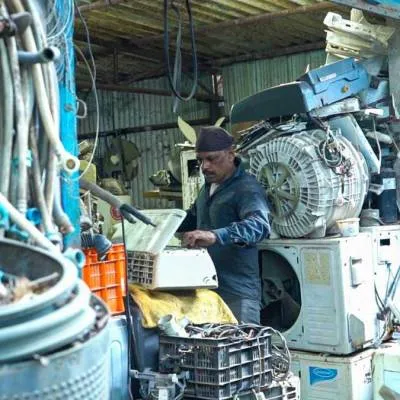
NGT noted that the informal sector continues to play a major role in dismantling and recycling, often operating without adequate safety measures, which increases risks to workers and local communities. It emphasised the hazards posed by components such as batteries, mercury containing devices and electronic boards when processed in unregulated settings. The tribunal called for measures to integrate informal workers into formal systems while ensuring health safeguards and regulatory compliance.

The tribunal urged strengthening of the Extended Producer Responsibility programme and tighter monitoring of producer and importer compliance to prevent leakages into informal channels. It recommended expansion of authorised collection points, incentives for formal recyclers and transparency in tracking material flows from sale to end of life. Municipal bodies were advised to build capacity for collection and enforcement, and regulators were asked to streamline licensing and inspection regimes.

NGT underscored the importance of public awareness, research and investment in modern recycling technologies to reduce reliance on rudimentary methods and to recover valuable material streams. It proposed regular reporting and review mechanisms to assess progress and foster inter agency coordination among environment, labour and industry departments. The tribunal signalled that sustained policy attention and resource allocation will be necessary to close existing gaps and protect public health and the environment.

The National Green Tribunal (NGT) has flagged significant gaps in e?waste management across the country, finding that oversight and infrastructure remain inadequate to manage rising volumes of discarded electronic devices. It identified weaknesses in collection systems, segregation processes and scientific recycling capacity that result in uncontrolled handling and potential environmental harm. The tribunal directed central and state governments to review roles and responsibilities and to prepare coordinated action plans for remediation. NGT noted that the informal sector continues to play a major role in dismantling and recycling, often operating without adequate safety measures, which increases risks to workers and local communities. It emphasised the hazards posed by components such as batteries, mercury containing devices and electronic boards when processed in unregulated settings. The tribunal called for measures to integrate informal workers into formal systems while ensuring health safeguards and regulatory compliance. The tribunal urged strengthening of the Extended Producer Responsibility programme and tighter monitoring of producer and importer compliance to prevent leakages into informal channels. It recommended expansion of authorised collection points, incentives for formal recyclers and transparency in tracking material flows from sale to end of life. Municipal bodies were advised to build capacity for collection and enforcement, and regulators were asked to streamline licensing and inspection regimes. NGT underscored the importance of public awareness, research and investment in modern recycling technologies to reduce reliance on rudimentary methods and to recover valuable material streams. It proposed regular reporting and review mechanisms to assess progress and foster inter agency coordination among environment, labour and industry departments. The tribunal signalled that sustained policy attention and resource allocation will be necessary to close existing gaps and protect public health and the environment.

Next Story
Infrastructure Transport

Guwahati Airport New Terminal Set To Begin Operations

The new terminal at Lokpriya Gopinath Bardoloi International Airport in Guwahati is scheduled to begin operations on February 22, state officials said. The announcement was made by the Chief Minister of Assam, who indicated that the facility will open to passengers on that date. The terminal forms part of a broader effort to upgrade aviation infrastructure in the region. The facility is expected to offer enhanced passenger amenities and streamlined movement across terminals. The integrated Terminal-2 building was inaugurated by the Prime Minister on 20 December last year and was constructed at..

Next Story
Infrastructure Urban

India–France Centre of Excellence in Aeronautics Announced for Kanpur

The Prime Minister announced the establishment of a National Centre of Excellence (NCoE) for skilling in aeronautics and defence at the National Skill Training Institute (NSTI), Kanpur, in collaboration with the Government of the French Republic under the Pradhan Mantri Skilling and Employability Transformation through Upgraded ITIs (PM-SETU) scheme of the Ministry of Skill Development and Entrepreneurship (MSDE). The announcement was made during a joint press statement with the President of France at the inauguration of the India–France Year of Innovation. The centre will focus on advanced ..

Next Story
Infrastructure Urban

Embraer And Mahindra Deepen Partnership For C-390 MRO In India

Brazilian aerospace manufacturer Embraer and Indian conglomerate Mahindra Group have agreed to deepen cooperation to develop Maintenance, Repair and Overhaul capabilities for the C-390 Millennium aircraft in India, contingent on the Indian Air Force selecting the type for its Medium Transport Aircraft programme. The initiative is intended to align with the government’s Make in India drive and to strengthen indigenous defence manufacturing capacities. The partners envisage the proposed facility supporting both military and civil operators and creating significant employment across manufacturi..

Advertisement

Subscribe to Our Newsletter

Get daily newsletters around different themes from Construction world.

STAY CONNECTED

Advertisement

Advertisement

Advertisement

Open In App