Patna’s sewerage projects under Namami Gange to be completed by 2023
WATER & WASTE

Patna’s sewerage projects under Namami Gange to be completed by 2023

Bihar Deputy Chief Minister Tarkishore Prasad has ordered officials of his urban development and housing department to ensure that all long-pending projects related to sewerage infrastructure under the Namami Gange programme in Patna must be completed within 2022-23.

The instruction came after the Comptroller and Auditor General (CAG) report tabled in the assembly in March had pulled up Bihar Urban Infrastructure Development Corporation Ltd, the executing agency, for failing to finish such projects under the Namami Gange initiative in the specified timeline.

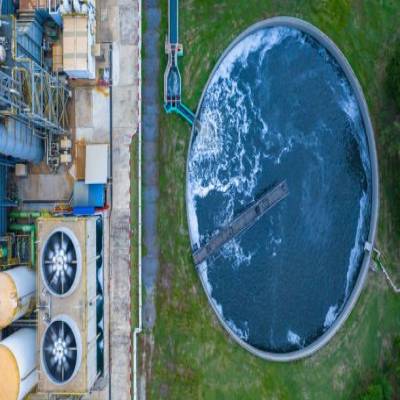
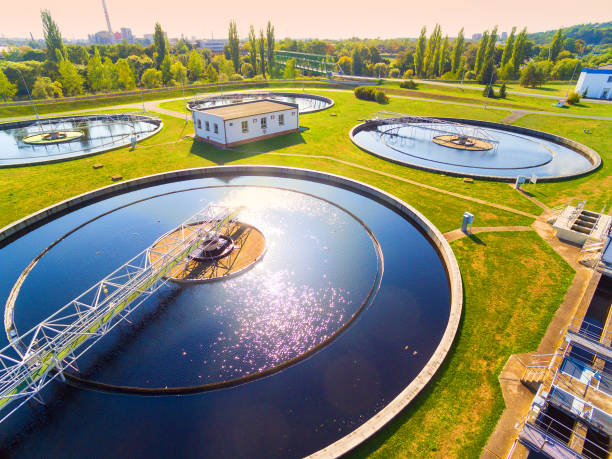
In Patna, all sewage treatment plants (STPs) construction work will be finished in 2022-23. Officials have been instructed to ensure quality in building such infrastructure under the Namami Gange programme.

Strict action will be taken against those who will break the government’s rules and norms for constructing these infrastructure projects.

Namami Gange programme is an integrated mission, sanctioned by the Central government in 2014 with an outlay of Rs 20,000 crore, to achieve objectives of effective abatement of pollution, conservation, and rejuvenation of the river Ganga.

In Patna, six STPs and five sewerage networks were to be built, and of them, nine were supposed to be finished by May 2021.

Of the nine projects, only four were finished by July 2021, and the progress ranged from 53% to 93% in others, the CAG said in its report.

The progress was negligible as far as STPs at Digha and Kankarbagh are considered.

Bihar Urban Infrastructure Development Corporation Ltd failed to stick to the specified timeline for the fulfilment of the works as no STP along with sewerage network achieved to date, and the discharge of sewage in Ganga and its tributaries could not be stopped in Patna as expected, the CAG said.

It also observed that only 16% to 50% of funds were utilised from 2016-17 to 2019-20.

As against the approved cost, only 35.48% of financial progress was achieved by December 2020, as per the report.

Prasad said the uncertainty in the construction work completion of STPs was because of the pending clearances from different authorities, including the railways.

The government has got approvals from almost all authorities, and the construction work of all STPs will be expedited.

Image Source

Also read: UP govt installs 104 sewage treatment plants to clean rivers

Bihar Deputy Chief Minister Tarkishore Prasad has ordered officials of his urban development and housing department to ensure that all long-pending projects related to sewerage infrastructure under the Namami Gange programme in Patna must be completed within 2022-23. The instruction came after the Comptroller and Auditor General (CAG) report tabled in the assembly in March had pulled up Bihar Urban Infrastructure Development Corporation Ltd, the executing agency, for failing to finish such projects under the Namami Gange initiative in the specified timeline. In Patna, all sewage treatment plants (STPs) construction work will be finished in 2022-23. Officials have been instructed to ensure quality in building such infrastructure under the Namami Gange programme. Strict action will be taken against those who will break the government’s rules and norms for constructing these infrastructure projects. Namami Gange programme is an integrated mission, sanctioned by the Central government in 2014 with an outlay of Rs 20,000 crore, to achieve objectives of effective abatement of pollution, conservation, and rejuvenation of the river Ganga. In Patna, six STPs and five sewerage networks were to be built, and of them, nine were supposed to be finished by May 2021. Of the nine projects, only four were finished by July 2021, and the progress ranged from 53% to 93% in others, the CAG said in its report. The progress was negligible as far as STPs at Digha and Kankarbagh are considered. Bihar Urban Infrastructure Development Corporation Ltd failed to stick to the specified timeline for the fulfilment of the works as no STP along with sewerage network achieved to date, and the discharge of sewage in Ganga and its tributaries could not be stopped in Patna as expected, the CAG said. It also observed that only 16% to 50% of funds were utilised from 2016-17 to 2019-20. As against the approved cost, only 35.48% of financial progress was achieved by December 2020, as per the report. Prasad said the uncertainty in the construction work completion of STPs was because of the pending clearances from different authorities, including the railways. The government has got approvals from almost all authorities, and the construction work of all STPs will be expedited. Image Source Also read: UP govt installs 104 sewage treatment plants to clean rivers

Related Stories

Gold Stories

Next Story
Infrastructure Urban

KONE Opens India's First Digital Experience Centre in Pune

KONE, a global elevator and escalator manufacturer, has inaugurated its first Digital Experience Centre (DEC) in India, located in Pune. The facility aims to showcase how artificial intelligence (AI), connectivity and data-driven technologies can enhance customer experiences and improve building operations.The centre was inaugurated by Jussi Herlin, Executive Vice Chair, KONE Corporation; Philippe Delorme, President and CEO, KONE; and Nandan Nilekani, Co-founder and Chairman of the Board, Infosys.Designed as an interactive customer environment, the facility demonstrates digital solutions cover..

Next Story
Infrastructure Urban

CII GreenCo Launches Circularity Guidelines for Indian Industry

The Confederation of Indian Industry (CII) GreenCo Council has launched the CII GreenCo Circularity Guidelines – Pilot Version at the 17th CII GreenCo Waste & Resource Management Summit 2026 in Chennai. The initiative aims to strengthen resource efficiency, waste reduction and circular economy practices across Indian manufacturing and process industries.The guidelines introduce a structured framework with circularity indices covering raw materials, consumables, packaging and other resource inputs. These indicators will help industries assess existing practices, identify opportunities to ..

Next Story
Infrastructure Energy

Global Electronics Association Launches IPC-1783-CO2E Standard

The Global Electronics Association has introduced IPC-1783-CO2E, a new international standard aimed at improving consistency, transparency and comparability in product carbon footprint reporting across the electronics manufacturing industry.The standard, titled International Standard for Data Collection and Reporting of CO2 Equivalent (CO2e) Emissions for the Electronics Manufacturing Supply Chain, provides industry-specific guidance for collecting, estimating and reporting carbon emissions data.With increasing regulatory requirements and customer expectations, electronics manufacturers face c..

Advertisement

Subscribe to Our Newsletter

Get daily newsletters around different themes from Construction world.

STAY CONNECTED

Advertisement

SPECIAL OFFER
QR Code