Powai Lake Cleanup Project to Begin With Sewage Diversion
WATER & WASTE

Powai Lake Cleanup Project to Begin With Sewage Diversion

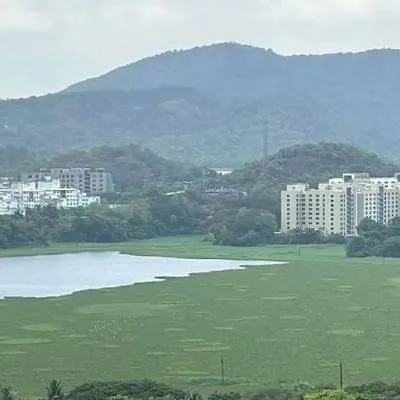
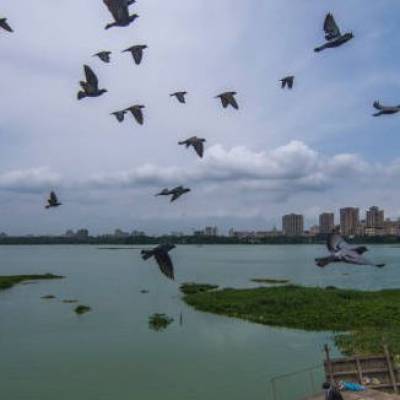
As part of its initiative to clean and restore Powai Lake, the Brihanmumbai Municipal Corporation (BMC) is set to issue work orders this month for diverting sewage lines and constructing a sewage treatment plant (STP). The move comes as the civic body prioritises halting the daily discharge of approximately 18 million litres of untreated sewage into the lake — a major contributor to the spread of water hyacinth and the deterioration of water quality and biodiversity.

According to Additional Municipal Commissioner (Projects) Abhijit Bangar, the work order for the sewage diversion is expected next week, while the contract for setting up a 9 million litres per day (MLD) STP is likely to be issued within 15 days. Once initiated, the entire project will take around 18 months to complete. In the interim, hyacinth removal operations will continue, with the current contract due for extension.

Bangar also confirmed that the removal of hyacinth had temporarily paused for two days due to technical issues but has since resumed. Over the past month, the BMC has increased its on-ground workforce and deployed more than five machines to accelerate the removal and transport of the invasive vegetation.

The civic action has been welcomed by environmental activists, who have been campaigning to save Powai Lake from the choking grip of water hyacinth. Activist BN Kumar stated, “The major wetland, once a source of drinking water, is now overrun by hyacinth due to unchecked sewer flow. If the BMC is moving ahead with sewage diversion, we hope the work begins without delay.”

Meanwhile, the Ministry of Environment, Forest and Climate Change (MoEF&CC) has directed Maharashtra’s Environment Department to take necessary steps to protect Powai Lake following complaints from environmental groups.

With a total estimated cost of Rs 900 million, the project marks a critical step in reviving one of Mumbai’s most iconic urban water bodies, ensuring its ecological and recreational value is preserved for the future.

As part of its initiative to clean and restore Powai Lake, the Brihanmumbai Municipal Corporation (BMC) is set to issue work orders this month for diverting sewage lines and constructing a sewage treatment plant (STP). The move comes as the civic body prioritises halting the daily discharge of approximately 18 million litres of untreated sewage into the lake — a major contributor to the spread of water hyacinth and the deterioration of water quality and biodiversity.According to Additional Municipal Commissioner (Projects) Abhijit Bangar, the work order for the sewage diversion is expected next week, while the contract for setting up a 9 million litres per day (MLD) STP is likely to be issued within 15 days. Once initiated, the entire project will take around 18 months to complete. In the interim, hyacinth removal operations will continue, with the current contract due for extension.Bangar also confirmed that the removal of hyacinth had temporarily paused for two days due to technical issues but has since resumed. Over the past month, the BMC has increased its on-ground workforce and deployed more than five machines to accelerate the removal and transport of the invasive vegetation.The civic action has been welcomed by environmental activists, who have been campaigning to save Powai Lake from the choking grip of water hyacinth. Activist BN Kumar stated, “The major wetland, once a source of drinking water, is now overrun by hyacinth due to unchecked sewer flow. If the BMC is moving ahead with sewage diversion, we hope the work begins without delay.”Meanwhile, the Ministry of Environment, Forest and Climate Change (MoEF&CC) has directed Maharashtra’s Environment Department to take necessary steps to protect Powai Lake following complaints from environmental groups.With a total estimated cost of Rs 900 million, the project marks a critical step in reviving one of Mumbai’s most iconic urban water bodies, ensuring its ecological and recreational value is preserved for the future.

Next Story
Infrastructure Transport

Surya Roshni delivers customised lighting for NCRTC RRTS stations

Surya Roshni has supplied customised indoor lighting solutions for 18 elevated stations on the National Capital Region Transport Corporation's (NCRTC) Rapid Rail Transit System (RRTS), strengthening its presence in India's infrastructure lighting segment.The project involved the design and deployment of lighting systems for platforms, concourses, foot overbridges (FOBs) and back-of-house (BOH) areas. According to the company, the luminaires were developed specifically to meet NCRTC's design, operational and performance requirements rather than using standard products.Surya introduced two custo..

Next Story
Real Estate

Hilton debuts Tapestry Collection brand in Vietnam

Hilton has opened NHAAN Resort & Spa Hoi An, Tapestry Collection by Hilton, marking the debut of the Tapestry Collection brand in Vietnam and expanding its lifestyle hospitality portfolio in Southeast Asia.Located along the Co Co River in Cam Thanh village, the 174-key resort provides access to Hoi An Ancient Town, Cua Dai Beach and the Cam Thanh Nipa Forest. The property has been designed by Vietnamese architect Vo Trong Nghia, incorporating biophilic architecture, locally sourced materials and riverfront landscapes.The resort offers a mix of guest rooms and suites, including family-frien..

Next Story
Building Material

Electrent expands lithium energy storage system portfolio

Electrent Energy has expanded its lithium-based energy storage portfolio with the launch of the ESS 850 and ESS 1050, targeting compact and maintenance-free power backup solutions for Indian homes.The new systems integrate a Home UPS and a LiFePO4 lithium battery into a single unit, extending the company's product range following the launch of its ESS 1350 and ESS 2500 models.Designed for apartments and smaller homes, the ESS 850 provides up to 1 hour 15 minutes of backup, while the ESS 1050 offers up to 1 hour 45 minutes on a typical 400 W household load. The systems can power essential appli..

Advertisement

Subscribe to Our Newsletter

Get daily newsletters around different themes from Construction world.

STAY CONNECTED

Advertisement

Advertisement

Advertisement