+
Smart Water Level Controllers Gain Traction as Aquabrim Expands
WATER & WASTE

Smart Water Level Controllers Gain Traction as Aquabrim Expands

Smart water level controllers are seeing rapid adoption across urban India as homes, housing societies and commercial buildings seek dependable solutions to mounting water management challenges. What began as an optional upgrade has become essential infrastructure amid erratic municipal supply, rising electricity costs and voltage fluctuations in densely populated cities. Companies such as Aquabrim are strengthening the shift to automated, data driven water management.

For decades, properties relied on manual motor switching, mechanical float valves and basic alarms, which often caused overflowing tanks, dry running pumps, motor damage and higher electricity bills. In high density regions such as the Delhi NCR, inconsistent supply timings and infrastructure gaps have made these inefficiencies increasingly costly. The rise of automation addresses these operational failures by preventing waste and protecting equipment.

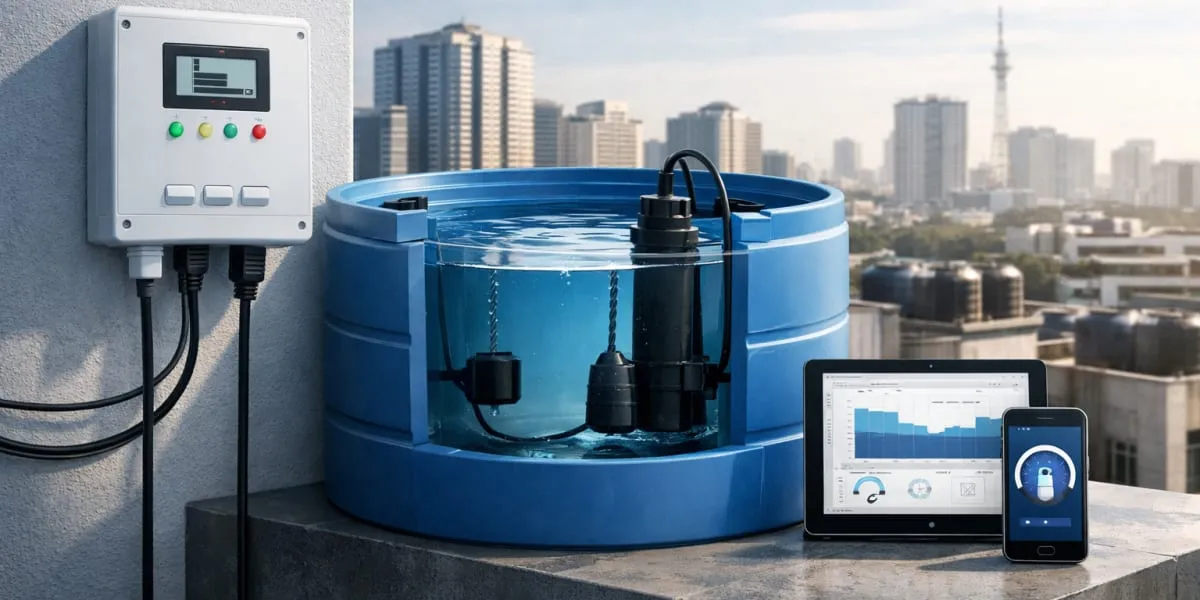
Modern controllers use ultrasonic and tank level sensors to measure water levels precisely and to operate pumps autonomously, ensuring consistent availability while preventing overflow. Wireless transmitters have reduced complex wiring and enabled communication between underground and overhead tanks across large complexes and industrial premises. Integration of Internet of Things water monitoring systems provides real time dashboards for remote oversight of tank levels, pump performance and flow.

By shifting management from reactive to intelligent automation, operators can reduce electricity consumption, extend motor lifespan and improve resource efficiency, aligning with smart home and smart city initiatives. Ease of installation and resilience to fluctuating voltage make these systems suited to Indian operating environments. The technology thus supports sustainable responses to climate variability and urbanisation pressures.

Aquabrim, a Delhi NCR based smart water management and automation provider, offers controllers, wireless transmitters, ultrasonic sensors, electromagnetic flow metres and pressure sensors alongside IoT enabled gateways for both residential and industrial clients. The company reports support for zero point one million (mn) users across independent homes, residential societies and industrial facilities in the region. Praveen Sinha, chairman of Aquabrim, said that intelligent automation was no longer a luxury but a necessary infrastructure solution to reduce waste and improve efficiency as urban expansion stresses water systems.

Smart water level controllers are seeing rapid adoption across urban India as homes, housing societies and commercial buildings seek dependable solutions to mounting water management challenges. What began as an optional upgrade has become essential infrastructure amid erratic municipal supply, rising electricity costs and voltage fluctuations in densely populated cities. Companies such as Aquabrim are strengthening the shift to automated, data driven water management. For decades, properties relied on manual motor switching, mechanical float valves and basic alarms, which often caused overflowing tanks, dry running pumps, motor damage and higher electricity bills. In high density regions such as the Delhi NCR, inconsistent supply timings and infrastructure gaps have made these inefficiencies increasingly costly. The rise of automation addresses these operational failures by preventing waste and protecting equipment. Modern controllers use ultrasonic and tank level sensors to measure water levels precisely and to operate pumps autonomously, ensuring consistent availability while preventing overflow. Wireless transmitters have reduced complex wiring and enabled communication between underground and overhead tanks across large complexes and industrial premises. Integration of Internet of Things water monitoring systems provides real time dashboards for remote oversight of tank levels, pump performance and flow. By shifting management from reactive to intelligent automation, operators can reduce electricity consumption, extend motor lifespan and improve resource efficiency, aligning with smart home and smart city initiatives. Ease of installation and resilience to fluctuating voltage make these systems suited to Indian operating environments. The technology thus supports sustainable responses to climate variability and urbanisation pressures. Aquabrim, a Delhi NCR based smart water management and automation provider, offers controllers, wireless transmitters, ultrasonic sensors, electromagnetic flow metres and pressure sensors alongside IoT enabled gateways for both residential and industrial clients. The company reports support for zero point one million (mn) users across independent homes, residential societies and industrial facilities in the region. Praveen Sinha, chairman of Aquabrim, said that intelligent automation was no longer a luxury but a necessary infrastructure solution to reduce waste and improve efficiency as urban expansion stresses water systems.

Next Story
Infrastructure Urban

India Expands Semiconductor Training To 500 Institutions

Under the Chips to Startups programme of the India Semiconductor Mission, the Union minister responsible for Railways, Information and Broadcasting, and Electronics and IT reported notable progress in talent development. He indicated that over the past four years substantial steps have been taken towards a 10-year target of training 85,000 engineers in semiconductor design. World-class EDA tools have been deployed in 315 academic institutions across the country to provide students with practical exposure to chip design. These EDA tools are supported by leading global firms and are accessible t..

Next Story
Infrastructure Urban

Delhi Institutions Support India Semiconductor Mission

The Government of India has prioritised talent development through training, upskilling and workforce development under the Chips to Startups initiative of the India Semiconductor Mission, with officials noting progress in four years towards a 10-year target of training 85,000 engineers in semiconductor design. Electronic design automation tools provided by Synopsys, Cadence, Siemens, Renesas, Ansys and AMD have been deployed in 315 academic institutions, enabling students to gain practical chip design experience. Chips have been fabricated and tested at the Semiconductor Laboratory, Mohali, a..

Next Story
Infrastructure Urban

NHA Announces Winners Of NHCX Hackathon At IIT Hyderabad

The National Health Authority (NHA) has concluded the NHCX Hackathon under the Ayushman Bharat Digital Mission (ABDM) to stimulate innovation around the National Health Claims Exchange (NHCX). The winning teams presented their solutions at the NHCX Innovation Meet held at IIT Hyderabad during a two-day event in March 2026 that also served as the hackathon grand finale. The hackathon itself ran from 22 to 28 February 2026 and aimed to accelerate paperless, transparent claims processing across India. The event was organised with a range of ecosystem partners, including the Insurance Regulatory a..

Advertisement

Subscribe to Our Newsletter

Get daily newsletters around different themes from Construction world.

STAY CONNECTED

Advertisement

Advertisement

Advertisement