Swachh Toycathon contest launched to boost toys from waste
WATER & WASTE

Swachh Toycathon contest launched to boost toys from waste

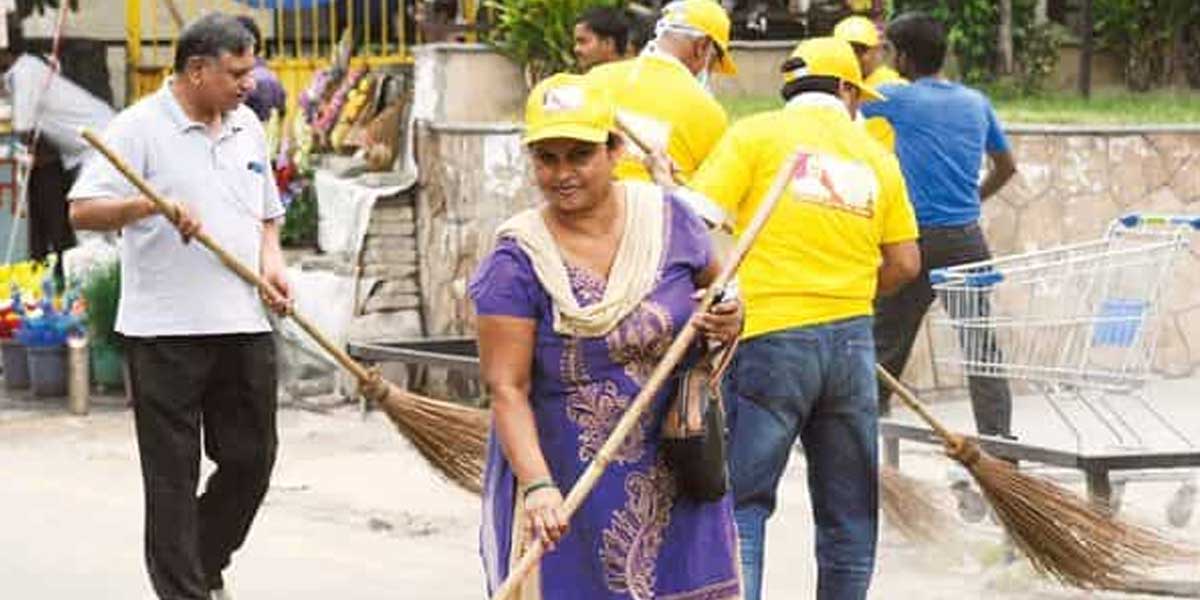
The Ministry of Housing and Urban Affairs (MoHUA) has launched the ‘Swachh Toycathon’ competition under the Swachh Amrit Mahotsav. This is a convergence between the National Action Plan for Toys (NAPT) 2020 and Swachh Bharat Mission 2.0 (SBM) that seeks to explore the use of waste to create or manufacture toys.

The competition will be open to individuals and groups to showcase toy designs using dry waste. It will focus on efficient designs that can be replicated on a large scale, toys that comply with minimum safety standards, as well as aesthetics of the toys.

The National Action Plan for Toys (NAPT) 2020 was introduced to promote the Indian toy industry, including traditional handicrafts and handmade toys, with the objective of establishing India as a global toy hub.

The demand for toys is also increasing due to strong economic growth, rising disposable incomes, and several innovations for the junior population. With changing consumption patterns and the rapid rise of ecommerce, the per capita waste generation has steadily increased over the last decade, making waste management in cities a challenge for urban local bodies.

See also:
HAL-L&T consortium bags Rs 8.60 bn NewSpace PSLV contract
Supply chain firm Radar Ventures commits Rs 3 bn for R&D centre


The Ministry of Housing and Urban Affairs (MoHUA) has launched the ‘Swachh Toycathon’ competition under the Swachh Amrit Mahotsav. This is a convergence between the National Action Plan for Toys (NAPT) 2020 and Swachh Bharat Mission 2.0 (SBM) that seeks to explore the use of waste to create or manufacture toys. The competition will be open to individuals and groups to showcase toy designs using dry waste. It will focus on efficient designs that can be replicated on a large scale, toys that comply with minimum safety standards, as well as aesthetics of the toys. The National Action Plan for Toys (NAPT) 2020 was introduced to promote the Indian toy industry, including traditional handicrafts and handmade toys, with the objective of establishing India as a global toy hub. The demand for toys is also increasing due to strong economic growth, rising disposable incomes, and several innovations for the junior population. With changing consumption patterns and the rapid rise of ecommerce, the per capita waste generation has steadily increased over the last decade, making waste management in cities a challenge for urban local bodies. See also: HAL-L&T consortium bags Rs 8.60 bn NewSpace PSLV contractSupply chain firm Radar Ventures commits Rs 3 bn for R&D centre

Related Stories

Gold Stories

Next Story
Infrastructure Urban

KONE Opens India's First Digital Experience Centre in Pune

KONE, a global elevator and escalator manufacturer, has inaugurated its first Digital Experience Centre (DEC) in India, located in Pune. The facility aims to showcase how artificial intelligence (AI), connectivity and data-driven technologies can enhance customer experiences and improve building operations.The centre was inaugurated by Jussi Herlin, Executive Vice Chair, KONE Corporation; Philippe Delorme, President and CEO, KONE; and Nandan Nilekani, Co-founder and Chairman of the Board, Infosys.Designed as an interactive customer environment, the facility demonstrates digital solutions cover..

Next Story
Infrastructure Urban

CII GreenCo Launches Circularity Guidelines for Indian Industry

The Confederation of Indian Industry (CII) GreenCo Council has launched the CII GreenCo Circularity Guidelines – Pilot Version at the 17th CII GreenCo Waste & Resource Management Summit 2026 in Chennai. The initiative aims to strengthen resource efficiency, waste reduction and circular economy practices across Indian manufacturing and process industries.The guidelines introduce a structured framework with circularity indices covering raw materials, consumables, packaging and other resource inputs. These indicators will help industries assess existing practices, identify opportunities to ..

Next Story
Infrastructure Energy

Global Electronics Association Launches IPC-1783-CO2E Standard

The Global Electronics Association has introduced IPC-1783-CO2E, a new international standard aimed at improving consistency, transparency and comparability in product carbon footprint reporting across the electronics manufacturing industry.The standard, titled International Standard for Data Collection and Reporting of CO2 Equivalent (CO2e) Emissions for the Electronics Manufacturing Supply Chain, provides industry-specific guidance for collecting, estimating and reporting carbon emissions data.With increasing regulatory requirements and customer expectations, electronics manufacturers face c..

Advertisement

Subscribe to Our Newsletter

Get daily newsletters around different themes from Construction world.

STAY CONNECTED

Advertisement

SPECIAL OFFER
QR Code