Union Minister Releases Jal Jeevan Mission Two Point Zero Guidelines
WATER & WASTE

Union Minister Releases Jal Jeevan Mission Two Point Zero Guidelines

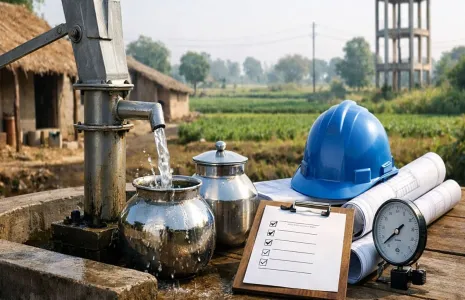
The Department of Drinking Water and Sanitation, Ministry of Jal Shakti (DDWS) released the operational guidelines of Jal Jeevan Mission (JJM) two point zero as Jal Mahotsav 2026 culminated with Sujal Gram Samvad on World Water Day. 15-day campaign from eight March to 22 March involved community participation and transfer of drinking water assets to Gram Panchayats. The e-release followed Cabinet approval to extend Jal Jeevan Mission until December 2028, with renewed focus on structural reforms and long-term sustainability of rural drinking water systems.

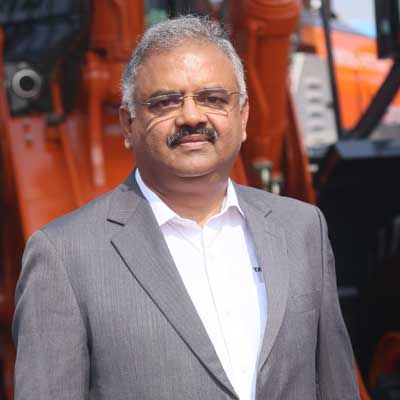
The Union Minister for Jal Shakti presided over the event and officials presented a video summarising campaign activities. The minister underlined that the second phase will move from infrastructure creation to service delivery, emphasising sustainability, functionality and accountability to ensure rural households receive regular adequate and safe drinking water. Reform-linked memoranda of understanding are being signed with States, with nine States having signed MoUs during the festival to commit to sustainable village-level water services.

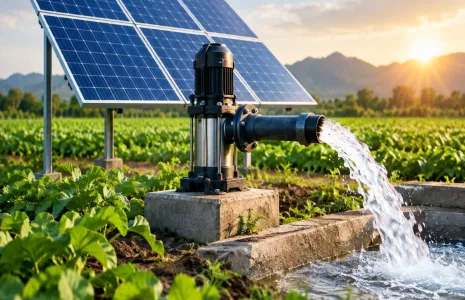
The guidelines set out assured service delivery with defined performance standards, clear accountability at State district and Gram Panchayat levels, and measures for source protection, water conservation and community ownership. They call for convergence on rainwater harvesting, grey water management and aquifer recharge to underpin reliability of supplies. The guidelines provide a roadmap for strengthened governance and long-term monitoring.

The Sujal Gram Samvad showcased village experiences from five states, illustrating that reforms are influencing local governance and operation and maintenance practices. Examples included a 24 by seven gravity based system in Uttarakhand, community funds for operation and maintenance and routine water quality testing using field test kits. Reported user charges included Rs40 per household per month in Haryana, Rs50 in Chhattisgarh and Odisha, and Rs100 in Madhya Pradesh to support local operation and maintenance.

Officials described continued emphasis on community ownership staff training and technology based monitoring to sustain gains made under the mission. The Ministry urged stakeholders to continue the movement for water conservation and local participation to achieve Har Ghar Jal and support the vision of Viksit Bharat by 2047.

The Department of Drinking Water and Sanitation, Ministry of Jal Shakti (DDWS) released the operational guidelines of Jal Jeevan Mission (JJM) two point zero as Jal Mahotsav 2026 culminated with Sujal Gram Samvad on World Water Day. 15-day campaign from eight March to 22 March involved community participation and transfer of drinking water assets to Gram Panchayats. The e-release followed Cabinet approval to extend Jal Jeevan Mission until December 2028, with renewed focus on structural reforms and long-term sustainability of rural drinking water systems. The Union Minister for Jal Shakti presided over the event and officials presented a video summarising campaign activities. The minister underlined that the second phase will move from infrastructure creation to service delivery, emphasising sustainability, functionality and accountability to ensure rural households receive regular adequate and safe drinking water. Reform-linked memoranda of understanding are being signed with States, with nine States having signed MoUs during the festival to commit to sustainable village-level water services. The guidelines set out assured service delivery with defined performance standards, clear accountability at State district and Gram Panchayat levels, and measures for source protection, water conservation and community ownership. They call for convergence on rainwater harvesting, grey water management and aquifer recharge to underpin reliability of supplies. The guidelines provide a roadmap for strengthened governance and long-term monitoring. The Sujal Gram Samvad showcased village experiences from five states, illustrating that reforms are influencing local governance and operation and maintenance practices. Examples included a 24 by seven gravity based system in Uttarakhand, community funds for operation and maintenance and routine water quality testing using field test kits. Reported user charges included Rs40 per household per month in Haryana, Rs50 in Chhattisgarh and Odisha, and Rs100 in Madhya Pradesh to support local operation and maintenance. Officials described continued emphasis on community ownership staff training and technology based monitoring to sustain gains made under the mission. The Ministry urged stakeholders to continue the movement for water conservation and local participation to achieve Har Ghar Jal and support the vision of Viksit Bharat by 2047.

Next Story
Real Estate

FractoProp Secures SEBI Nod for Ridhama Real Estate Fund

FractoProp, a real estate-focused fund management company, has received registration from the Securities and Exchange Board of India (SEBI) for the Ridhama Real Estate Fund, a Category II Alternative Investment Fund (AIF). The approval marks a milestone as the firm expands its platform to offer structured real estate investment opportunities to institutional and sophisticated investors. The fund is targeting a corpus of Rs 50 crore, with a greenshoe option of up to Rs 75 crore, taking the total potential fund size to Rs 125 crore. The Ridhama Real Estate Fund will focus on structured credit ..

Next Story
Real Estate

Flex Spaces Reshaping Tier-2 Office Markets

India's leading cosmopolitan centres such as Bengaluru, Hyderabad, NCR and MMR continue to anchor the office market, but absorption surged by almost 30 per cent to 78.2 million (mn) sq ft in 2025 compared with 2023. Over 40 per cent of this demand was driven by Global Capability Centres (GCCs), whose footprint expanded by almost 50 per cent to approximately 35 million (mn) sq ft. As global uncertainty persists, large international companies regard India as a stable safe haven and are shifting focus from saturated Tier-1 markets to Tier-2 cities. The structural shift is underpinned by governmen..

Next Story
Infrastructure Urban

Bharat Electricity Summit To Showcase Rs50 tn Investment Opportunities

The Bharat Electricity Summit 2026 will be held from 19 to 22 March 2026 at Yashobhoomi in New Delhi and will convene international energy ministers, Indian central and state ministers and regulators. The four-day event is expected to feature more than 100 sessions, over 300 speakers, more than 500 exhibitors and 25,000 visitors from over 80 countries. The gathering will aim to foster dialogue on energy transition, grid modernisation, investment and technology indigenisation. Senior speakers will include Union ministers, the secretary of the Ministry of Power and the chairperson of the Central..

Advertisement

Subscribe to Our Newsletter

Get daily newsletters around different themes from Construction world.

STAY CONNECTED

Advertisement

Advertisement

Advertisement