+
Waste Management Capacity Expansion Key To Curb Plastic Pollution
WATER & WASTE

Waste Management Capacity Expansion Key To Curb Plastic Pollution

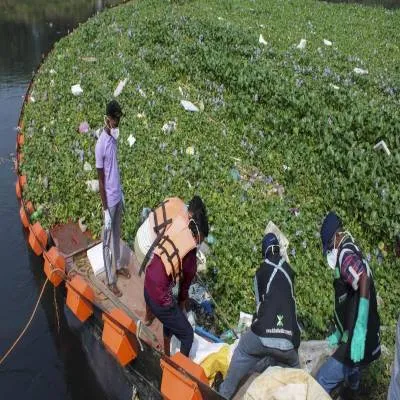
India needs to increase its waste management capacity and ensure universal access to disposal to tackle rising plastic pollution, according to the founder of The Ocean Cleanup, a Netherlands-based non-profit that develops technologies to remove plastic waste from the oceans. The organisation has announced an initiative to deploy barriers on the Trombay and Malad waterways in Mumbai to stop plastic from reaching the Arabian Sea and the Indian Ocean. The deployment is scheduled before the arrival of the monsoon season and aims to intercept debris close to source points.

The barriers are expected to collect at least 62 tonnes (t) per year once fully operational. The devices will be modular and placed like LEGO pieces, while some sites will use excavators and others will use conveyor belts to remove accumulated waste. The structures have been designed to withstand heavy monsoon rains and to give cities time to improve long term disposal systems.

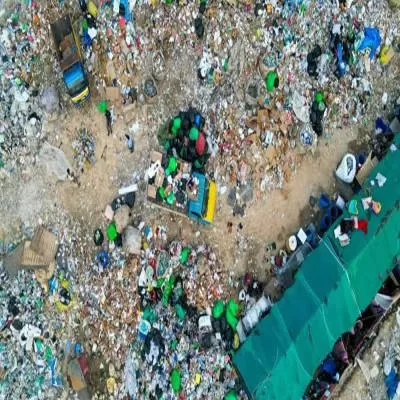
A 2024 study published in Nature found that India is the world’s biggest contributor to plastic pollution, accounting for nearly 20 per cent of global plastic waste. The country generates nine point three million (mn) tonnes (t) of plastic waste annually, of which three point five mn t are mismanaged and leak into the environment each year. Limited access to collection systems and rapid population growth have been cited as drivers that prevent waste management systems from keeping pace with consumption.

Marine plastic pollution threatens food safety, human health and coastal economies and can damage mangroves and coral reefs. Collected waste will be sorted by material and recyclability to minimise residues that cannot be repurposed, and kilogram (kg) is used on first reference. Mumbai was chosen because surveys indicate it releases about five mn kg of plastic into the Arabian Sea and Indian Ocean annually, affecting 220 km of coastline, 152 sq km of mangroves, 107 protected species and nearly one point nine mn livelihoods. The organisation plans to expand the approach to other coastal cities and expressed optimism that improved collection and prosperity will reduce visible pollution.

India needs to increase its waste management capacity and ensure universal access to disposal to tackle rising plastic pollution, according to the founder of The Ocean Cleanup, a Netherlands-based non-profit that develops technologies to remove plastic waste from the oceans. The organisation has announced an initiative to deploy barriers on the Trombay and Malad waterways in Mumbai to stop plastic from reaching the Arabian Sea and the Indian Ocean. The deployment is scheduled before the arrival of the monsoon season and aims to intercept debris close to source points. The barriers are expected to collect at least 62 tonnes (t) per year once fully operational. The devices will be modular and placed like LEGO pieces, while some sites will use excavators and others will use conveyor belts to remove accumulated waste. The structures have been designed to withstand heavy monsoon rains and to give cities time to improve long term disposal systems. A 2024 study published in Nature found that India is the world’s biggest contributor to plastic pollution, accounting for nearly 20 per cent of global plastic waste. The country generates nine point three million (mn) tonnes (t) of plastic waste annually, of which three point five mn t are mismanaged and leak into the environment each year. Limited access to collection systems and rapid population growth have been cited as drivers that prevent waste management systems from keeping pace with consumption. Marine plastic pollution threatens food safety, human health and coastal economies and can damage mangroves and coral reefs. Collected waste will be sorted by material and recyclability to minimise residues that cannot be repurposed, and kilogram (kg) is used on first reference. Mumbai was chosen because surveys indicate it releases about five mn kg of plastic into the Arabian Sea and Indian Ocean annually, affecting 220 km of coastline, 152 sq km of mangroves, 107 protected species and nearly one point nine mn livelihoods. The organisation plans to expand the approach to other coastal cities and expressed optimism that improved collection and prosperity will reduce visible pollution.

Next Story
Building Material

Seppa Township Road Being Paved With Bituminous Concrete

Work is underway to pave the main township road in Seppa with bituminous concrete, marking a significant upgrade to the local transport network. The project is being overseen by the district administration and carried out by municipal contractors using mechanised laying equipment. The initiative aims to replace older surface material that had become potholed and dusty, and to improve all weather access for residents and public services. Local officials have coordinated traffic diversions and site safety measures to minimise disruption during construction. The work includes preparing the base, ..

Next Story
Infrastructure Transport

Tribal Hohos Urge CM To Approve Foothills Road Phase Two

13 Dimapur-based tribal Hohos have urged the Chief Minister to ensure the issuance of the second phase work order for the Foothills Road project on or before 31 March 2026, warning that failure to meet the deadline would compel them to resort to democratic means. The bodies expressed appreciation for government support towards the project, known as the Nagaland People's Road, while stressing that remaining formalities must not be delayed. They described the project as a people-driven initiative of high public value. The Foothills Road project covers a stretch of 395.9 kilometres from Tizit in ..

Next Story
Infrastructure Transport

India Approves First Underwater Road-Rail Tunnel Project

The Indian government has approved the country's first underwater road-rail tunnel project, marking a major step in urban and coastal infrastructure development. The decision signals a shift towards integrated transport corridors that combine road and rail modes to enhance connectivity and resilience. Authorities characterised the approval as a milestone for engineering ambition and national connectivity planning. The move reflects rising investment in large scale infrastructure to support urbanisation and coastal commerce. France has positioned India as a top priority market and is targeting ..

Advertisement

Subscribe to Our Newsletter

Get daily newsletters around different themes from Construction world.

STAY CONNECTED

Advertisement

Advertisement

Advertisement

Open In App