We will share an extensive report with NHAI on proposed resolutions to impediments received from stakeholders
ROADS & HIGHWAYS

We will share an extensive report with NHAI on proposed resolutions to impediments received from stakeholders

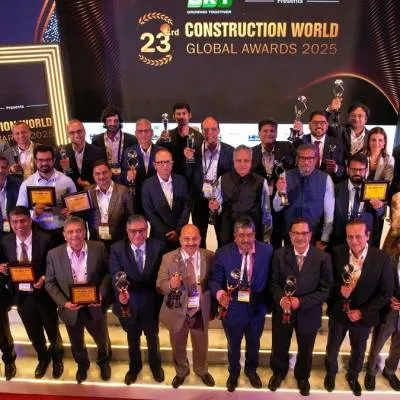
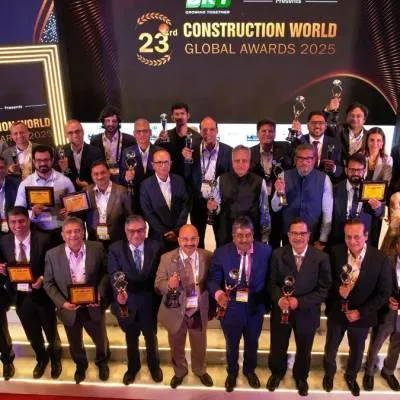
“FY19 was a challenging time for India Inc. The issues were many, ranging from liquidity crunch, rising bad loans, loan defaults (principal as well as interest), slowing capex and slower automobile growth to delayed or stalled projects, financially inviable projects and an insolvency-like situation for a few large organisations. Despite all the obstacles, uncertainties and challenges, a few entities managed to persevere and prevail, posting growth and exhibiting excellence. And these are the companies, from the universe of construction, contracting, engineering and building materials, many of whom were awarded and honoured for their outstanding work at the India Construction Festival in Delhi.

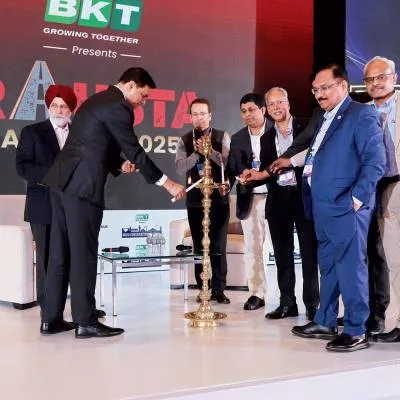
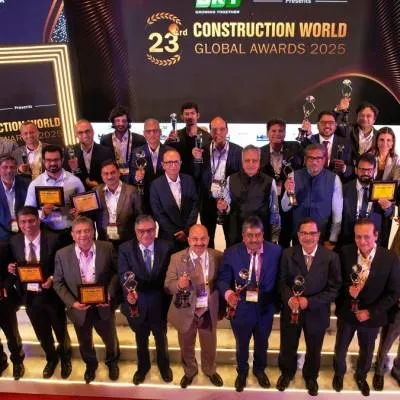
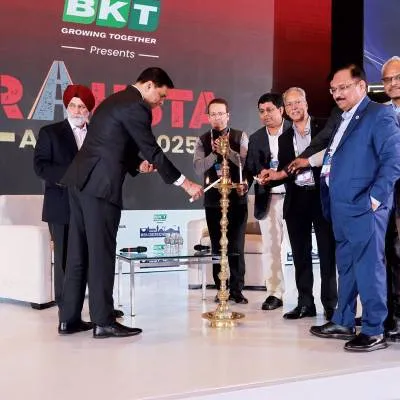
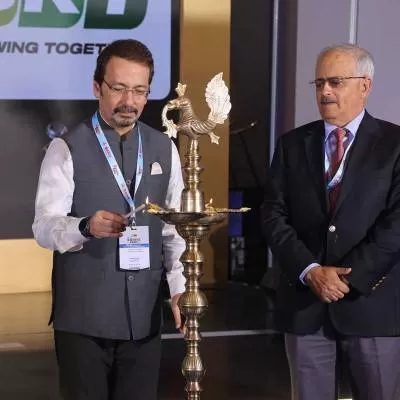
The India Construction Festival, organised by FIRST Construction Council on October 15 and 16, 2019, comprised four sub-events: The India Roads Conference; CONSTRUCTION WORLD Global Awards; CONSTRUCTION WORLD Leadership Summit; and the EQUIPMENT INDIA Awards.

Delivering the inaugural address at the India Construction Festival, Pratap Padode, Founder & President, FIRST Construction Council, said, “The India construction industry is not only one of the fastest growing sectors but will continue to invite new investments. And, India will have to explore new turfs to enhance investments in infrastructure. The country needs a strong pipeline to attract leading global engineering firms. Lack of funding continues to be principal impediment in the way of completion of infrastructure projects.” While he emphasised on the need to examine ways in which technology can be leveraged to improve the Indian construction industry, Padode went on to add, “FCC will share an extensive report with National Highways Authority of India on proposed resolutions of impediments based on suggestions received from stakeholders at the India Construction Festival.” 

Here’s his full speech: 

“The ‘Infrastructure Sector’, as we know it today, was born in 2001 when then Prime Minister Atal Bihari Vajpayee launched the Golden Quadrilateral project to kickstart the Indian economy, which had suffered a series of jolts beginning with the Asian financial crisis of 1997 to the dotcom bust in the year 2000, where several companies inspired by the Internet boom failed financially.

The GDP growth rate of India was at 3.8 per cent then and the country ranked 13thin global GDP rankings. Nineteen years later, India ranks 5thin GDP rankings and is expected to grow to $10 trillion by 2030 when it would be ranked 3rdglobally.

Therefore, what may have sounded like a fantasy till a few years ago seems an achievable target. The $5 trillion economy is possible if the world’s second-most populous country can boost growth as well as expand the current pace of development across sectors.

Needless to say, infrastructure will play a significant role in the country’s march towards its $5 trillion dream. You name it… each segment under the humongous infrastructure sector offers tremendous growth potential. Consequently, the development of highways, rail and metro rail, ports and shipping, warehousing and logistics, airports and mining has experienced brisk activity.

Besides, attempts have also been made to make critical sectors like steel globally competitive through policy interventions.

Having said that, there is still plenty of ground left to cover. Policy interventions can only serve to change the sentiment to positive briefly. What makes the real difference is ‘reform’. Land acquisition for infrastructure projects continues to remain a serious challenge and perhaps it is time policymakers took a relook at the Land Acquisition Act, 2013. Land pooling and experiments on making landowners stakeholders in infra projects have been successfully implemented in Navi Mumbai, Pune and Andhra Pradesh. There are lessons and solutions. Considering the very high cost of land, such out-of-the-box solutions are worth exploring further.

Fundraising for critical infrastructure projects is another issue. In July, Finance Minister Nirmala Sitharaman entered the portals of Parliament House with the Budget papers rolled up in the four-cornered traditional red cloth or bahikhatha and proceeded to inform the nation about the Central Government’s intent to spend Rs 100 trillion on infrastructure over the next five years. But other than government spending, a sign of a robust free-market economy is private spending. And that needs to be revived. At the same time, the divestment of public-sector units (PSUs) needs to be accelerated to bring about accountability and unlock value in several such assets. Fair offloading of such large shareholdings will see a surge interest from both domestic and foreign investors.

Last but not least, it is pertinent to have a workforce that is suitably trained to take on the challenges of Industry 4.0. A Citibank report that analysed data from 1950 onwards for 26 economies, both developed and developing, found that in 75 per cent of the cases, GDP growth exceeded 8 per cent when labour productivity growth topped 6 per cent. India’s labour productivity growth peaked at 10.2 per cent in 2010 and has been on the decline since, making the country part of the global productivity slowdown enigma. In 2016, it stood at 4.75 per cent.

With Prime Minister Narendra Modi informing Chinese Premier Xi Jinping that his mandate this term is for ‘economic development’, the Finance Minister would be busy cranking measures to stimulate the economy. The Rs 1.4 trillion tax benefit has been one such dynamic reform. Many more are likely to follow.

Another area that requires serious attention is the enforcement of contracts. However, that cannot happen without a synergised effort between the executive and the judiciary. Issues ranging from funding, contract clauses and arbitration need urgent and effective oversight. 

Simultaneously, private players, too, will have to ramp up capacity to fully benefit from the opportunities. Just last year, Railway Minister Piyush Goyal had shared how despite there being a strong demand for railway wagons, the private sector had failed to deliver, forcing Indian Railways to consider imports!

The Indian construction industry is not only one of the fastest growing sectors but will continue to invite new investments. And India will have to explore new turf to enhance investments in infrastructure. The country needs a strong pipeline to attract leading global engineering firms. Lack of funding continues to be the principal impediment in the way of completion of infrastructure projects. We need to examine ways in which technology can be leveraged to improve the Indian construction industry.

In continuation of our policy advocacy initiative, FIRST Construction has accelerated its role as an ‘infrastructure thinktank’ and begun offering stakeholders access to research, round tables, white papers, best practices, technology updates and so on. FCC will share an extensive report with National Highways Authority of India on proposed resolutions of impediments based on suggestions received from stakeholders at the India Construction Festival.”



“FY19 was a challenging time for India Inc. The issues were many, ranging from liquidity crunch, rising bad loans, loan defaults (principal as well as interest), slowing capex and slower automobile growth to delayed or stalled projects, financially inviable projects and an insolvency-like situation for a few large organisations. Despite all the obstacles, uncertainties and challenges, a few entities managed to persevere and prevail, posting growth and exhibiting excellence. And these are the companies, from the universe of construction, contracting, engineering and building materials, many of whom were awarded and honoured for their outstanding work at the India Construction Festival in Delhi.The India Construction Festival, organised by FIRST Construction Council on October 15 and 16, 2019, comprised four sub-events: The India Roads Conference; CONSTRUCTION WORLD Global Awards; CONSTRUCTION WORLD Leadership Summit; and the EQUIPMENT INDIA Awards.Delivering the inaugural address at the India Construction Festival, Pratap Padode, Founder & President, FIRST Construction Council, said, “The India construction industry is not only one of the fastest growing sectors but will continue to invite new investments. And, India will have to explore new turfs to enhance investments in infrastructure. The country needs a strong pipeline to attract leading global engineering firms. Lack of funding continues to be principal impediment in the way of completion of infrastructure projects.” While he emphasised on the need to examine ways in which technology can be leveraged to improve the Indian construction industry, Padode went on to add, “FCC will share an extensive report with National Highways Authority of India on proposed resolutions of impediments based on suggestions received from stakeholders at the India Construction Festival.” Here’s his full speech: “The ‘Infrastructure Sector’, as we know it today, was born in 2001 when then Prime Minister Atal Bihari Vajpayee launched the Golden Quadrilateral project to kickstart the Indian economy, which had suffered a series of jolts beginning with the Asian financial crisis of 1997 to the dotcom bust in the year 2000, where several companies inspired by the Internet boom failed financially.The GDP growth rate of India was at 3.8 per cent then and the country ranked 13thin global GDP rankings. Nineteen years later, India ranks 5thin GDP rankings and is expected to grow to $10 trillion by 2030 when it would be ranked 3rdglobally.Therefore, what may have sounded like a fantasy till a few years ago seems an achievable target. The $5 trillion economy is possible if the world’s second-most populous country can boost growth as well as expand the current pace of development across sectors.Needless to say, infrastructure will play a significant role in the country’s march towards its $5 trillion dream. You name it… each segment under the humongous infrastructure sector offers tremendous growth potential. Consequently, the development of highways, rail and metro rail, ports and shipping, warehousing and logistics, airports and mining has experienced brisk activity.Besides, attempts have also been made to make critical sectors like steel globally competitive through policy interventions.Having said that, there is still plenty of ground left to cover. Policy interventions can only serve to change the sentiment to positive briefly. What makes the real difference is ‘reform’. Land acquisition for infrastructure projects continues to remain a serious challenge and perhaps it is time policymakers took a relook at the Land Acquisition Act, 2013. Land pooling and experiments on making landowners stakeholders in infra projects have been successfully implemented in Navi Mumbai, Pune and Andhra Pradesh. There are lessons and solutions. Considering the very high cost of land, such out-of-the-box solutions are worth exploring further.Fundraising for critical infrastructure projects is another issue. In July, Finance Minister Nirmala Sitharaman entered the portals of Parliament House with the Budget papers rolled up in the four-cornered traditional red cloth or bahikhatha and proceeded to inform the nation about the Central Government’s intent to spend Rs 100 trillion on infrastructure over the next five years. But other than government spending, a sign of a robust free-market economy is private spending. And that needs to be revived. At the same time, the divestment of public-sector units (PSUs) needs to be accelerated to bring about accountability and unlock value in several such assets. Fair offloading of such large shareholdings will see a surge interest from both domestic and foreign investors.Last but not least, it is pertinent to have a workforce that is suitably trained to take on the challenges of Industry 4.0. A Citibank report that analysed data from 1950 onwards for 26 economies, both developed and developing, found that in 75 per cent of the cases, GDP growth exceeded 8 per cent when labour productivity growth topped 6 per cent. India’s labour productivity growth peaked at 10.2 per cent in 2010 and has been on the decline since, making the country part of the global productivity slowdown enigma. In 2016, it stood at 4.75 per cent.With Prime Minister Narendra Modi informing Chinese Premier Xi Jinping that his mandate this term is for ‘economic development’, the Finance Minister would be busy cranking measures to stimulate the economy. The Rs 1.4 trillion tax benefit has been one such dynamic reform. Many more are likely to follow.Another area that requires serious attention is the enforcement of contracts. However, that cannot happen without a synergised effort between the executive and the judiciary. Issues ranging from funding, contract clauses and arbitration need urgent and effective oversight. Simultaneously, private players, too, will have to ramp up capacity to fully benefit from the opportunities. Just last year, Railway Minister Piyush Goyal had shared how despite there being a strong demand for railway wagons, the private sector had failed to deliver, forcing Indian Railways to consider imports!The Indian construction industry is not only one of the fastest growing sectors but will continue to invite new investments. And India will have to explore new turf to enhance investments in infrastructure. The country needs a strong pipeline to attract leading global engineering firms. Lack of funding continues to be the principal impediment in the way of completion of infrastructure projects. We need to examine ways in which technology can be leveraged to improve the Indian construction industry.In continuation of our policy advocacy initiative, FIRST Construction has accelerated its role as an ‘infrastructure thinktank’ and begun offering stakeholders access to research, round tables, white papers, best practices, technology updates and so on. FCC will share an extensive report with National Highways Authority of India on proposed resolutions of impediments based on suggestions received from stakeholders at the India Construction Festival.”

Next Story
Infrastructure Transport

Shivraj Chouhan Launches PMGSY IV and Announces Package for Madhya Pradesh

Union Minister Shivraj Singh Chouhan launched the Pradhan Mantri Gram Sadak Yojana (PMGSY) IV at Bhairunda in Sehore district during the 25 year celebrations and announced a development package for Madhya Pradesh. The programme was organised by the Union Ministry of Rural Development and attended by Chief Minister Dr Mohan Yadav, ministers of state, state ministers, legislators and senior officials from the centre and the state. The minister said the central government under the Prime Minister is committed to strengthening rural livelihoods through improved connectivity, housing and women's in..

Next Story
Infrastructure Urban

DMR Engineering Reports FY 25-26 Financial Results

DMR Engineering reported its half year results for the financial year ended 31 March 2026 and published full year figures on a standalone basis. Standalone revenue from operations decreased by 2.01 per cent year-over-year to Rs 102.58 million (mn), while profit after tax declined by 43.94 per cent to nine point five six mn, leaving a profit after tax margin of nine point zero five per cent. Earnings per share stood at Rs zero point nine two, a fall of 44.71 per cent year-over-year. The company attributed part of the decline to one-off provisioning for bad debts and additional financing charges..

Next Story
Infrastructure Urban

Atlanta Electricals Posts Strong FY26 Growth And Debt Free Finish

Atlanta Electricals reported audited consolidated results for the quarter and year ended 31 March 2026. The company recorded significant year-on-year revenue growth driven by capacity ramp-up at new facilities and higher utilisation at legacy plants. The announcement summarised operating improvements and strategic milestones achieved during the year. For Q4 the company reported revenue of Rs 7.48 bn and for FY26 revenue of Rs 18.52 bn, representing robust growth versus the prior year. EBITDA in Q4 was Rs. 1.49 bn and Rs. 3.44 bn for the full year, with margins expanding to 20 per cent in the q..

Advertisement

Subscribe to Our Newsletter

Get daily newsletters around different themes from Construction world.

STAY CONNECTED

Advertisement

Advertisement

Advertisement