Imports of lower priced steel will impact the cost and quality of steel
Steel

Imports of lower priced steel will impact the cost and quality of steel

The domestic steel consumption growth is expected to grow by 7 per cent during this fiscal and the trend is likely to continue in the next financial year as well, says an ICRA report. “Given the Central and state government’s emphasis on infrastructure development in terms of road, air and ...

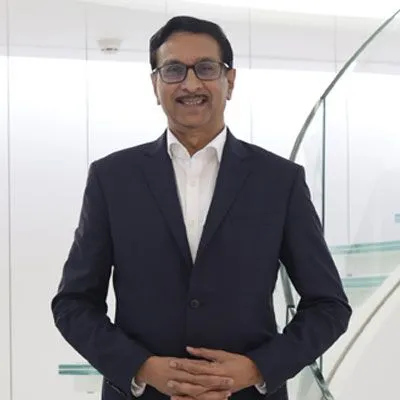
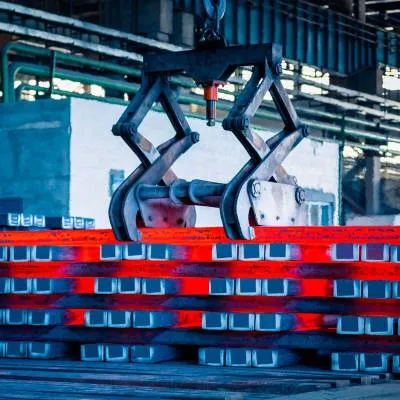
The domestic steel consumption growth is expected to grow by 7 per cent during this fiscal and the trend is likely to continue in the next financial year as well, says an ICRA report. “Given the Central and state government’s emphasis on infrastructure development in terms of road, air and port connectivity and other projects in various sectors across the country, the prediction of growth in the infrastructure sector by 7 per cent during the current fiscal requires increased steel consumption,” says Manish Beriwala, Director, Shyam Steel Industries. He shares more…Which segments do you see as growth drivers?Housing, power transmission and rail expansion projects, along with the development and expansion of National Highways under Bharatmala and state expressways, railway infrastructure development and station redevelopment, water and irrigation, the National River Linking Project, development of 100 airports in the next 15 years, urban infra projects  like metro-rail and MRTS, water supply and sanitation, AMRUT, smart cities, Swachh Bharat Abhiyan and the Sagarmala project, besides rapid growth of the automobile sector. With Make in India, the domestic steel industry, both in the public and private sectors, including MSMEs, will have the opportunity to grow.Are lower-priced steel imports expected to impact construction?Certainly! If imported steel of inferior quality is used, the quality of construction is seriously compromised, besides adversely affecting the domestic steel industry. That said, the government is going to impose minimum import price, safeguard duty and anti-dumping measures to bolster the growth of the domestic steel industry in consonance with its vision to reach the country’s steel production target to 300 MT by 2030-31.Tell us about the different steel components offered by your company for construction.Established in 1953, the company is among the pioneering steelmaking industries in India. With plants in West Bengal, it caters to the need of a vast multitude of clientele pan-India and beyond. Our products include TMT bars and structural steel. Our high-in-demand corrosion-resistant steel is widely used in the coastal region in different sectors. The unsurpassed quality of our steel has made its utility deeply entrenched and because of our flexi-strong quality, our presence is firmly placed in all the segments of construction, especially infrastructure.The National Steel Policy targets an increase in steel production capacity to 300 mt by the year 2030-2031, and an increase in per capita steel consumption in the country to 160 kg per person…If we consider the projects on the anvil and the upcoming ones, in the backdrop of the policies of the government and policy guidance of Niti Aayog, the targets can be realised. However, achieving such a target hinges on a multiplicity of unpredictable factors. The government needs to take a number of enabling measures, including hassle-free availability of iron ore, easing the auction process of coal and critical minerals for steel-making, breaking the monopoly of a few big players over the minerals required for steel making, as well as putting in place adequate logistical infrastructure support for transportation of iron ore and finished products across the country. The challenge that the industry has been facing for a long time is the non-availability of an adequate number of rakes from the Railways for transportation of iron ore and finished products. Unless these major issues are addressed in an industry-friendly manner with due importance to the requirements of MSMEs, which contribute 60 per cent of the steel production of the country, it will perhaps be difficult to achieve the targets set in the NSP.

Next Story
Real Estate

Smartworks Signs ~1.68 Lakh Sq Ft Flex Lease with IT Major in Kolkata

Smartworks Coworking Spaces, India’s largest managed office platform by total area under management, has leased approximately 1.68 lakh sq ft in Kolkata to a leading global information technology, consulting and business process services company. The office space is spread across Smartworks’ Victoria Park and Mediasiti campuses in Salt Lake City, Sector V, marking the largest flex-office deal signed in the region. JLL India served as the advisory partner for the transaction.“Enterprise adoption of managed campuses has entered a decisive phase. Large organisations are scaling faster and l..

Next Story
Infrastructure Energy

Samko, SRAM & MRAM Team Up for Smart-city Venture with Gigafactories

Samko Renewable Energy, a subsidiary of Samko Holdings UK, and SRAM & MRAM Projects of the SRAM & MRAM Group have formed a joint venture, Samko SRAM & MRAM BESS, to spearhead the Nikola Tesla Smart City Project. The initiative aims to develop integrated manufacturing townships that will feature Gigafactories, commercial towers, retail complexes, leisure zones, and resort-style infrastructure. The first cluster is planned for Tamil Nadu, with a parallel rollout in the United Kingdom.Positioned as a multi-billion-dollar global programme, the project envisions Gigafactory-scale develo..

Next Story
Infrastructure Transport

NFR Deploys Underwater Robots to Inspect 34 Bridges

The Northeast Frontier Railway (NFR) has carried out extensive inspections of major railway bridges using underwater robotic vehicles, including the iconic Saraighat Bridge over the Brahmaputra in Guwahati. The initiative uses advanced Remotely Operated Robotic Vehicle (RORV) technology to assess submerged structures that require year-round monitoring.The Saraighat Bridge — India’s first rail-cum-road bridge linking Pandu and Amingaon — underwent a comprehensive evaluation using a combination of RORV surveys, LiDAR, thermal imaging, Ground Penetrating Radar (GPR) and Ultrasonic Pulse Vel..

Advertisement

Subscribe to Our Newsletter

Get daily newsletters around different themes from Construction world.

STAY CONNECTED

Advertisement

Advertisement

Advertisement

Advertisement

Open In App