Andhra Offers Discom Licences To Private Firms Outside Power Sector
Cement

Andhra Offers Discom Licences To Private Firms Outside Power Sector

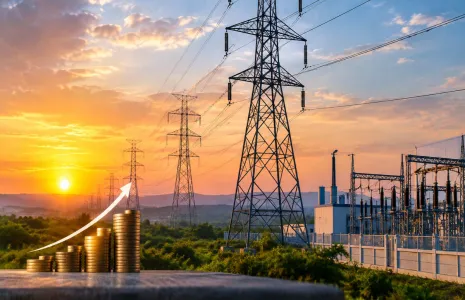
The Andhra Pradesh government will allow private firms that require more than 300 megawatt (MW) of power to apply for distribution licences, making the state the first to extend such licences beyond the power sector. The policy targets information technology, pharmaceuticals, steel and data centres and aims to reduce reliance on state utilities as demand rises for artificial intelligence infrastructure.

Approved applicants will be able to procure electricity directly from generators through power purchase agreements, a change officials said will create more competitive tariffs and reduce supply risk. Licence holders will use the Andhra Pradesh Transmission Company (APTRANSCO) network on payment of charges and will not need a separate distribution network initially.

Licences will be granted under the Electricity Act, 2003 framework, with the Central and State electricity regulators retaining authority over terms and approvals. The recent Electricity (Amendment) Bill, 2025 sought to lower entry barriers, enable network sharing and encourage competition, while the state commission will set floor and ceiling tariffs where multiple discoms operate.

Industry players and original equipment manufacturers welcomed the policy, saying competitive supply is vital for large data centre investments. Major projects and partnerships such as those involving Adani and Google, Brookfield and Reliance, and Meta and Sify Technologies are expected to benefit as capacity expands in the state.

Analysts noted India’s data centre capacity is forecast to reach 10 gigawatts (GW) by 2030 and cited International Energy Agency estimates that global data centre electricity consumption could approach 945 terawatt hours by the same year. A one GW data centre needs an equivalent power allocation and one point five times the water, which authorities equated to 150 billion litres (150 bn litres).

Advisers warned that distribution licences will require close regulation and monitoring to prevent misuse and to ensure tariffs and supply obligations are met. Officials said the policy aims to balance investor requirements with regulatory oversight and could serve as a model for other states.

The Andhra Pradesh government will allow private firms that require more than 300 megawatt (MW) of power to apply for distribution licences, making the state the first to extend such licences beyond the power sector. The policy targets information technology, pharmaceuticals, steel and data centres and aims to reduce reliance on state utilities as demand rises for artificial intelligence infrastructure. Approved applicants will be able to procure electricity directly from generators through power purchase agreements, a change officials said will create more competitive tariffs and reduce supply risk. Licence holders will use the Andhra Pradesh Transmission Company (APTRANSCO) network on payment of charges and will not need a separate distribution network initially. Licences will be granted under the Electricity Act, 2003 framework, with the Central and State electricity regulators retaining authority over terms and approvals. The recent Electricity (Amendment) Bill, 2025 sought to lower entry barriers, enable network sharing and encourage competition, while the state commission will set floor and ceiling tariffs where multiple discoms operate. Industry players and original equipment manufacturers welcomed the policy, saying competitive supply is vital for large data centre investments. Major projects and partnerships such as those involving Adani and Google, Brookfield and Reliance, and Meta and Sify Technologies are expected to benefit as capacity expands in the state. Analysts noted India’s data centre capacity is forecast to reach 10 gigawatts (GW) by 2030 and cited International Energy Agency estimates that global data centre electricity consumption could approach 945 terawatt hours by the same year. A one GW data centre needs an equivalent power allocation and one point five times the water, which authorities equated to 150 billion litres (150 bn litres). Advisers warned that distribution licences will require close regulation and monitoring to prevent misuse and to ensure tariffs and supply obligations are met. Officials said the policy aims to balance investor requirements with regulatory oversight and could serve as a model for other states.

Next Story
Infrastructure Transport

Civil Aviation Minister Reviews Hub And Spoke Readiness

The Minister of Civil Aviation, Ram Mohan Naidu, chaired a high-level meeting at Delhi Airport to review readiness for hub-and-spoke operations. Senior officials from the Ministry of Home Affairs, Ministry of Civil Aviation, Bureau of Immigration, Bureau of Civil Aviation Security, Customs, Airports Authority of India, Directorate General of Civil Aviation, CISF, DigiYatra, Delhi International Airport Limited and leading airlines attended. He led an on-ground walkthrough of passenger flows and inspected the Security Hold Area at Terminal 3. The ministry noted that the National Civil Aviation P..

Next Story
Infrastructure Energy

BCCL Announces PI Relaxation And Cash Discount For Power Sector

Bharat Coking Coal Limited (BCCL) has announced a scheme providing relaxation in Performance Incentive (PI) and offering a cash discount to power sector consumers for the first quarter of Financial Year 2026–27, covering April to June 2026. The scheme is applicable to all eligible power sector consumers covered under Fuel Supply Agreements (FSA), including those under the Flexi?Linkage arrangement. Incentives will be linked to actual coal offtake through rail, road and rail?cum?road (RCR) modes and implemented on the basis of proportion of offtake against the Quarterly Quantity (QQ) in defin..

Next Story
Technology

Union Minister Concludes Czech Republic Visit To Deepen Economic Ties

Union Minister of State for Commerce and Industry Shri Jitin Prasada concluded an official visit to the Czech Republic from 22 to 23 April 2026 at the invitation of the Czech government. The visit reaffirmed India’s commitment to strengthening strategic and economic engagement with key European partners and to deepening bilateral trade, investment and innovation linkages. The programme focused on identifying practical opportunities for industrial collaboration and technology partnerships. During the visit, the minister held bilateral meetings with senior Czech leaders, including Mr Karel Hav..

Advertisement

Subscribe to Our Newsletter

Get daily newsletters around different themes from Construction world.

STAY CONNECTED

Advertisement

Advertisement

Advertisement