
Cement Prices Likely To Rise As Petcoke Costs Increase
Cement

Cement Prices Likely To Rise As Petcoke Costs Increase

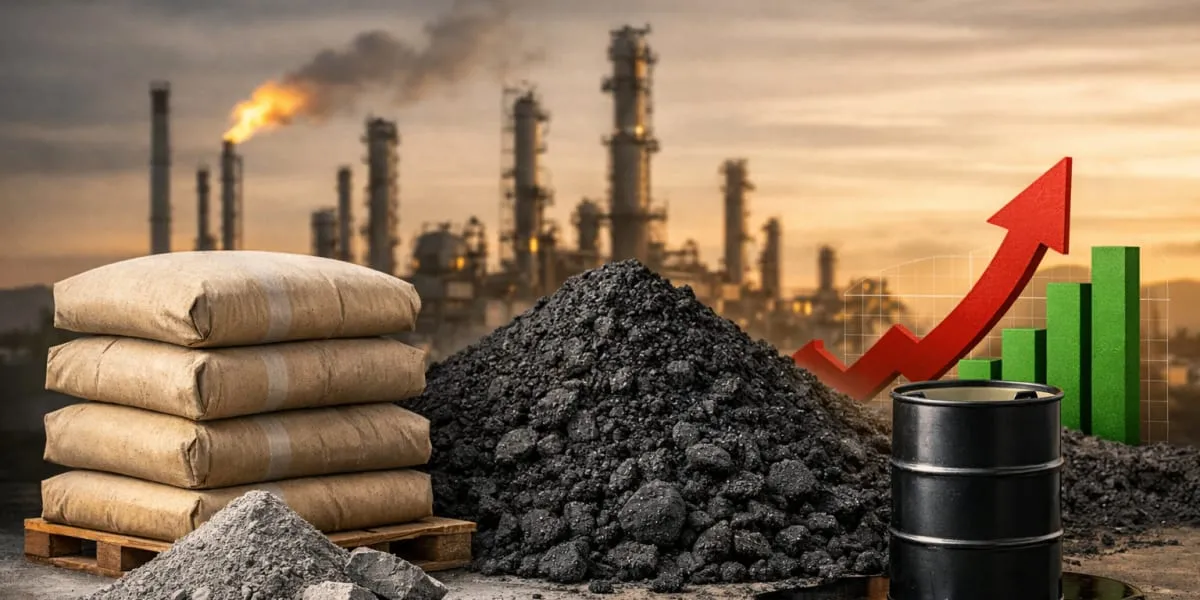
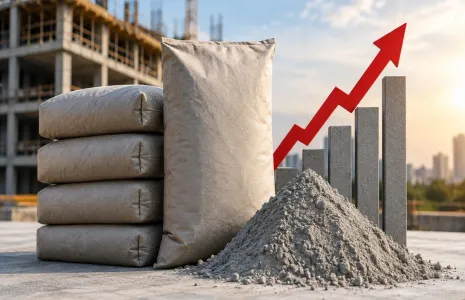
A report by Nuvama Wealth Management said cement prices in India could rise by the end of March or early April 2026 as producers face higher input costs linked to crude oil. The report identified rising petroleum coke and packaging material costs as principal drivers of upward pressure on production expenses. Petroleum coke, a fuel used in cement manufacturing, rose by about 13 per tonne (t) in US dollar terms in February 2026, a change that could be passed on to buyers. Producers may adjust prices later in the quarter to protect margins.

Cement demand remained stable during February and March 2026, supported by ongoing construction and infrastructure activity, and earlier price increases on non-trade sales were largely reversed by the end of February. Retail prices remained broadly steady through March in most regions. The persistence of demand may allow firms to manage price adjustments rather than apply uniform increases. Market responses will vary by region and logistical cost pressures.

Nuvama said that stock performance of cement companies will likely be influenced by the path of cement prices and petroleum coke costs in the coming weeks. Rising input costs including crude linked fuels and packaging may squeeze profit margins and prompt firms to monitor pricing and demand closely. The balance between input inflation and end demand will determine whether companies absorb costs or transfer them to customers. Analysts will watch forthcoming quarterly results for evidence of margin pressure or successful cost pass through.

Government capital expenditure showed moderation, with overall capex declining 24 per cent year-on-year to around Rs 2 trillion (Rs 2 tn) in January 2026 and cumulative capex from April 2025 to January 2026 at about Rs 20 trillion (Rs 20 tn), up eight per cent year-on-year. The report noted that real estate launches fell 44 per cent year-on-year in January 2026, and overall healthy demand could still be offset by rising crude linked input costs that may push cement prices higher by late March or early April 2026.

A report by Nuvama Wealth Management said cement prices in India could rise by the end of March or early April 2026 as producers face higher input costs linked to crude oil. The report identified rising petroleum coke and packaging material costs as principal drivers of upward pressure on production expenses. Petroleum coke, a fuel used in cement manufacturing, rose by about 13 per tonne (t) in US dollar terms in February 2026, a change that could be passed on to buyers. Producers may adjust prices later in the quarter to protect margins. Cement demand remained stable during February and March 2026, supported by ongoing construction and infrastructure activity, and earlier price increases on non-trade sales were largely reversed by the end of February. Retail prices remained broadly steady through March in most regions. The persistence of demand may allow firms to manage price adjustments rather than apply uniform increases. Market responses will vary by region and logistical cost pressures. Nuvama said that stock performance of cement companies will likely be influenced by the path of cement prices and petroleum coke costs in the coming weeks. Rising input costs including crude linked fuels and packaging may squeeze profit margins and prompt firms to monitor pricing and demand closely. The balance between input inflation and end demand will determine whether companies absorb costs or transfer them to customers. Analysts will watch forthcoming quarterly results for evidence of margin pressure or successful cost pass through. Government capital expenditure showed moderation, with overall capex declining 24 per cent year-on-year to around Rs 2 trillion (Rs 2 tn) in January 2026 and cumulative capex from April 2025 to January 2026 at about Rs 20 trillion (Rs 20 tn), up eight per cent year-on-year. The report noted that real estate launches fell 44 per cent year-on-year in January 2026, and overall healthy demand could still be offset by rising crude linked input costs that may push cement prices higher by late March or early April 2026.

Next Story
Real Estate

Integrated Waterproofing Strategies

Waterproofing buildings used to be an annual pre-monsoon affair but the evolution of real-estate development has changed that approach. In new developments, developers are weaving waterproofing solutions into both the design and construction phases, an approach that Nikhil Madan, Managing Director, Mahima Group, says, “is all about ensuring lasting durability [of the building] and keeping lifecycle risks including water seepage and extensive maintenance to a minimum.”Watertight by designAluminium formwork systems aren’t commonly thought of as a waterproofing tool but at the Mahima Group,..

Next Story
Infrastructure Urban

GROHE Showcases Water-Led Design At Milan

GROHE unveiled its GROHE SPA Aqua Sanctuary at Milan Design Week 2026, transforming Piccolo Teatro Studio Melato into an immersive showcase of water, design and wellbeing. Built on the philosophy of ‘Wellbeing Through Water’, the installation reimagined bathrooms as holistic spaces for relaxation, rejuvenation and self-care.The Aqua Sanctuary was presented through three interconnected sanctums. The first showcased the 3D-printed GROHE SPA AquaTree shower and faucet, highlighting bespoke innovation and biophilic design. The second featured the Atrio Private Collection and GROHE SPA x Buster..

Next Story
Infrastructure Transport

Rahee Group Expands Rail Manufacturing Capacity

Rahee Group has outlined a multi-year investment roadmap to expand its operational footprint and strengthen manufacturing capabilities for India’s growing railway and urban transit sector. The Group is expanding in Odisha with a new Track Component Casting Unit, for which the groundbreaking ceremony was held on 8 April 2026 in the presence of Odisha Chief Minister Mohan Charan Majhi.The Group’s flagship EPC arm, Rahee Infratech Ltd, continues to focus on complex rail infrastructure projects, including track systems, bridges, viaducts and ballastless infrastructure. Its wholly owned subsidi..

Advertisement

Subscribe to Our Newsletter

Get daily newsletters around different themes from Construction world.

STAY CONNECTED

Advertisement

Advertisement

Advertisement