
Indian Railways Reforms Boost Bulk Cement Rail Movement
Cement

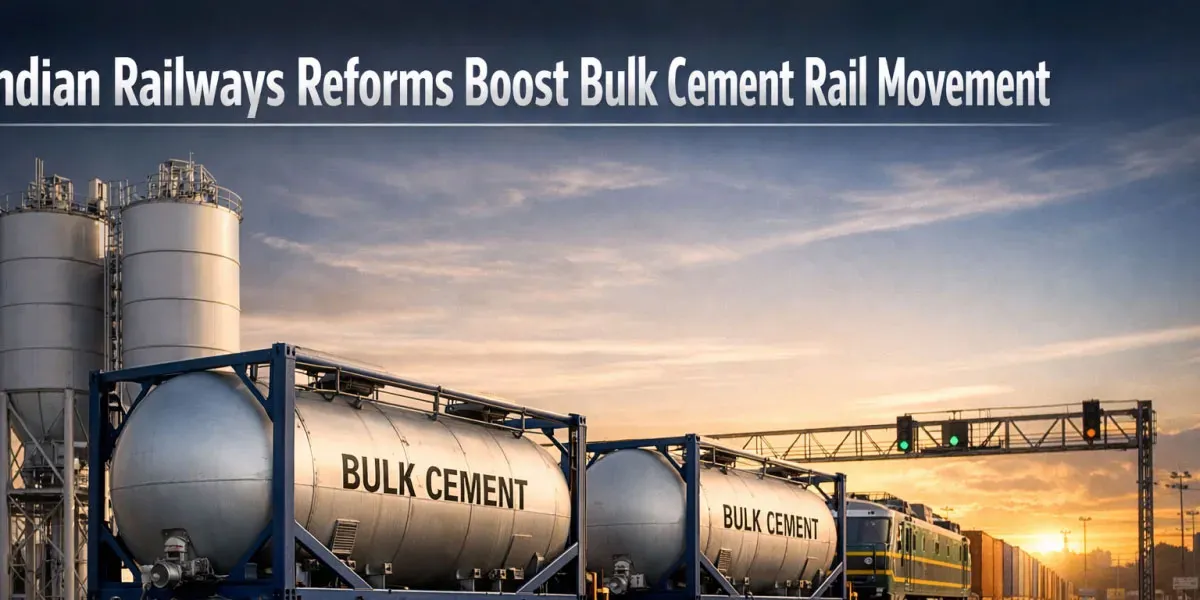
Indian Railways Reforms Boost Bulk Cement Rail Movement

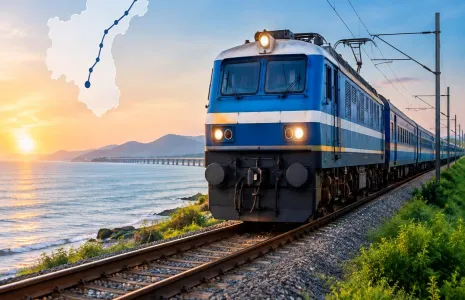
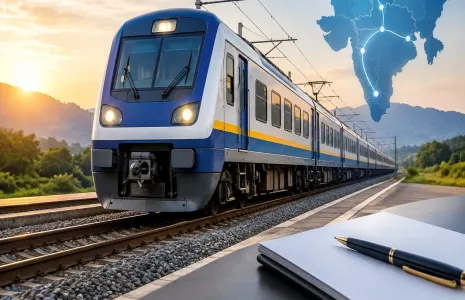
Indian Railways has reported a positive response to reforms intended to shift bulk cement movement from road to rail, with many cement companies approaching the Container Corporation of India (CONCOR) for tank container services. The Ministry of Railways has promoted measures designed to make rail a more competitive option for bulk cement logistics. Trade sources have indicated improved commercial interest since the measures were introduced.

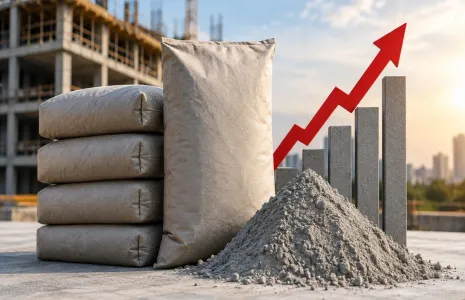
CONCOR is facilitating the installation of silos at terminals to enable bulk handling and storage and to support plant to market flows using tank containers. The rail authority has revised charging on a gross tonne kilometre (GTKM) basis from Rs 0.90 to Rs 0.85 per tonne per kilometre and introduced discounts for empty return movement to the originating terminal on the same basis. The combined effect has been described as making rail movement of bulk cement in tank containers significantly more competitive compared to road.

The ministry believes the scheme will reduce overall freight cost for bulk cement movement and lower fuel consumption, resulting in reduced emissions. The reforms are intended to support faster turnaround times and to reduce handling losses compared with bagged cement. The measures are expected to encourage wider adoption of tank containers and to improve efficiency between plants and markets.

Previously, haulage for tank containers had been charged on a per twenty foot equivalent unit (TEU) basis according to distance slabs with a graded discount for empty return haulage that reduced from 50 per cent in the first year to 40 per cent in the second year, 30 per cent in the third year, 20 per cent in the fourth year and 10 per cent in the fifth year, with no discount thereafter. That basis of charging was found unattractive for cement producers and acted as a deterrent to modal shift from road to rail. The revised rates aim to increase loading and create a win-win situation for the railways and customers.

Indian Railways has reported a positive response to reforms intended to shift bulk cement movement from road to rail, with many cement companies approaching the Container Corporation of India (CONCOR) for tank container services. The Ministry of Railways has promoted measures designed to make rail a more competitive option for bulk cement logistics. Trade sources have indicated improved commercial interest since the measures were introduced. CONCOR is facilitating the installation of silos at terminals to enable bulk handling and storage and to support plant to market flows using tank containers. The rail authority has revised charging on a gross tonne kilometre (GTKM) basis from Rs 0.90 to Rs 0.85 per tonne per kilometre and introduced discounts for empty return movement to the originating terminal on the same basis. The combined effect has been described as making rail movement of bulk cement in tank containers significantly more competitive compared to road. The ministry believes the scheme will reduce overall freight cost for bulk cement movement and lower fuel consumption, resulting in reduced emissions. The reforms are intended to support faster turnaround times and to reduce handling losses compared with bagged cement. The measures are expected to encourage wider adoption of tank containers and to improve efficiency between plants and markets. Previously, haulage for tank containers had been charged on a per twenty foot equivalent unit (TEU) basis according to distance slabs with a graded discount for empty return haulage that reduced from 50 per cent in the first year to 40 per cent in the second year, 30 per cent in the third year, 20 per cent in the fourth year and 10 per cent in the fifth year, with no discount thereafter. That basis of charging was found unattractive for cement producers and acted as a deterrent to modal shift from road to rail. The revised rates aim to increase loading and create a win-win situation for the railways and customers.

Next Story
Real Estate

Homes: Smart Beyond Gadgets

India’s smart home industry is seeing a clear shift from gadget-centric automation to integrated living ecosystems. Whereas smart homes used to largely be about controlling lights through an app, today, the expectation is more holistic: Technology should seamlessly integrate with architecture and everyday living and tailored to home occupants needs to maximise their convenience and safety.Especially as home owners develop a taste for minimalism, integrated automation assumes centre-stage. “By reducing the dependence on multiple switches, panels and visible hardware, integrated automation c..

Next Story
Building Material

Ultra Concrete Age

The need of present time is stronger buildings, industrial or common utility buildings, such as Malls, Railway stations, hospitals, offices, bridges etc. For this, there is need of long durable, tough and stable concrete, which could stand under normal and seismic conditions. Tough railway bridges are required for bullet trains to pass without any damage. Railway tunnels, sea-links, coastal roads, bridges and multistorey buildings, are the need of the hour. The question comes, is the normal cement called OPC is sufficient to take care of such requirements or better combination of cements and s..

Next Story
Infrastructure Energy

The next five years will expose the capability gap in transmission EPC

India’s transmission expansion is redefining EPC priorities, shifting focus from scale to specialised execution. Rajesh Kumar Singh, CEO, Jyoti Structures, explains how engineering capability, disciplined project selection and delivery experience will determine competitiveness in the evolving market.India is witnessing a major push to expand its transmission network to integrate renewable energy and strengthen grid resilience. From your perspective, how will this wave of transmission investment reshape opportunities for EPC companies over the next five years?What is happening in Indian ..

Advertisement

Subscribe to Our Newsletter

Get daily newsletters around different themes from Construction world.

STAY CONNECTED

Advertisement

Advertisement

Advertisement