Shiva Cement Merges with JSW Cement
Cement

Shiva Cement Merges with JSW Cement

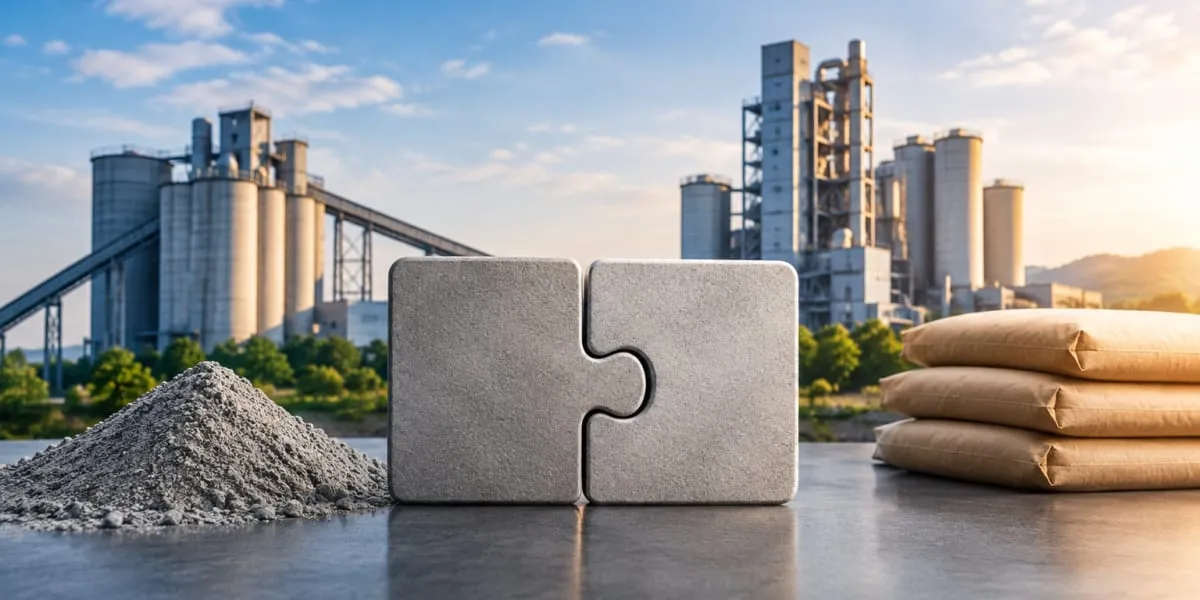
JSW Cement has announced a scheme of arrangement to merge its listed subsidiary Shiva Cement with itself, creating a single unified cement platform. The boards of both companies have approved the proposal, which will require clearances from stock exchanges, the Securities and Exchange Board of India, the National Company Law Tribunal, Odisha Industrial Infrastructure Development Corporation and other applicable authorities.

The transaction is expected to be completed within 12 to 14 months, subject to the necessary approvals from regulators, shareholders and creditors. Under the scheme, JSW Cement will issue 5 equity shares with a face value of Rs. 10 each for every 41 equity shares with a face value of Rs. 2 each held by Shiva Cement shareholders other than JSW Cement.

The company said the merger would consolidate financial, managerial, technical, distribution and marketing resources while reducing administrative duplication and compliance requirements. It would also provide greater funding flexibility, potentially lower financing costs and eliminate inter-company guarantees.

The consolidation is expected to strengthen backward integration by enabling JSW Cement to use Shiva Cement’s clinker manufacturing facility. This would reduce dependence on external clinker procurement and improve supply-chain efficiency. Public shareholders of Shiva Cement would receive direct ownership in JSW Cement, which has a broader institutional investor base and a more liquid listed presence.

JSW Cement acquired a controlling stake in Shiva Cement through transactions that began in January 2017. Shiva Cement operates a clinker facility in Odisha, near the borders of Odisha, Chhattisgarh and Jharkhand, and commissioned a 1 mtpa cement grinding unit at Sambalpur in FY26 through a commercial arrangement with Bhushan Power and Steel.

JSW Cement has 24.10 mtpa of cement grinding capacity and 9.74 mtpa of clinkerisation capacity. Its Indian operations comprise nine plants, including two integrated units, one clinker unit and six grinding units. The proposed merger is intended to simplify the corporate structure and align the financial statements of the two companies.

JSW Cement has announced a scheme of arrangement to merge its listed subsidiary Shiva Cement with itself, creating a single unified cement platform. The boards of both companies have approved the proposal, which will require clearances from stock exchanges, the Securities and Exchange Board of India, the National Company Law Tribunal, Odisha Industrial Infrastructure Development Corporation and other applicable authorities. The transaction is expected to be completed within 12 to 14 months, subject to the necessary approvals from regulators, shareholders and creditors. Under the scheme, JSW Cement will issue 5 equity shares with a face value of Rs. 10 each for every 41 equity shares with a face value of Rs. 2 each held by Shiva Cement shareholders other than JSW Cement. The company said the merger would consolidate financial, managerial, technical, distribution and marketing resources while reducing administrative duplication and compliance requirements. It would also provide greater funding flexibility, potentially lower financing costs and eliminate inter-company guarantees. The consolidation is expected to strengthen backward integration by enabling JSW Cement to use Shiva Cement’s clinker manufacturing facility. This would reduce dependence on external clinker procurement and improve supply-chain efficiency. Public shareholders of Shiva Cement would receive direct ownership in JSW Cement, which has a broader institutional investor base and a more liquid listed presence. JSW Cement acquired a controlling stake in Shiva Cement through transactions that began in January 2017. Shiva Cement operates a clinker facility in Odisha, near the borders of Odisha, Chhattisgarh and Jharkhand, and commissioned a 1 mtpa cement grinding unit at Sambalpur in FY26 through a commercial arrangement with Bhushan Power and Steel. JSW Cement has 24.10 mtpa of cement grinding capacity and 9.74 mtpa of clinkerisation capacity. Its Indian operations comprise nine plants, including two integrated units, one clinker unit and six grinding units. The proposed merger is intended to simplify the corporate structure and align the financial statements of the two companies.

Related Stories

Gold Stories
Next Story
Infrastructure Energy

Vedanta Secures Two Offshore Blocks in KG Basin Under DSF IV

Vedanta Oil and Gas has secured two offshore blocks in the Krishna Godavari (KG) Basin under the Government of India's Discovered Small Field (DSF) IV bidding round, strengthening its exploration and production portfolio along India's east coast.The newly awarded assets include the shallow water block KG/OSDSF/G1/2025 and the deepwater block KG/DWDSF/GD10/2025. The acquisition forms part of Vedanta's strategy to expand its offshore operations and explore India's untapped hydrocarbon resources through advanced technologies and efficient project execution.The blocks were awarded at a contract si..

Next Story
Resources

Hindustan Zinc's Sakhi Enterprise Income Grows 43%

Hindustan Zinc's Sakhi Microenterprise initiative has recorded a 43 per cent year-on-year increase in collective income, rising from Rs 2.3 million in FY26 to Rs 3.28 million, according to the company. The initiative, operated through Sakhi Utpadan Samiti, currently engages 426 women in income-generating activities across multiple production units.The programme aims to promote financial independence by helping rural women develop entrepreneurial skills and establish sustainable livelihoods. One of its beneficiaries, Manju Devi, who previously depended on seasonal agricultural work, now operate..
Next Story
Technology

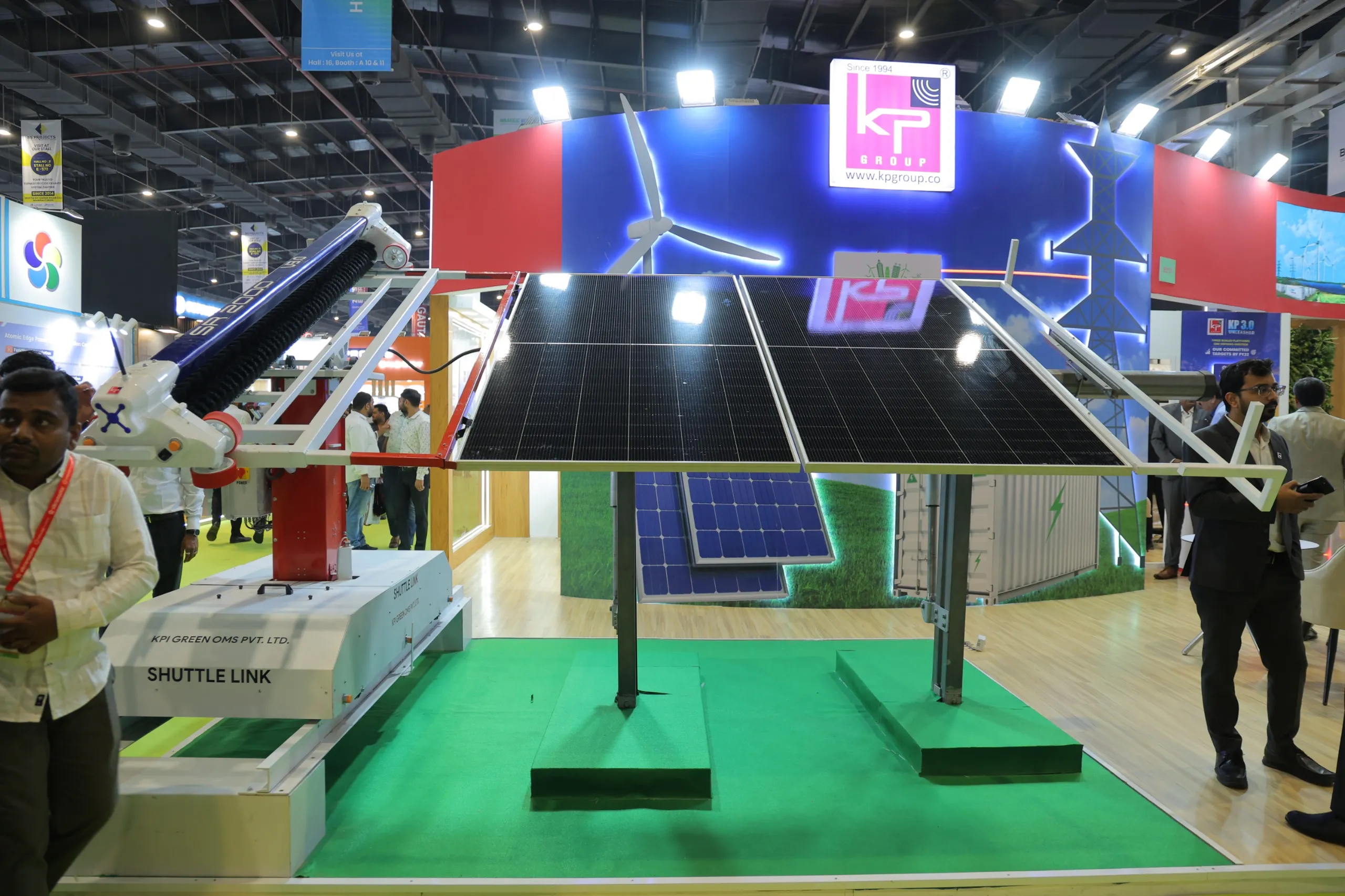
KP Group Launches Waterless Solar Cleaning Robot at REI Expo

KP Group's KPI Green OMS has launched the SR 2000 V3.0, a waterless robotic solar panel cleaning system designed for single-axis tracker and fixed-tilt solar power plants, at the Renewable Energy India (REI) Expo 2026 in Greater Noida. The robot aims to improve solar plant efficiency while reducing water consumption and maintenance requirements.Designed to address dust accumulation on solar modules, particularly in dry and remote locations, the SR 2000 V3.0 uses a UV-resistant polybutylene terephthalate (PBT) brush operating at 130 rpm. According to the company, the system achieves a cleaning ..

Advertisement

Subscribe to Our Newsletter

Get daily newsletters around different themes from Construction world.

STAY CONNECTED

Advertisement

SPECIAL OFFER
QR Code