Coal Mines Boost Local Growth and Support India’s Energy Self-reliance
COAL & MINING

Coal Mines Boost Local Growth and Support India’s Energy Self-reliance

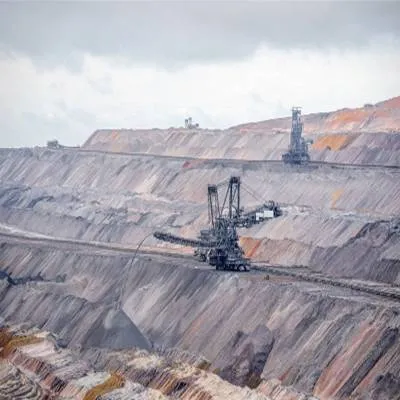
The Magadh and Amrapali coal mines in Jharkhand are playing a pivotal role in strengthening India’s energy security, contributing nearly half of Central Coalfields Limited’s total coal production in 2024–25. Both mines support the broader goal of ensuring steady coal availability for the power sector under the vision of Aatmanirbhar Bharat. Magadh has estimated mineable reserves of 854.91 million tonnes, while Amrapali holds 456.34 million tonne. For FY 2025–26, the two are expected to generate net sales revenues of Rs 28.12 billion and Rs 23.67 billion respectively. Local development remains a major focus, with employment already approved for 808 people in the Magadh–Sanghmitra region and 210 individuals in the Amrapali–Chandragupt area.

In the Northeast, the Namchik Namphuk Coal Mine is set to contribute about 0.2 million tonnes of coal annually, enhancing Arunachal Pradesh’s energy reliability. With geological reserves of 14.97 million tonnes, the mine is projected to generate Rs 1.73 billion in annual revenue and provide employment for around 270 people.

Alongside production, the sector is advancing sustainability through Mission GREEN (Grow, Restore, Enrich and Empower Nature) Coal Regions. Coal India, NLC India and Singareni Collieries Company are implementing long-term ecological and community-centric initiatives across coal and lignite belts. The five-year vision includes large-scale afforestation, ecological restoration of post-mining areas, renewable energy promotion, sustainable mine-water use and circular resource management. New initiatives such as mine tourism and green-economy models aim to diversify local livelihoods. The Mission places strong emphasis on community involvement, including the engagement of self-help groups in development activities. A dedicated monitoring committee set up by the Ministry of Coal oversees the implementation process.

Together, the three mines in Jharkhand and Arunachal Pradesh support India’s self-reliance by reducing dependence on imported coal and fostering economic development through improved infrastructure, logistics and employment generation.
News source: PIB

The Magadh and Amrapali coal mines in Jharkhand are playing a pivotal role in strengthening India’s energy security, contributing nearly half of Central Coalfields Limited’s total coal production in 2024–25. Both mines support the broader goal of ensuring steady coal availability for the power sector under the vision of Aatmanirbhar Bharat. Magadh has estimated mineable reserves of 854.91 million tonnes, while Amrapali holds 456.34 million tonne. For FY 2025–26, the two are expected to generate net sales revenues of Rs 28.12 billion and Rs 23.67 billion respectively. Local development remains a major focus, with employment already approved for 808 people in the Magadh–Sanghmitra region and 210 individuals in the Amrapali–Chandragupt area.In the Northeast, the Namchik Namphuk Coal Mine is set to contribute about 0.2 million tonnes of coal annually, enhancing Arunachal Pradesh’s energy reliability. With geological reserves of 14.97 million tonnes, the mine is projected to generate Rs 1.73 billion in annual revenue and provide employment for around 270 people.Alongside production, the sector is advancing sustainability through Mission GREEN (Grow, Restore, Enrich and Empower Nature) Coal Regions. Coal India, NLC India and Singareni Collieries Company are implementing long-term ecological and community-centric initiatives across coal and lignite belts. The five-year vision includes large-scale afforestation, ecological restoration of post-mining areas, renewable energy promotion, sustainable mine-water use and circular resource management. New initiatives such as mine tourism and green-economy models aim to diversify local livelihoods. The Mission places strong emphasis on community involvement, including the engagement of self-help groups in development activities. A dedicated monitoring committee set up by the Ministry of Coal oversees the implementation process.Together, the three mines in Jharkhand and Arunachal Pradesh support India’s self-reliance by reducing dependence on imported coal and fostering economic development through improved infrastructure, logistics and employment generation.News source: PIB

Next Story
Infrastructure Urban

Rosatom Delivers Nuclear Fuel for Kudankulam Unit 3

Rosatom has recently supplied nuclear fuel for the initial loading of the VVER-1000 reactor core at Unit 3 of the Kudankulam Nuclear Power Plant, marking a key milestone in the second stage of the Russian-designed nuclear power project in southern India.The fuel was supplied by Rosatom’s Nuclear Fuel Division, managed by TVEL, and manufactured at the Novosibirsk Chemical Concentrates Plant. The delivery includes the initial reactor load along with reserve fuel assemblies and is part of a long-term contract covering the entire operational life of Units 3 and 4.Building on operational experien..

Next Story
Infrastructure Transport

CBL International Enables First LNG Bunkering at Xiaomo Port

CBL International recently completed the first-ever LNG bunkering operation at Xiaomo Port, supplying liquefied natural gas to vessels operated by BYD in support of its maritime decarbonisation strategy. The operation was facilitated through a physical supplier in collaboration with China National Offshore Oil Corporation (CNOOC), which supported the port’s inaugural LNG bunkering activity. The milestone represents a strategic expansion of CBL International's sustainable fuel offerings beyond biofuels, while also diversifying revenue streams. As global shipping intensifies efforts to cut em..

Next Story
Infrastructure Urban

Aimtron, Aurassure Partner for IoT Weather Systems

Aimtron Electronics has recently entered into an OEM manufacturing engagement with Aurassure to produce new-age, IoT-enabled weather and environmental monitoring systems in India. The collaboration supports the growing demand for real-time environmental intelligence across urban, industrial and infrastructure applications. The engagement comes as global focus on climate-risk management and data-driven planning accelerates. The global weather monitoring systems market, valued at around USD 2.1 billion in 2024, is projected to reach nearly USD 4.8 billion by 2034, driven by the rapid adoption o..

Advertisement

Subscribe to Our Newsletter

Get daily newsletters around different themes from Construction world.

STAY CONNECTED

Advertisement

Advertisement

Advertisement

Advertisement

Open In App