




Coal Remains Backbone of India's Power Supply
COAL & MINING

Coal Remains Backbone of India's Power Supply

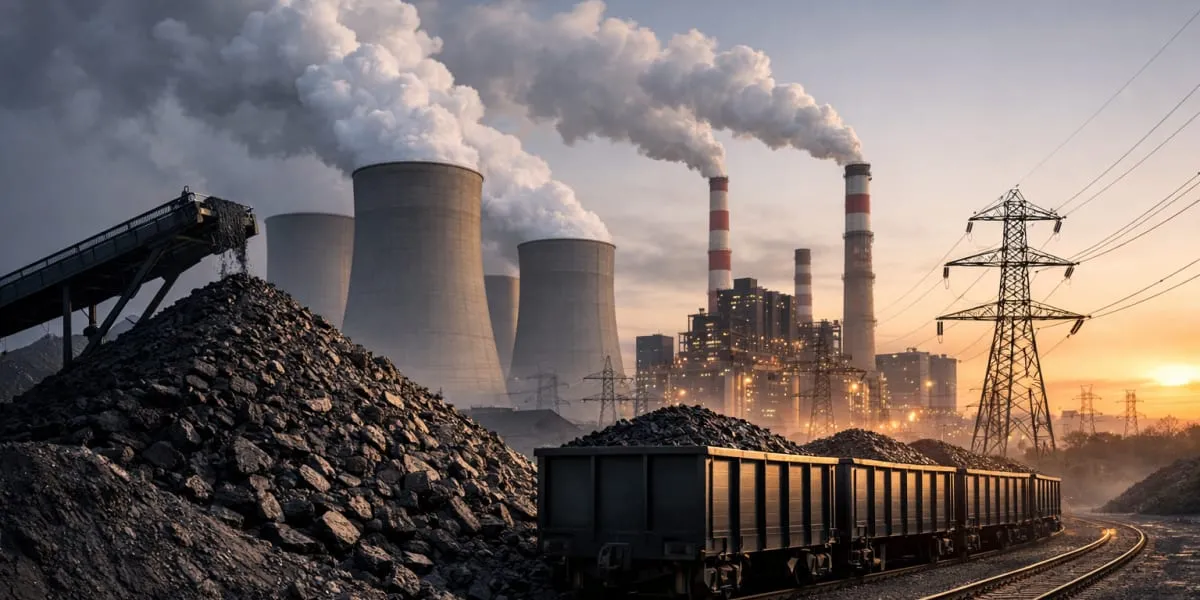
The government told Parliament that coal continues to remain the backbone of India's electricity system despite rapid renewable expansion, with coal and lignite based plants accounting for 69.54 per cent of electricity during April–June 2026. It said these plants generated 188.8 gigawatts (GW) and supplied around three quarters of total generation during non-solar peak demand hours, underlining coal's role in meeting evening loads. The ministry framed this as part of a strategy to balance capacity addition with changes in consumption patterns.

It said distribution companies have been asked to promote energy efficiency measures to optimise cooling and pumping loads, encourage electric vehicle charging during daytime solar hours and shift agricultural demand to daytime where possible. The reply to the Lok Sabha explained that demand management is gaining emphasis alongside capacity growth to reduce stress on the system. The ministry noted that these measures aim to align consumption with rising renewable output.

The government attributed a sharp rise in electricity demand to El Nino conditions, reporting peak demand during April–June up around 12 per cent year on year and an all time high peak of 270.8 GW in May that was met successfully. Demand crossed 270 GW twice again in July and was met, while gas based generation continues to account for less than 2 per cent of the power mix. Thermal power plants held 41.4 million tonnes (mn t) of coal stock as on July 18, sufficient for 13 days at an 85 per cent plant load factor.

The reply highlighted improvements in supply, saying average daily electricity availability in rural areas rose from 12.5 hours in fiscal 2013–14 to 22.6 hours in fiscal 2025–26 while urban supply rose from 22.1 hours to 23.4 hours. It noted that India's energy shortage declined to 0.0 per cent in FY2025–26 from 4.2 per cent in FY2013–14, reflecting significant progress in supply adequacy. The ministry therefore presented a picture of adequate power while underlining the need for demand side measures as renewable capacity expands.

The government told Parliament that coal continues to remain the backbone of India's electricity system despite rapid renewable expansion, with coal and lignite based plants accounting for 69.54 per cent of electricity during April–June 2026. It said these plants generated 188.8 gigawatts (GW) and supplied around three quarters of total generation during non-solar peak demand hours, underlining coal's role in meeting evening loads. The ministry framed this as part of a strategy to balance capacity addition with changes in consumption patterns. It said distribution companies have been asked to promote energy efficiency measures to optimise cooling and pumping loads, encourage electric vehicle charging during daytime solar hours and shift agricultural demand to daytime where possible. The reply to the Lok Sabha explained that demand management is gaining emphasis alongside capacity growth to reduce stress on the system. The ministry noted that these measures aim to align consumption with rising renewable output. The government attributed a sharp rise in electricity demand to El Nino conditions, reporting peak demand during April–June up around 12 per cent year on year and an all time high peak of 270.8 GW in May that was met successfully. Demand crossed 270 GW twice again in July and was met, while gas based generation continues to account for less than 2 per cent of the power mix. Thermal power plants held 41.4 million tonnes (mn t) of coal stock as on July 18, sufficient for 13 days at an 85 per cent plant load factor. The reply highlighted improvements in supply, saying average daily electricity availability in rural areas rose from 12.5 hours in fiscal 2013–14 to 22.6 hours in fiscal 2025–26 while urban supply rose from 22.1 hours to 23.4 hours. It noted that India's energy shortage declined to 0.0 per cent in FY2025–26 from 4.2 per cent in FY2013–14, reflecting significant progress in supply adequacy. The ministry therefore presented a picture of adequate power while underlining the need for demand side measures as renewable capacity expands.

Next Story
Technology

AI-Enabled Workflows Lift Profitability and Productivity

Organisations modernising frontline workflows with artificial intelligence, automation and real-time data are reporting stronger financial performance, higher productivity and improved employee engagement, according to a global study by Zebra Technologies and Oxford Economics.The research covered 1,000 senior leaders across retail, manufacturing, transportation and logistics in the US, Mexico, the UK, Germany, India, Japan, Australia and New Zealand.In transportation and logistics, 54 per cent of companies that improved picking and packing operations reported faster operational performance, wh..

Next Story
Real Estate

India Leads Global AI Readiness but Implementation Lags

Indian companies lead global averages across all eight artificial intelligence readiness indicators tracked by JLL, but only 19 per cent have started making changes to their workplaces, according to the JLL 2026 Future of Work Survey.The study found that 77 per cent of Indian business leaders expect AI to change their office requirements, creating a 58-percentage-point gap between awareness and implementation. The survey covered more than 2,200 CEOs, CFOs and real estate leaders across 21 countries during the first quarter of 2026.Despite concerns over automation, 58 per cent of Indian leaders..

Next Story
Equipment

Three WOLFF Cranes Build Riyadh Cable-Stayed Bridges

Three WOLFF 180 B luffing jib cranes are supporting the construction of two cable-stayed bridges alongside the existing Wadi Laban Bridge in Riyadh, Saudi Arabia. The project is being developed for the Royal Commission for Riyadh City and executed by the ICRC joint venture comprising IC Ictas and Al Rashid Trading & Contracting Company.The cranes are handling lifting operations including formwork, reinforcement, concrete placement, work platforms, surveying equipment and other construction materials. Each crane is fitted with a 40 m jib, reaches a hook height of 157 m and offers a maximum ..

Advertisement

Subscribe to Our Newsletter

Get daily newsletters around different themes from Construction world.

STAY CONNECTED

Advertisement

Advertisement

Advertisement