


Government Introduces MMDR Amendment Bill in Lok Sabha
COAL & MINING

Government Introduces MMDR Amendment Bill in Lok Sabha

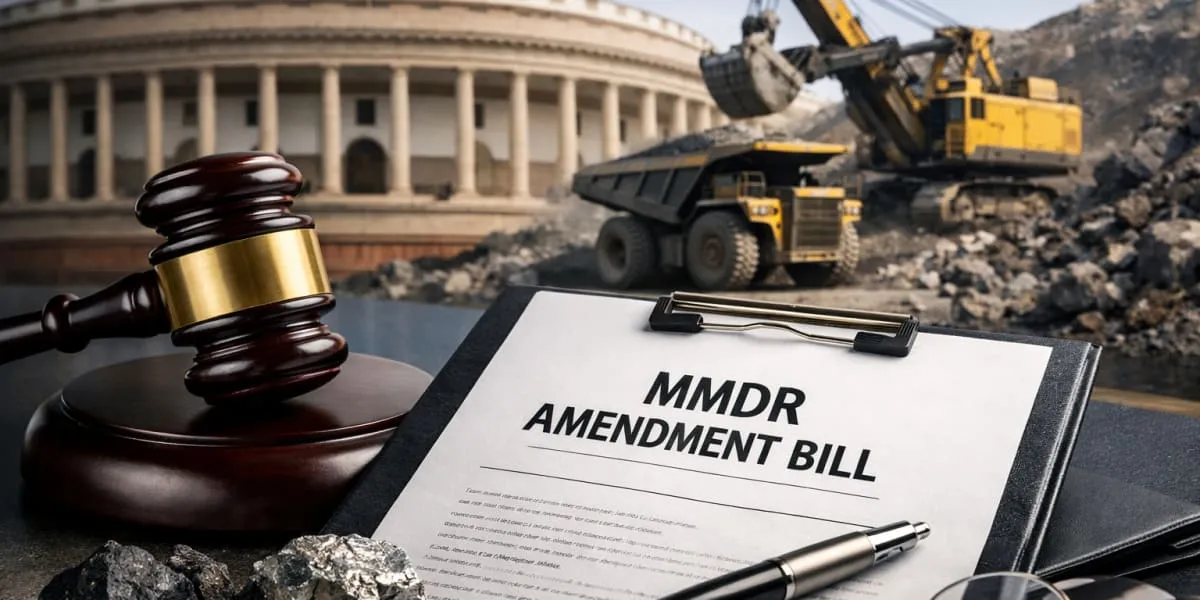
The government introduced an amendment bill to the Mines and Minerals (Development and Regulation) Act (MMDR Act) in the Lok Sabha, where it was tabled for consideration. The measure was presented by the ministry responsible for mining policy and seeks to update the regulatory framework that governs extraction and trade in mineral resources. The introduction was described as part of an effort to bring existing statutes into alignment with contemporary industry practices and governance standards. The bill represents a formal step in the statutory reform process.

The proposed changes seek to streamline licensing and approval processes, reinforce environmental and social safeguards and increase transparency in allocation and revenue realisation. They are intended to clarify roles and responsibilities across central and state authorities and to reduce procedural delays that affect investment and operations. The text of the bill outlines amendments to regulatory procedures and compliance obligations without altering core ownership provisions. It includes provisions to clarify fee structures and reporting requirements for operators.

Following its presentation in the lower house, the bill will be subject to parliamentary debate and scrutiny and proceed through the established legislative stages before it can become law. Members of Parliament will examine the specifics and contribute to debates on the scope and impact of the amendments. Any detailed implementation timelines will be determined through secondary legislation and administrative orders once the act is updated.

Officials framed the bill as a step to promote responsible mineral development while maintaining oversight of environmental and community concerns. Stakeholders across industry and state administrations are expected to review the provisions to assess implications for licences, royalties and operational compliance. The parliamentary process will set the pace for when the regulatory changes take effect.

The government introduced an amendment bill to the Mines and Minerals (Development and Regulation) Act (MMDR Act) in the Lok Sabha, where it was tabled for consideration. The measure was presented by the ministry responsible for mining policy and seeks to update the regulatory framework that governs extraction and trade in mineral resources. The introduction was described as part of an effort to bring existing statutes into alignment with contemporary industry practices and governance standards. The bill represents a formal step in the statutory reform process. The proposed changes seek to streamline licensing and approval processes, reinforce environmental and social safeguards and increase transparency in allocation and revenue realisation. They are intended to clarify roles and responsibilities across central and state authorities and to reduce procedural delays that affect investment and operations. The text of the bill outlines amendments to regulatory procedures and compliance obligations without altering core ownership provisions. It includes provisions to clarify fee structures and reporting requirements for operators. Following its presentation in the lower house, the bill will be subject to parliamentary debate and scrutiny and proceed through the established legislative stages before it can become law. Members of Parliament will examine the specifics and contribute to debates on the scope and impact of the amendments. Any detailed implementation timelines will be determined through secondary legislation and administrative orders once the act is updated. Officials framed the bill as a step to promote responsible mineral development while maintaining oversight of environmental and community concerns. Stakeholders across industry and state administrations are expected to review the provisions to assess implications for licences, royalties and operational compliance. The parliamentary process will set the pace for when the regulatory changes take effect.

Related Stories

Gold Stories

Next Story
Infrastructure Urban

Sabarmati Riverfront Two Plots Up for Auction at Rs2.24 bn Base Price

Two commercial plots on the western bank of the Sabarmati Riverfront will be auctioned with a base price of Rs 112 crore each, equivalent to Rs 1.12 bn apiece and Rs 2.24 billion in total. The parcels are located adjacent to the Metro Rail Bridge in Ahmedabad and form the first commercial offering after a prolonged pause. The Riverfront Development Corporation has framed the sale as part of a phased commercial release to revive development along the riverfront. The combined base valuation has been set by the corporation to reflect market rates along the riverfront. The corporation has fixed a ..

Next Story
Infrastructure Urban

Andhra Pradesh to Connect Over One Million Streetlights

Andhra Pradesh will undertake a statewide smart streetlighting programme across all 123 Urban Local Bodies (ULBs), bringing around 1.05 million (mn) streetlights under an AI enabled monitoring and management system. The programme will be implemented by Energy Efficiency Services Limited (EESL) with the Commissioner and Director of Municipal Administration under the state Municipal Administration and Urban Development Department. The project aims to convert conventional streetlighting into a digitally managed municipal service monitored and maintained remotely. The initial phase will cover abou..

Next Story
Infrastructure Urban

AMC To Procure Four Machines For Guard Rail Cleaning

Ahmedabad Municipal Corporation will introduce four specialised machines for cleaning guard railings along major roads and the central verges of BRTS and Metro corridors. The civic body plans to replace manual labour with mechanised cleaning to improve maintenance of road infrastructure and greenery. The purchase is estimated at Rs 82.8 million (mn), excluding GST. The proposal sets the base price of each machine at about Rs 20.7 million (mn) so four units total Rs 82.8 million (mn) before GST. 18 per cent GST will be applicable separately. During the warranty period each machine will operate ..

Advertisement

Subscribe to Our Newsletter

Get daily newsletters around different themes from Construction world.

STAY CONNECTED

Advertisement