India to Build Full EV Battery Ecosystem in Two to Three Years
COAL & MINING

India to Build Full EV Battery Ecosystem in Two to Three Years

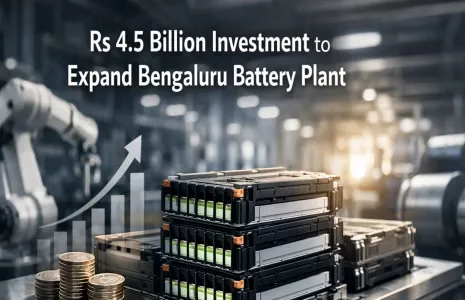
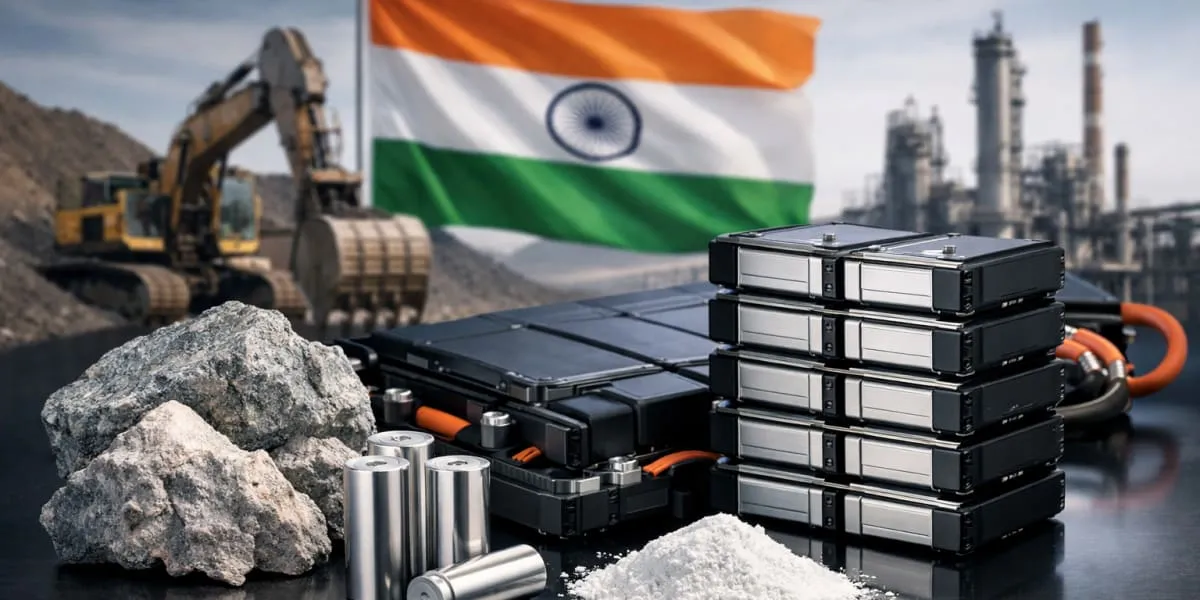
Mines Secretary Piyush Goyal said India is confident of building a complete electric vehicle battery ecosystem within the next two to three years and outlined a strategy covering lithium sourcing, processing, global acquisitions and mining reforms. He said the government expects rapid scale up in downstream capacity to support electric vehicle adoption and reduce import dependence. The remarks were made during an interaction with reporters in New Delhi.

Goyal said lithium remains central to the clean energy transition as lithium ion technology dominates batteries, while domestic lithium availability is limited and brine reserves are more common in South America. He noted that spodumene typically contains lithium in the range of one to six per cent and can be imported for further processing, and that domestic companies already possess the technology. He urged development of conversion facilities at scale to retain value addition.

He said the government is finalising a policy on processing critical minerals and has identified two key resources for electric vehicles, with incentives under consideration to encourage firms to establish lithium and nickel processing facilities. To secure supplies the country is pursuing mineral assets in South America, Australia and Canada and a consortium of public sector undertakings including Hindustan Copper Limited is bidding for overseas blocks, including copper assets in Chile. International collaborations for technology and resource access are being evaluated.

Efforts are under way to recover critical minerals from industrial waste such as red mud, tailings and fly ash, and production of gallium and cadmium has begun while work on tantalum continues though private firms remain cautious due to high capital requirements. Under the National Critical Mineral Mission 46 blocks have been auctioned against a target of 100 and a separate scheme to strengthen the value chain is in advanced stages. The Secretary highlighted mining reforms that saw 212 blocks auctioned in 2025-26, the National Geoscience Data Repository hosting 90,000 exploration reports, faster operationalisation with 25 mines becoming operational in the past year, and copper ore imports valued at Rs 430 billion (Rs 430 bn) processed domestically.

Mines Secretary Piyush Goyal said India is confident of building a complete electric vehicle battery ecosystem within the next two to three years and outlined a strategy covering lithium sourcing, processing, global acquisitions and mining reforms. He said the government expects rapid scale up in downstream capacity to support electric vehicle adoption and reduce import dependence. The remarks were made during an interaction with reporters in New Delhi. Goyal said lithium remains central to the clean energy transition as lithium ion technology dominates batteries, while domestic lithium availability is limited and brine reserves are more common in South America. He noted that spodumene typically contains lithium in the range of one to six per cent and can be imported for further processing, and that domestic companies already possess the technology. He urged development of conversion facilities at scale to retain value addition. He said the government is finalising a policy on processing critical minerals and has identified two key resources for electric vehicles, with incentives under consideration to encourage firms to establish lithium and nickel processing facilities. To secure supplies the country is pursuing mineral assets in South America, Australia and Canada and a consortium of public sector undertakings including Hindustan Copper Limited is bidding for overseas blocks, including copper assets in Chile. International collaborations for technology and resource access are being evaluated. Efforts are under way to recover critical minerals from industrial waste such as red mud, tailings and fly ash, and production of gallium and cadmium has begun while work on tantalum continues though private firms remain cautious due to high capital requirements. Under the National Critical Mineral Mission 46 blocks have been auctioned against a target of 100 and a separate scheme to strengthen the value chain is in advanced stages. The Secretary highlighted mining reforms that saw 212 blocks auctioned in 2025-26, the National Geoscience Data Repository hosting 90,000 exploration reports, faster operationalisation with 25 mines becoming operational in the past year, and copper ore imports valued at Rs 430 billion (Rs 430 bn) processed domestically.

Next Story
Technology

LTTS Partners with Databricks to Advance Industrial AI

L&T Technology Services (LTTS) has entered a strategic partnership with Databricks to co-develop Industrial AI solutions for asset-intensive industries, including energy, petrochemicals, and manufacturing. The collaboration leverages LTTS’ engineering expertise across 600+ major plants with Databricks’ AI and analytics platform to convert operational data into actionable Engineering Intelligence.The partnership will deliver solutions spanning Predictive Asset Reliability, Energy & Emissions Optimisation, Overall Equipment Effectiveness, Production and Quality Intelligence, and Sust..

Next Story
Infrastructure Urban

Opptra Partners with Unicommerce to Scale AI-Driven E-Commerce

Opptra, the AI-native e-commerce distributor founded by Flipkart co-founder Binny Bansal, has partnered with Unicommerce to enhance operations across India, the GCC, and Southeast Asia. The collaboration integrates Opptra’s brand expansion expertise with Unicommerce’s AI-led Uniware platform, enabling centralised management of orders, inventory, and fulfilment across warehouses, stores, and sales channels.Opptra retains full commercial ownership of online brand operations, from marketplace strategy and pricing to fulfilment and customer service. Leveraging Unicommerce’s 350+ integrations..

Next Story
Real Estate

AHS Properties Acquires Shangri-La Hotel for AED 1.1 Billion

AHS Properties has acquired the Shangri-La Hotel on Sheikh Zayed Road for AED 1.1 billion from Mismak Asset Management, marking one of the largest single-asset real estate deals in recent history. The 43-floor, 200-metre tower, completed in 2003, was among the first five-star hotels on the corridor.This acquisition complements AHS Tower and AHS City, forming a vertical corridor strategy that represents a substantial portion of the developer’s AED 50 billion year-end 2026 pipeline. Founder and CEO Abbas Sajwani described the purchase as a long-term investment in structurally constrained asset..

Advertisement

Subscribe to Our Newsletter

Get daily newsletters around different themes from Construction world.

STAY CONNECTED

Advertisement

Advertisement

Advertisement