NGT Extends Sand Mining Restrictions In Goa Until April 23
COAL & MINING

NGT Extends Sand Mining Restrictions In Goa Until April 23

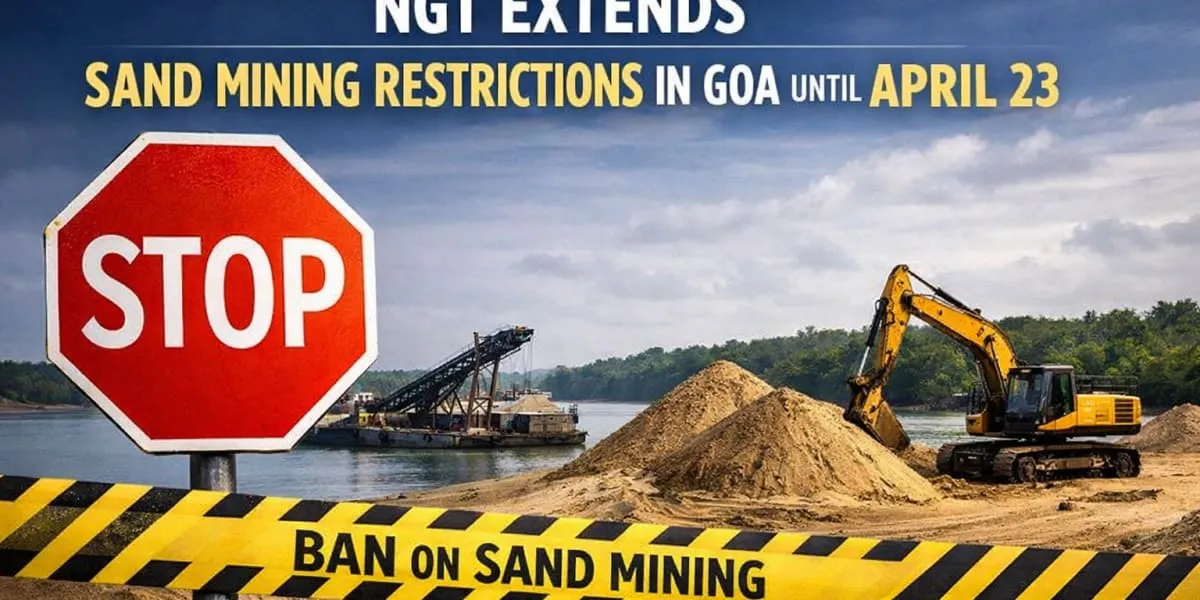
The National Green Tribunal (NGT) has extended an interim ban on sand mining activities in Goa until April 23 after the Goa Coastal Zone Management Authority (GCZMA) informed the tribunal that sand mining is a prohibited activity within Coastal Regulation Zone (CRZ) areas. In an order dated February 16 the NGT's Western Bench directed that the ban will remain in force until the next hearing on April 23.

The tribunal noted that the GCZMA, in an affidavit, stated that the Directorate of Mines and Geology (DMG) had proposed sand mining in CRZ areas where such activity is prohibited. During a previous hearing on January 28 the Goa State Environment Impact Assessment Authority (Goa-SEIAA) informed the tribunal that the DMG had failed to disclose that the identified sand extraction sites fell within CRZ and intertidal CRZ areas.

SEIAA said that, had the Mines Department clearly disclosed the CRZ status of the proposed sites, it would have insisted on mandatory prior clearance from the GCZMA before considering the grant of environmental clearance. The bench referred to the Ministry of Environment, Forest and Climate Change (MoEF&CC) office memorandum dated April 26, 2022, observing that projects in CRZ areas must first obtain recommendations from the GCZMA before SEIAA may consider applications for clearance.

During the latest hearing the GCZMA tendered an apology for failing to file its reply affidavit on earlier dates and sought the recall of a Rs 50,000 penalty imposed on it; the bench accepted the request and disposed of the matter. The NGT is hearing 12 appeals filed by the Goa River Sand Protection Network challenging the environmental clearances granted by SEIAA in February last year for sand mining in designated zones.

SEIAA maintained that the clearance process had taken into account a report by the National Institute of Oceanography (NIO) that delineated areas where sand extraction could be carried out with environmental impact, but reiterated that the non-disclosure of CRZ status by the DMG had compromised the clearance process. The tribunal will revisit the matter on April 23.

The National Green Tribunal (NGT) has extended an interim ban on sand mining activities in Goa until April 23 after the Goa Coastal Zone Management Authority (GCZMA) informed the tribunal that sand mining is a prohibited activity within Coastal Regulation Zone (CRZ) areas. In an order dated February 16 the NGT's Western Bench directed that the ban will remain in force until the next hearing on April 23. The tribunal noted that the GCZMA, in an affidavit, stated that the Directorate of Mines and Geology (DMG) had proposed sand mining in CRZ areas where such activity is prohibited. During a previous hearing on January 28 the Goa State Environment Impact Assessment Authority (Goa-SEIAA) informed the tribunal that the DMG had failed to disclose that the identified sand extraction sites fell within CRZ and intertidal CRZ areas. SEIAA said that, had the Mines Department clearly disclosed the CRZ status of the proposed sites, it would have insisted on mandatory prior clearance from the GCZMA before considering the grant of environmental clearance. The bench referred to the Ministry of Environment, Forest and Climate Change (MoEF&CC) office memorandum dated April 26, 2022, observing that projects in CRZ areas must first obtain recommendations from the GCZMA before SEIAA may consider applications for clearance. During the latest hearing the GCZMA tendered an apology for failing to file its reply affidavit on earlier dates and sought the recall of a Rs 50,000 penalty imposed on it; the bench accepted the request and disposed of the matter. The NGT is hearing 12 appeals filed by the Goa River Sand Protection Network challenging the environmental clearances granted by SEIAA in February last year for sand mining in designated zones. SEIAA maintained that the clearance process had taken into account a report by the National Institute of Oceanography (NIO) that delineated areas where sand extraction could be carried out with environmental impact, but reiterated that the non-disclosure of CRZ status by the DMG had compromised the clearance process. The tribunal will revisit the matter on April 23.

Next Story
Infrastructure Urban

MIDC and Ramky Unit Sign Concession for Life Sciences Park

Maharashtra Industrial Development Corporation has signed a concession agreement with Maha Integrated Life Sciences City Limited (MILeS City), a wholly owned subsidiary of Ramky Infrastructure Limited (RIL), to develop a high-tech pharmaceutical park at Dighi Port Industrial Area in Raigad. The project will follow a public-private partnership under a DBFOT model and has an estimated cost of Rs 30 billion (Rs 30 bn). The concession will run for 95 years, including a five-year construction phase, with MILeS City responsible for development and management. The development will occupy approximatel..

Next Story
Real Estate

BuzzWorks Leases Hyderabad Office to MyComplianceOffice

Brigade Group’s managed workspace provider BuzzWorks has leased 550 seats at Mindspace Business Park in Hyderabad to Dublin based MyComplianceOffice, in what is the company’s largest office in India. With this signing, BuzzWorks' total leased office space in Hyderabad stands at zero point one one million (mn) square feet. The new premises will house core functions including product engineering, product management, customer success and global operations. Artificial intelligence enabled compliance technology initiatives will also be part of the local delivery model. BuzzWorks will provide wo..

Next Story
Infrastructure Transport

Jindal Stainless Flags Operational Strain From Middle East Crisis

Jindal Stainless warned that the Middle East war crisis has affected its operations because of dependence on industrial gases such as propane and LPG and on natural gas. The scrap-based production route used by the stainless steel maker does not generate blast furnace or coke oven gases internally, unlike the conventional steel industry. Several plant processes have been adversely impacted and production is being run at rationalised capacity. Disruptions in global shipping routes have resulted in vessel diversions, longer transit times and cargo delays, adding pressure to supply chains and to ..

Advertisement

Subscribe to Our Newsletter

Get daily newsletters around different themes from Construction world.

STAY CONNECTED

Advertisement

Advertisement

Advertisement