Jindal Stainless Flags Operational Strain From Middle East Crisis
PORTS & SHIPPING

Jindal Stainless Flags Operational Strain From Middle East Crisis

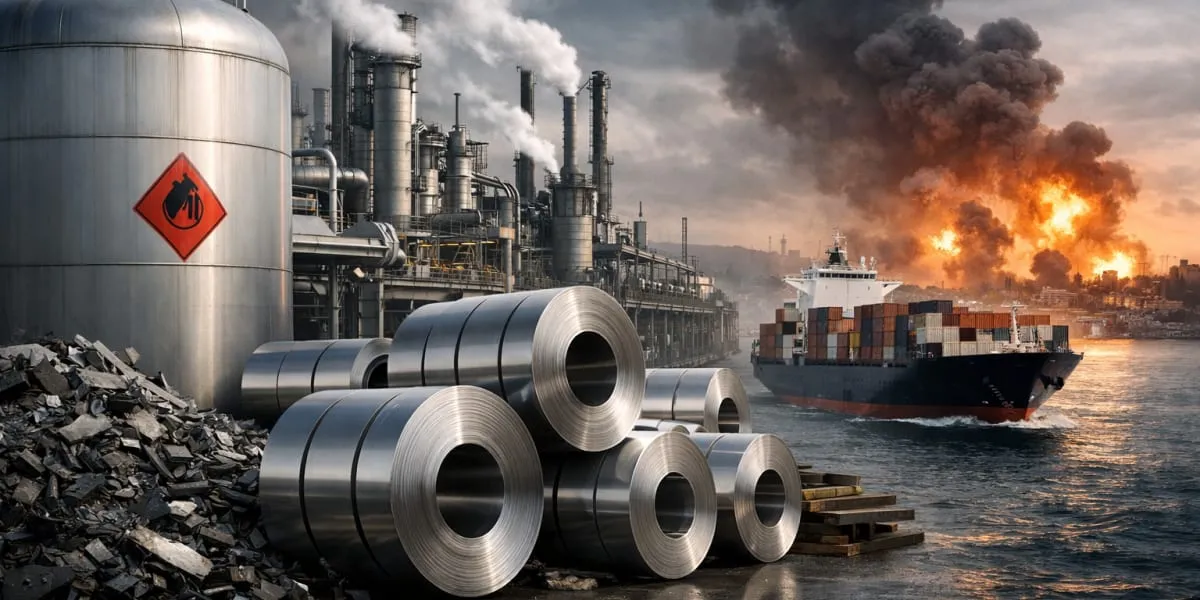
Jindal Stainless warned that the Middle East war crisis has affected its operations because of dependence on industrial gases such as propane and LPG and on natural gas. The scrap-based production route used by the stainless steel maker does not generate blast furnace or coke oven gases internally, unlike the conventional steel industry. Several plant processes have been adversely impacted and production is being run at rationalised capacity.

Disruptions in global shipping routes have resulted in vessel diversions, longer transit times and cargo delays, adding pressure to supply chains and to margins. These logistical difficulties are compounding the operational strain from constrained fuel supplies and are delaying receipt of raw materials and finished goods. Management is assessing the impact on production schedules and on commercial commitments.

The company noted that the Government is seized of the matter and is prioritising fuel allocation for critical sectors. It said clarity on the allocation percentage for industrial propane and LPG and for natural gas, together with assurance of regular supplies, will be important for the stainless steel industry to plan and to optimise operations. In the absence of such clarity the firm foresees a cascading effect across the sector.

Jindal Stainless is engaging with relevant authorities to secure firm allocations and to mitigate near term operational disruptions while monitoring market developments closely. The company is adapting production schedules and supply chain arrangements to manage available fuel and to safeguard critical obligations towards customers and suppliers. It has emphasised the need for transparent allocation parameters and for assurances of regular deliveries so that plants can plan maintenance and inventory effectively and to reduce uncertainty in commercial planning. The company warned that the scale and duration of any sustained curtailment will determine longer term impacts on margins, on domestic supply continuity and on the broader value chain.

Jindal Stainless warned that the Middle East war crisis has affected its operations because of dependence on industrial gases such as propane and LPG and on natural gas. The scrap-based production route used by the stainless steel maker does not generate blast furnace or coke oven gases internally, unlike the conventional steel industry. Several plant processes have been adversely impacted and production is being run at rationalised capacity. Disruptions in global shipping routes have resulted in vessel diversions, longer transit times and cargo delays, adding pressure to supply chains and to margins. These logistical difficulties are compounding the operational strain from constrained fuel supplies and are delaying receipt of raw materials and finished goods. Management is assessing the impact on production schedules and on commercial commitments. The company noted that the Government is seized of the matter and is prioritising fuel allocation for critical sectors. It said clarity on the allocation percentage for industrial propane and LPG and for natural gas, together with assurance of regular supplies, will be important for the stainless steel industry to plan and to optimise operations. In the absence of such clarity the firm foresees a cascading effect across the sector. Jindal Stainless is engaging with relevant authorities to secure firm allocations and to mitigate near term operational disruptions while monitoring market developments closely. The company is adapting production schedules and supply chain arrangements to manage available fuel and to safeguard critical obligations towards customers and suppliers. It has emphasised the need for transparent allocation parameters and for assurances of regular deliveries so that plants can plan maintenance and inventory effectively and to reduce uncertainty in commercial planning. The company warned that the scale and duration of any sustained curtailment will determine longer term impacts on margins, on domestic supply continuity and on the broader value chain.

Next Story
Infrastructure Urban

MIDC and Ramky Unit Sign Concession for Life Sciences Park

Maharashtra Industrial Development Corporation has signed a concession agreement with Maha Integrated Life Sciences City Limited (MILeS City), a wholly owned subsidiary of Ramky Infrastructure Limited (RIL), to develop a high-tech pharmaceutical park at Dighi Port Industrial Area in Raigad. The project will follow a public-private partnership under a DBFOT model and has an estimated cost of Rs 30 billion (Rs 30 bn). The concession will run for 95 years, including a five-year construction phase, with MILeS City responsible for development and management. The development will occupy approximatel..

Next Story
Real Estate

BuzzWorks Leases Hyderabad Office to MyComplianceOffice

Brigade Group’s managed workspace provider BuzzWorks has leased 550 seats at Mindspace Business Park in Hyderabad to Dublin based MyComplianceOffice, in what is the company’s largest office in India. With this signing, BuzzWorks' total leased office space in Hyderabad stands at zero point one one million (mn) square feet. The new premises will house core functions including product engineering, product management, customer success and global operations. Artificial intelligence enabled compliance technology initiatives will also be part of the local delivery model. BuzzWorks will provide wo..

Advertisement

Subscribe to Our Newsletter

Get daily newsletters around different themes from Construction world.

STAY CONNECTED

Advertisement

Advertisement

Advertisement