

Rajasthan May Add 4.4 GW Coal Power by 2036
COAL & MINING

Rajasthan May Add 4.4 GW Coal Power by 2036

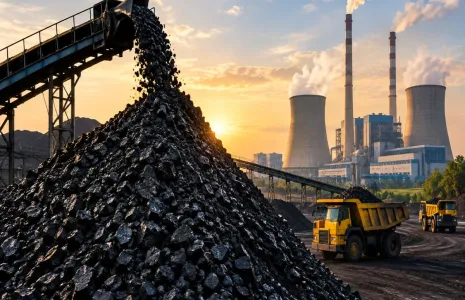
Rajasthan will require an additional 4,400 megawatts of coal-fired power capacity by 2036 to meet rising electricity demand, despite being India’s leading renewable energy-producing state, according to a Reuters report. The increase comes even as the state prepares to retire 1,350 MW of ageing thermal power plants and continues to add clean energy capacity.

The revised estimate has been made by the Central Electricity Authority, which has more than doubled its earlier projection of 1,900 MW of coal-based capacity for Rajasthan. The updated assessment was communicated in a letter dated 27 November to the state power utility, which indicated that older coal plants totalling 1,350 MW are set to be phased out.

India currently meets around one-third of its electricity demand through thermal power and has committed to achieving net-zero emissions by 2070. As part of this goal, the country plans to more than double its renewable energy capacity to 500 gigawatts. However, power consumption is expected to rise sharply as the economy expands, with government data projecting a 40 per cent increase in coal-fired capacity to more than 307 GW by 2035.

Following the upward revision in Rajasthan’s coal requirement, the state’s power regulator has decided to review its earlier decision denying approval for a new 3,200 MW coal-fired power plant. The move follows a request from the Rajasthan power utility, which argued that additional coal capacity is necessary because solar and wind power are not available round the clock and battery storage systems are not yet commercially ready at scale. The state currently sources around 70 per cent of its electricity from renewable energy.

Rajasthan’s renewed push for coal highlights a broader structural challenge facing India’s energy transition: the intermittency of renewable power and limited storage capacity, which complicate grid reliability without firm backup. A 2023 report by the Institute for Energy Economics and Financial Analysis noted that solar and wind generation, being weather-dependent, can create short-term supply-demand imbalances. Managing variability of less than four hours requires fast-responding backup resources, while existing thermal plants are better suited to handling longer and more predictable fluctuations.

This approach allows for a gradual phase-out of India’s relatively new coal fleet while maintaining grid stability, aligning with the country’s 2070 net-zero target. This contrasts with many developed economies that have committed to net zero by 2050 or earlier, where coal generation is expected to be eliminated entirely.

Rajasthan will require an additional 4,400 megawatts of coal-fired power capacity by 2036 to meet rising electricity demand, despite being India’s leading renewable energy-producing state, according to a Reuters report. The increase comes even as the state prepares to retire 1,350 MW of ageing thermal power plants and continues to add clean energy capacity. The revised estimate has been made by the Central Electricity Authority, which has more than doubled its earlier projection of 1,900 MW of coal-based capacity for Rajasthan. The updated assessment was communicated in a letter dated 27 November to the state power utility, which indicated that older coal plants totalling 1,350 MW are set to be phased out. India currently meets around one-third of its electricity demand through thermal power and has committed to achieving net-zero emissions by 2070. As part of this goal, the country plans to more than double its renewable energy capacity to 500 gigawatts. However, power consumption is expected to rise sharply as the economy expands, with government data projecting a 40 per cent increase in coal-fired capacity to more than 307 GW by 2035. Following the upward revision in Rajasthan’s coal requirement, the state’s power regulator has decided to review its earlier decision denying approval for a new 3,200 MW coal-fired power plant. The move follows a request from the Rajasthan power utility, which argued that additional coal capacity is necessary because solar and wind power are not available round the clock and battery storage systems are not yet commercially ready at scale. The state currently sources around 70 per cent of its electricity from renewable energy. Rajasthan’s renewed push for coal highlights a broader structural challenge facing India’s energy transition: the intermittency of renewable power and limited storage capacity, which complicate grid reliability without firm backup. A 2023 report by the Institute for Energy Economics and Financial Analysis noted that solar and wind generation, being weather-dependent, can create short-term supply-demand imbalances. Managing variability of less than four hours requires fast-responding backup resources, while existing thermal plants are better suited to handling longer and more predictable fluctuations. This approach allows for a gradual phase-out of India’s relatively new coal fleet while maintaining grid stability, aligning with the country’s 2070 net-zero target. This contrasts with many developed economies that have committed to net zero by 2050 or earlier, where coal generation is expected to be eliminated entirely.

Next Story
Infrastructure Energy

Rays Power Infra Wins Rs 19.12 Bn Renewable Energy Project

Rays Power Infra has secured a 300 MW renewable energy project valued at Rs 19.12 billion from a state-owned company, strengthening its position in India’s utility-scale clean energy sector. With this latest order, the company’s total order book has crossed Rs 80 billion.The project will be executed under Rays Power Infra’s co-development business model. Under this framework, the company will undertake land acquisition, secure interstate transmission system (ISTS) connectivity and carry out complete engineering, procurement and construction (EPC) works. The project is planned to be devel..

Next Story
Infrastructure Transport

MMRDA Signs $96 Bn MoUs at Davos, Marks Record Day 1 Haul

The Mumbai Metropolitan Region Development Authority (MMRDA) marked a historic achievement on the opening day of the World Economic Forum (WEF) Annual Summit 2026 in Davos by securing investment commitments worth about Rs 8.73 trillion. The investments were formalised through the signing of 10 major Memoranda of Understanding (MoUs), setting a new benchmark for the authority’s global outreach.According to MMRDA, the agreements are expected to generate nearly 9.6 lakh direct and indirect jobs, reinforcing the Mumbai Metropolitan Region’s position as a major talent and economic hub in India ..

Next Story
Infrastructure Transport

AAI Submits Hydrology Report to WRD for Chennai Airport Corridor

In a move to accelerate the implementation of an elevated corridor and the long-pending satellite terminal at Chennai Airport, the Airports Authority of India (AAI) has submitted a detailed study report to the Water Resources Department (WRD) of the Tamil Nadu government.The satellite terminal, first proposed nearly eight years ago, is aimed at easing congestion by handling additional aircraft and passenger traffic while optimally utilising remote bays at the airport. Although the project remained stalled for several years, it gained renewed momentum in 2024 after AAI revived the proposal.Acco..

Advertisement

Subscribe to Our Newsletter

Get daily newsletters around different themes from Construction world.

STAY CONNECTED

Advertisement

Advertisement

Advertisement

Advertisement

Open In App