

+
US federal agency funds methane capture project India
COAL & MINING

US federal agency funds methane capture project India

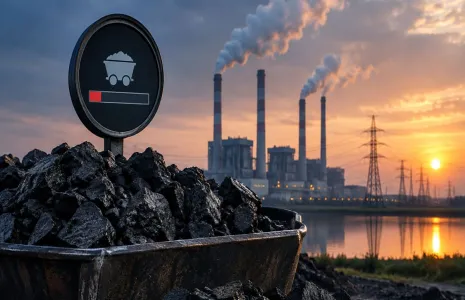
A federal US agency has approved grant funding for a feasibility study to develop a coal mine methane (CMM) recovery facility in Jharkhand's Jharia coalfield, the first of its kind in India. The US Trade and Development Agency (USTDA) approved grant funding for a feasibility study to support Prabha Energy (PEPL) efforts to develop a coal mine methane (CMM) recovery facility in the Jharia coalfield.

According to a press release from the USTDA, Advanced Resources International of Virginia has been chosen to conduct the study.

"USTDA is pleased to collaborate with PEPL on this project, which presents a tremendous opportunity to strengthen India's energy resilience and sustainability using innovative technology that US companies can readily provide," said Enoh T Ebong, Director of USTDA.

"This project will prevent methane, a harmful greenhouse gas, from being released directly into the atmosphere. This will benefit India and the rest of the world's climate "Ebong elaborated.

The USTDA-funded feasibility study, according to the press release, will develop recommendations for extracting, gathering, compressing, and processing CMM at the Jharia site while utilising innovative US technologies and solutions. The project has the dual benefit of preventing methane emissions and providing a cleaner fuel alternative to coal by capturing the CMM.

"PEPL is pleased to partner with USTDA and ARI on the potential capture of methane gas from the Jharia coal mine in India," said Prem Sawhney, CEO & Director of PEPL. "This project, the first of its kind in India, will increase India's domestic gas resources while also providing opportunities for US equipment and technology suppliers," Sawhney explained.

The study advances the goals of the federal agency's Global Partnership for Climate-Smart Infrastructure, which seeks to encourage the use of US technologies and services in overseas climate-smart infrastructure projects, as well as the Responsible Oil and Gas Pillar of the US-India Strategic Clean Energy Partnership. The project also supports the Biden Administration's pledge to reduce global methane emissions and limit global warming through the Global Methane Pledge.

Also Read
Ring Road and Purandar Airport: BJP-Sena to speed up projects
New master plan's roads will spur growth in Tirupati

A federal US agency has approved grant funding for a feasibility study to develop a coal mine methane (CMM) recovery facility in Jharkhand's Jharia coalfield, the first of its kind in India. The US Trade and Development Agency (USTDA) approved grant funding for a feasibility study to support Prabha Energy (PEPL) efforts to develop a coal mine methane (CMM) recovery facility in the Jharia coalfield. According to a press release from the USTDA, Advanced Resources International of Virginia has been chosen to conduct the study. USTDA is pleased to collaborate with PEPL on this project, which presents a tremendous opportunity to strengthen India's energy resilience and sustainability using innovative technology that US companies can readily provide, said Enoh T Ebong, Director of USTDA. This project will prevent methane, a harmful greenhouse gas, from being released directly into the atmosphere. This will benefit India and the rest of the world's climate Ebong elaborated. The USTDA-funded feasibility study, according to the press release, will develop recommendations for extracting, gathering, compressing, and processing CMM at the Jharia site while utilising innovative US technologies and solutions. The project has the dual benefit of preventing methane emissions and providing a cleaner fuel alternative to coal by capturing the CMM. PEPL is pleased to partner with USTDA and ARI on the potential capture of methane gas from the Jharia coal mine in India, said Prem Sawhney, CEO & Director of PEPL. This project, the first of its kind in India, will increase India's domestic gas resources while also providing opportunities for US equipment and technology suppliers, Sawhney explained. The study advances the goals of the federal agency's Global Partnership for Climate-Smart Infrastructure, which seeks to encourage the use of US technologies and services in overseas climate-smart infrastructure projects, as well as the Responsible Oil and Gas Pillar of the US-India Strategic Clean Energy Partnership. The project also supports the Biden Administration's pledge to reduce global methane emissions and limit global warming through the Global Methane Pledge. Also Read Ring Road and Purandar Airport: BJP-Sena to speed up projects New master plan's roads will spur growth in Tirupati

Next Story
Infrastructure Urban

Implementation Status of Jal Jeevan Mission

Since August 2019 the Government has implemented Jal Jeevan Mission to provide assured potable water through household tap connections in rural India. At the start of the mission only 32.3 million (mn) rural households, representing 16.7 per cent, were reported to have tap water connections. States and union territories have reported that 125.8 mn additional rural households have since been provided with tap connections. As a result, of about 193.6 mn rural households roughly 158.2 mn, or 81.71 per cent, are reported to have tap water supply at home.\n\nThe State, district and village level st..

Next Story
Infrastructure Urban

Jal Jeevan Mission Reaches Eighty One Per Cent Rural Coverage

The Government reported substantial progress under the Jal Jeevan Mission, launched in August 2019 to provide tap water to every rural household. At launch only 32.3 million (mn) rural households had tap connections and states and Union territories reported provision of 125.8 mn additional households by March 2026. Consequently, out of about 193.6 mn rural households around 158.2 mn, or 81.71 per cent, are reported to have tap water at home. The Finance Minister announced extension of the mission until 2028 in the 2025-26 budget speech. The Swachh Bharat Mission Grameen, launched in October 20..

Next Story
Infrastructure Urban

Empowering Local Governance for Sustainable Rural Water Supply

The Ministry of Jal Shakti has aligned the Jal Jeevan Mission (JJM) with the 73rd Amendment to strengthen village level planning and community ownership of water supply. Gram Panchayats, village water and sanitation committees and Pani Samitis are to plan, implement, manage and maintain piped water systems, with gram sabha processes formalising handover and oversight. Implementation support agencies including non government organisations, community based organisations and self help groups have been empanelled to train local committees and promote women participation. Under JJM, the department ..

Advertisement

Subscribe to Our Newsletter

Get daily newsletters around different themes from Construction world.

STAY CONNECTED

Advertisement

Advertisement

Advertisement