Andaman Oil Exploration Could Propel India To $20 Trn Economy
OIL & GAS

Andaman Oil Exploration Could Propel India To $20 Trn Economy

The Lieutenant Governor of the Andaman and Nicobar Islands Admiral D K Joshi (Retired) said the archipelago is poised to become a significant contributor to the Prime Minister's vision for driving self-reliance, innovation and citizen empowerment. He delivered the 30th Colonel Pyara Lal Memorial Lecture on development challenges and imperatives for the islands and set out several government initiatives aimed at economic and strategic transformation. He noted that exploration, maritime infrastructure and targeted investment would underpin the region's emergence as a growth hub.

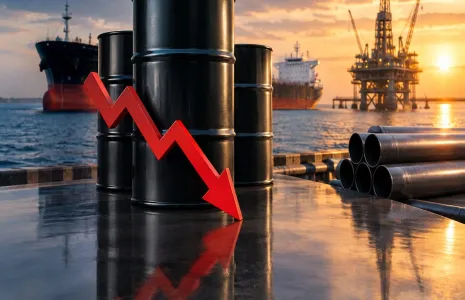
He reported that 63.5 per cent of the six hundred thousand square kilometres (0.6 million, 0.6 mn square kilometres) previously designated as a No-Go Zone for oil had been freed and that the Andaman Basin had been described as having Guyana-like potential which could propel national growth from a four trillion dollar economy toward a 20 trillion dollar economy (20 tn dollars). He said responsible exploration and calibrated investment would be required to harness hydrocarbon potential while managing environmental concerns. He indicated that such resource realisation could materially alter the longer term economic trajectory.

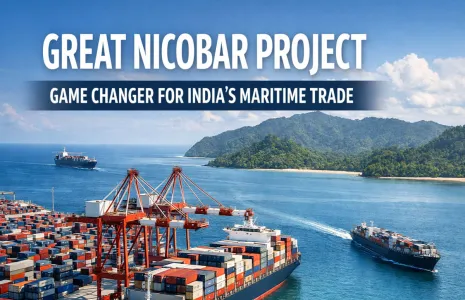
He highlighted that Galathea Bay at Great Nicobar has been notified as the thirteenth major port of India and will be developed under a public-private partnership model along with an international container transhipment terminal. He outlined plans to develop the archipelago as a ship repair and shipbuilding hub for the Indo-Pacific and said this strategic use of maritime assets would complement national trade and security objectives. He noted projects related to Great Nicobar including the transhipment terminal, a power plant and a proposed township amounting to Rs 824.5 billion (Rs 824.5 bn) in maritime trade, connectivity and security investments.

He identified the proposed investments and infrastructure as a force multiplier that would promote the geo-strategic and economic interests of the nation and reiterated the role of the Islands Development Agency in coordinating development. He said integrated planning for connectivity, environmental safeguards and community welfare would guide implementation. He made the remarks at an event organised by a national defence and security think tank.

The Lieutenant Governor of the Andaman and Nicobar Islands Admiral D K Joshi (Retired) said the archipelago is poised to become a significant contributor to the Prime Minister's vision for driving self-reliance, innovation and citizen empowerment. He delivered the 30th Colonel Pyara Lal Memorial Lecture on development challenges and imperatives for the islands and set out several government initiatives aimed at economic and strategic transformation. He noted that exploration, maritime infrastructure and targeted investment would underpin the region's emergence as a growth hub. He reported that 63.5 per cent of the six hundred thousand square kilometres (0.6 million, 0.6 mn square kilometres) previously designated as a No-Go Zone for oil had been freed and that the Andaman Basin had been described as having Guyana-like potential which could propel national growth from a four trillion dollar economy toward a 20 trillion dollar economy (20 tn dollars). He said responsible exploration and calibrated investment would be required to harness hydrocarbon potential while managing environmental concerns. He indicated that such resource realisation could materially alter the longer term economic trajectory. He highlighted that Galathea Bay at Great Nicobar has been notified as the thirteenth major port of India and will be developed under a public-private partnership model along with an international container transhipment terminal. He outlined plans to develop the archipelago as a ship repair and shipbuilding hub for the Indo-Pacific and said this strategic use of maritime assets would complement national trade and security objectives. He noted projects related to Great Nicobar including the transhipment terminal, a power plant and a proposed township amounting to Rs 824.5 billion (Rs 824.5 bn) in maritime trade, connectivity and security investments. He identified the proposed investments and infrastructure as a force multiplier that would promote the geo-strategic and economic interests of the nation and reiterated the role of the Islands Development Agency in coordinating development. He said integrated planning for connectivity, environmental safeguards and community welfare would guide implementation. He made the remarks at an event organised by a national defence and security think tank.

Related Stories

Gold Stories

Next Story
Infrastructure Urban

KONE Opens India's First Digital Experience Centre in Pune

KONE, a global elevator and escalator manufacturer, has inaugurated its first Digital Experience Centre (DEC) in India, located in Pune. The facility aims to showcase how artificial intelligence (AI), connectivity and data-driven technologies can enhance customer experiences and improve building operations.The centre was inaugurated by Jussi Herlin, Executive Vice Chair, KONE Corporation; Philippe Delorme, President and CEO, KONE; and Nandan Nilekani, Co-founder and Chairman of the Board, Infosys.Designed as an interactive customer environment, the facility demonstrates digital solutions cover..

Next Story
Infrastructure Urban

CII GreenCo Launches Circularity Guidelines for Indian Industry

The Confederation of Indian Industry (CII) GreenCo Council has launched the CII GreenCo Circularity Guidelines – Pilot Version at the 17th CII GreenCo Waste & Resource Management Summit 2026 in Chennai. The initiative aims to strengthen resource efficiency, waste reduction and circular economy practices across Indian manufacturing and process industries.The guidelines introduce a structured framework with circularity indices covering raw materials, consumables, packaging and other resource inputs. These indicators will help industries assess existing practices, identify opportunities to ..

Next Story
Infrastructure Energy

Global Electronics Association Launches IPC-1783-CO2E Standard

The Global Electronics Association has introduced IPC-1783-CO2E, a new international standard aimed at improving consistency, transparency and comparability in product carbon footprint reporting across the electronics manufacturing industry.The standard, titled International Standard for Data Collection and Reporting of CO2 Equivalent (CO2e) Emissions for the Electronics Manufacturing Supply Chain, provides industry-specific guidance for collecting, estimating and reporting carbon emissions data.With increasing regulatory requirements and customer expectations, electronics manufacturers face c..

Advertisement

Subscribe to Our Newsletter

Get daily newsletters around different themes from Construction world.

STAY CONNECTED

Advertisement

SPECIAL OFFER
QR Code