+
Government To Raise Rs 163 Bn Via Oil And Gas Asset Sales By FY30
OIL & GAS

Government To Raise Rs 163 Bn Via Oil And Gas Asset Sales By FY30

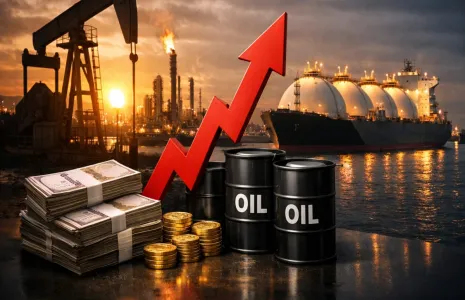
The government plans to raise Rs 163 billion (bn) through monetisation of oil and gas assets by FY30, outlining a five year programme from FY26 to FY30. The exercise targets four key asset categories for disposal or partial divestment to mobilise capital and reduce fiscal pressure. Officials described the initiative as focused on unlocking value from underutilised public sector holdings while attracting private sector participation. The aim is to create a sustainable revenue stream to support future sectoral investments.

Discovered small fields are expected to generate Rs 75 billion (bn) through competitive bidding under a production linked concession model, with the government estimating Rs 15 billion (bn) annually from these fields until FY30. The pipeline also includes storage facilities for liquids and gases, planned equity dilution in GAIL Gas, and leasing of dark optical fibre. The plan covers both brownfield and greenfield projects and emphasises assets that already generate revenue or have market linked utility characteristics. Authorities indicated that select upstream fields with extractable reserves are part of the portfolio.

The portfolio spans gas distribution networks, pipelines, storage facilities and upstream operations, and is intended to attract private capital into midstream and upstream infrastructure. Officials noted that monetisation will prioritise market linked utility infrastructure and revenue generating midstream assets while allowing for operational efficiencies. The strategy seeks to balance ongoing service delivery with transfer of ownership or stakes to private investors. Oversight mechanisms and phased transactions were indicated to manage continuity and oversight.

Analysts expect the initiative to strengthen India’s energy infrastructure, accelerate private sector participation and provide capital for new projects without exacerbating fiscal deficits. The government views the approach as a mechanism to leverage existing assets to fund growth, improve efficiency and support broader economic objectives. The programme is positioned as part of a wider effort to modernise energy sector financing and ensure long term revenue generation for public finances. Stakeholders will watch implementation details and timing as transactions are scheduled to roll out through FY30.

The government plans to raise Rs 163 billion (bn) through monetisation of oil and gas assets by FY30, outlining a five year programme from FY26 to FY30. The exercise targets four key asset categories for disposal or partial divestment to mobilise capital and reduce fiscal pressure. Officials described the initiative as focused on unlocking value from underutilised public sector holdings while attracting private sector participation. The aim is to create a sustainable revenue stream to support future sectoral investments. Discovered small fields are expected to generate Rs 75 billion (bn) through competitive bidding under a production linked concession model, with the government estimating Rs 15 billion (bn) annually from these fields until FY30. The pipeline also includes storage facilities for liquids and gases, planned equity dilution in GAIL Gas, and leasing of dark optical fibre. The plan covers both brownfield and greenfield projects and emphasises assets that already generate revenue or have market linked utility characteristics. Authorities indicated that select upstream fields with extractable reserves are part of the portfolio. The portfolio spans gas distribution networks, pipelines, storage facilities and upstream operations, and is intended to attract private capital into midstream and upstream infrastructure. Officials noted that monetisation will prioritise market linked utility infrastructure and revenue generating midstream assets while allowing for operational efficiencies. The strategy seeks to balance ongoing service delivery with transfer of ownership or stakes to private investors. Oversight mechanisms and phased transactions were indicated to manage continuity and oversight. Analysts expect the initiative to strengthen India’s energy infrastructure, accelerate private sector participation and provide capital for new projects without exacerbating fiscal deficits. The government views the approach as a mechanism to leverage existing assets to fund growth, improve efficiency and support broader economic objectives. The programme is positioned as part of a wider effort to modernise energy sector financing and ensure long term revenue generation for public finances. Stakeholders will watch implementation details and timing as transactions are scheduled to roll out through FY30.

Next Story
Real Estate

Perceptive Ideas Designs Structure for Vanijya Bhawan

Perceptive Ideas Consulting Engineers has recently contributed to the structural design of Vanijya Bhawan, a major government office complex located at 16A Akbar Road on the C-Hexagon in New Delhi. The facility serves as the official office of the Ministry of Commerce, Government of India, and represents a blend of modern engineering design with architectural elements reflecting national heritage.The complex houses offices of the Minister of Commerce and Industry, the Secretary’s office and accommodates approximately 1,800–2,000 officers. The project highlights the firm’s capabilities in..

Next Story
Resources

Deepak Halder Appointed CEO Of Sarvottam India

Sarvottam India has appointed Deepak Halder as its Chief Executive Officer. With over 23 years of professional experience, including nearly two decades in the real estate sector, Halder brings extensive leadership and strategic expertise to the organisation. Halder began his career in real estate in 2007 and has held senior leadership roles with developers such as Bestech Group, Paras Buildtech, Hero Realty, ATS Infrastructure and Rajdarbar Group. During his career, he has been involved in strategic expansion, brand positioning, major project launches and revenue growth across residential and..

Next Story
Real Estate

India Drives APAC Office Leasing Growth in 2025: Colliers

Office demand across Asia Pacific’s 11 major markets reached 9.8 million sq m (105.5 million sq ft) in 2025, marking an 11 per cent year-on-year increase, according to Colliers’ Asia Pacific Office Market Insights February 2026 report. India, Mainland China and Japan accounted for over 90 per cent of the region’s total demand during the year, with India emerging as the dominant leasing market.India alone contributed nearly 68 per cent of total office leasing across the region and accounted for 55 per cent of new office supply among the top 11 APAC markets in 2025. The report highlights t..

Advertisement

Subscribe to Our Newsletter

Get daily newsletters around different themes from Construction world.

STAY CONNECTED

Advertisement

Advertisement

Advertisement

Open In App