India Auto Boom Threatened by West Asia Gas Disruption
OIL & GAS

India Auto Boom Threatened by West Asia Gas Disruption

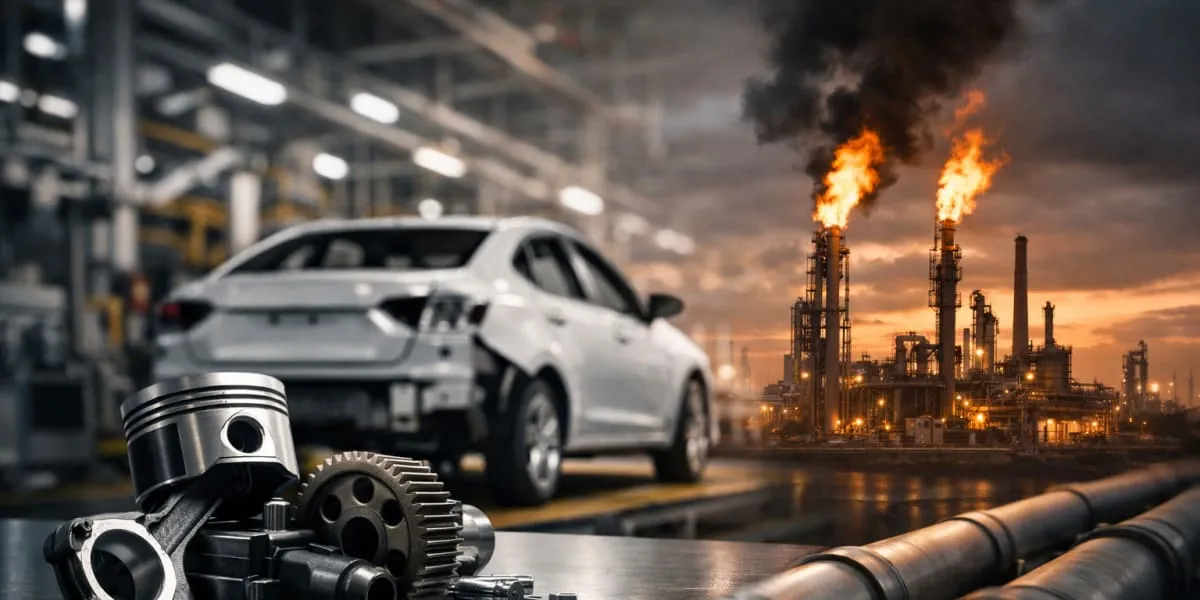
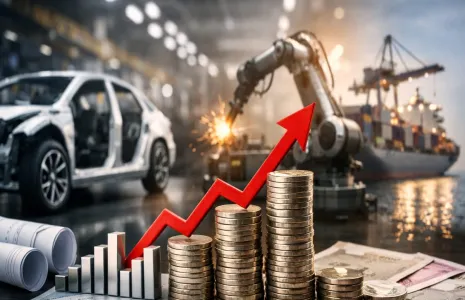
Gas shortages linked to the Iran conflict are threatening India's auto production and straining supply chains as demand peaks in the world's third-largest car market. Manufacturers expect sales to cross four point five million (mn) units in the current fiscal year to March 31, leaving little buffer inventory with producers and dealers. The interruption of gas supplies is emerging as a systemic stress that could constrain output just as consumer demand reaches record levels.

Several parts suppliers to major carmakers including Maruti Suzuki, Tata Motors and Mahindra have reported reduced gas availability for factory operations, affecting high-heat processes such as forging, casting and paint shops. Small and medium manufacturing units, which form the industry backbone, are particularly vulnerable because they rely more on gas and lack the flexibility to switch fuel sources quickly. Executives indicated that some plants are operating below capacity and that buffer stocks will not last long.

Automakers are working closely with suppliers to manage production and have not yet formally cut schedules, while firms are optimising operations and rerouting supplies where possible. Kirloskar Ferrous has halted some production at a western India facility and Hindalco has declared force majeure for some customers, signalling tangible disruptions in metal and parts supply. Companies said they are prioritising continuity and taking contingency measures to keep assembly lines moving.

India imports roughly 50 per cent of its natural gas, mostly from Qatar, and shipments through the Strait of Hormuz have fallen after attacks on vessels and damage to regional refineries. The government has prioritised household supply over industrial use, compounding pressure on energy intensive segments of the auto value chain. S&P Global Mobility has cut its India outlook to six point three per cent growth in light vehicle production for 2026, down from seven point four per cent, and warned that forecasts may be revised again depending on the conflict timeline.

Gas shortages linked to the Iran conflict are threatening India's auto production and straining supply chains as demand peaks in the world's third-largest car market. Manufacturers expect sales to cross four point five million (mn) units in the current fiscal year to March 31, leaving little buffer inventory with producers and dealers. The interruption of gas supplies is emerging as a systemic stress that could constrain output just as consumer demand reaches record levels. Several parts suppliers to major carmakers including Maruti Suzuki, Tata Motors and Mahindra have reported reduced gas availability for factory operations, affecting high-heat processes such as forging, casting and paint shops. Small and medium manufacturing units, which form the industry backbone, are particularly vulnerable because they rely more on gas and lack the flexibility to switch fuel sources quickly. Executives indicated that some plants are operating below capacity and that buffer stocks will not last long. Automakers are working closely with suppliers to manage production and have not yet formally cut schedules, while firms are optimising operations and rerouting supplies where possible. Kirloskar Ferrous has halted some production at a western India facility and Hindalco has declared force majeure for some customers, signalling tangible disruptions in metal and parts supply. Companies said they are prioritising continuity and taking contingency measures to keep assembly lines moving. India imports roughly 50 per cent of its natural gas, mostly from Qatar, and shipments through the Strait of Hormuz have fallen after attacks on vessels and damage to regional refineries. The government has prioritised household supply over industrial use, compounding pressure on energy intensive segments of the auto value chain. S&P Global Mobility has cut its India outlook to six point three per cent growth in light vehicle production for 2026, down from seven point four per cent, and warned that forecasts may be revised again depending on the conflict timeline.

Next Story
Infrastructure Energy

TEXMiN Signs MoUs, Announces Startup Funding at IInvenTiv 2026

TEXMiN IIT (ISM) Dhanbad has announced a series of strategic industry collaborations and startup incubation funding during IInvenTiv 2026, aimed at strengthening India’s mining and deep-tech innovation ecosystem. TEXMiN functions as the Technology Translation Research Park (TTRP) supported by the Department of Science and Technology (DST), Government of India.The announcements were made at the inaugural ceremony of IInvenTiv 2026, the Ministry of Education’s flagship R&D fair being hosted at IIT (ISM) Dhanbad. The event brought together academic institutions, startups, investors, indus..

Next Story
Infrastructure Urban

IEEMA Launches ELECRAMA 2027, World’s Largest Electrical Show

Indian Electrical & Electronics Manufacturers’ Association (IEEMA) has officially announced the 17th edition of ELECRAMA, billed as the world’s largest electrical show. ELECRAMA 2027 will be held from February 20 to February 24, 2027 at India Expo Mart, Greater Noida, Delhi. The upcoming edition will be organised under the theme “Harnessing the power of ‘I’.”According to IEEMA, the theme highlights multiple dimensions including India’s growing global capabilities, intelligence-led innovation, industry impact, immersive stakeholder experiences, knowledge-driven insights throug..

Next Story
Infrastructure Urban

Action TESA Launches OrnaMatte Range with Durable Matte Surface Finishes

Action TESA has introduced OrnaMatte, a new range of performance-driven matte finishes aimed at enhancing modern interior surfaces with a balance of aesthetics and durability. The company, known for engineered panel products including MDF, HDHMR, Boilo and particle boards, said the offering aligns with evolving consumer demand for contemporary yet long-lasting furniture and interior solutions.The company noted that in the Indian market, surface finish selection is often influenced by architects, interior designers and peer recommendations, rather than personal preference alone. Interior design..

Advertisement

Subscribe to Our Newsletter

Get daily newsletters around different themes from Construction world.

STAY CONNECTED

Advertisement

Advertisement

Advertisement